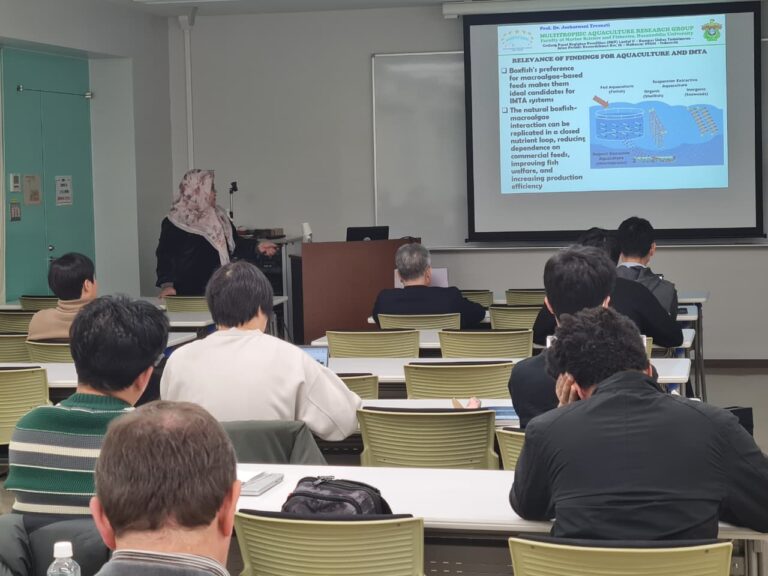
MAKASSAR, Indonesia Oktober 1 2019/MARGO/ What do a tiny snail, a common freshwater fish, and a prized sea cucumber have in common? In the world of multitrophic aquaculture, they share a tank—and sometimes, the consequences can be deadly.
The sandfish (Holothuria scabra) is one of the most valuable sea cucumbers in the world, commanding high prices in international markets. Unfortunately, this demand has led to severe overfishing across Southeast Asia. If wild populations are not managed carefully, extinction is a real possibility. One solution is aquaculture—raising sandfish in controlled environments, often alongside other species in multitrophic systems. But as a study published on 1 October 2019 in the Journal of Physics: Conference Series (Publisher: IOP Publishing) titled “Predators effects on mortality of sandfish Holothuria scabra cultured in multitrophic system” reveals, even well-designed systems can harbor unexpected threats.
Researchers from Hasanuddin University in Indonesia set out to investigate two potential predators in a microcosm multitrophic system containing sandfish, Nile tilapia, and red seaweed. The results were eye-opening.
First, the team discovered a silent assassin: juvenile mangrove snails (Cerithidea sp.). These tiny creatures—some as small as 1 millimeter in height—attached themselves to the sandfish’s skin and burrowed deep into their tegument (the outer body wall). Of the 328 sandfish observed, a staggering 100% were attacked, with some individuals carrying up to 59 snails on their bodies. The snails created small wounds that, while not immediately fatal, became deadly when the sandfish had already eviscerated—a natural defense mechanism where sea cucumbers expel their internal organs to escape danger. Without their digestive tracts, the injured sandfish could not muster the energy to heal, leading to death. 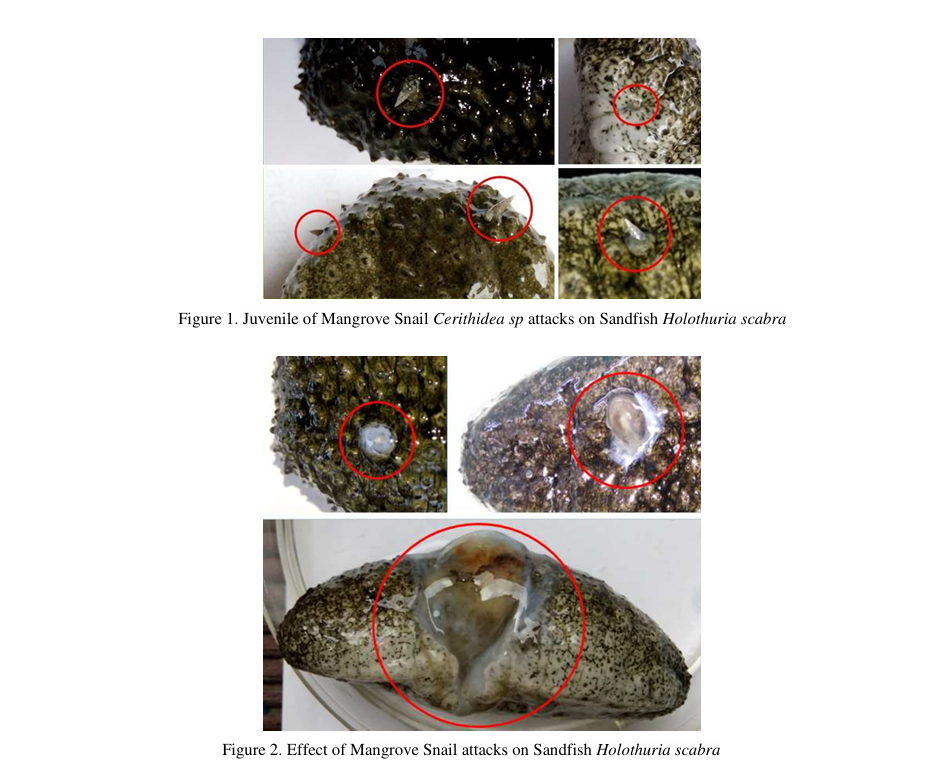
The second predator was more surprising: Nile tilapia. Traditionally considered herbivorous, these fish proved to be opportunistic omnivores, nibbling on the dorsal (back) surface of the sandfish. While these bites were rarely fatal on their own, they became dangerous when combined with evisceration. In seven out of ten tanks, tilapia attacked the sandfish, creating wounds that took one to three weeks to heal—if the animal survived at all.
The researchers noted a critical design flaw: the tanks lacked substrate (sand or mud). In the wild, sandfish bury themselves to hide from predators. Without this refuge, they were exposed and vulnerable. The study concluded that for multitrophic systems to work, sandfish and tilapia should be kept in separate but connected tanks, preventing direct physical contact while maintaining the ecological benefits of the system. 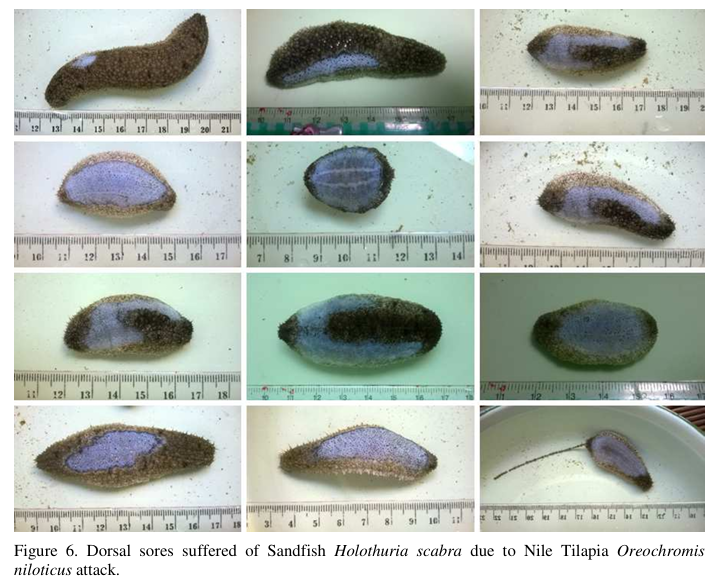
This research directly supports the United Nations’ Sustainable Development Goal 14: Life Below Water. By improving our understanding of predator-prey dynamics in aquaculture, it helps develop more sustainable, responsible farming practices that reduce pressure on wild populations. It also contributes to food security and livelihoods for coastal communities, who depend on sandfish as a vital source of income (SDG 1). With thoughtful system design, farming can work with nature, not against it—protecting both endangered species and the communities that rely on them.
Reference
DOI:
https://iopscience.iop.org/article/10.1088/1742-6596/1341/2/022026/pdf
Contact:
Prof. Dr. Ir. Ambo Tuwo DEA
+628124206391
ambotuwo62@gmail.com