


MAKASSAR, Indonesia Apr 19 2026 /MSM-RG/– Have you ever wondered how a transparent thin layer on glass can improve solar cells, sensors, and even medical devices? Many modern technologies depend on thin films that are almost invisible to our eyes, but their function is extremely important. By improving these materials, scientists can create devices that are more efficient, affordable, and environmentally friendly.
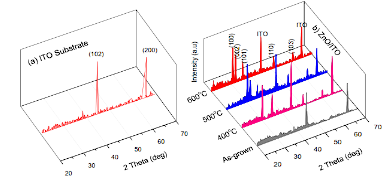
One important study discussing this innovation is “Effect of Annealing on the Structural and Optical Properties of ZnO/ITO and AZO/ITO Thin Films Prepared by Sol-Gel Spin Coating”, published in the TRENDS IN SCIENCES, issued by Walailak University, and officially published on 27 December 2022. This research explains how heating treatment, known as annealing, can improve the quality of zinc oxide (ZnO) and aluminum-doped zinc oxide (AZO) thin films grown on ITO substrates using the sol-gel spin coating method.
ZnO is one of the most important semiconductor materials because it has excellent electrical and optical properties. It is widely used in LED lamps, solar cells, biosensors, and photovoltaic devices. AZO, which is ZnO mixed with aluminum, offers even better transparency and conductivity. These materials are important for creating low-cost and high-performance electronic devices.
In this study, the researchers heated the films at temperatures between 400°C and 600°C for 60 minutes. This process is called annealing. Why is annealing important? Because heat helps improve the crystal structure of the material. Better crystals mean better device performance, stronger stability, and higher light transmission.
The results showed that after annealing, the crystallite size of both ZnO/ITO and AZO/ITO films increased significantly. For example, the transmittance of ZnO/ITO increased from around 40% before annealing to about 80%, while AZO/ITO reached nearly 90% after annealing . This means the films became clearer and allowed more visible light to pass through, which is very useful for solar windows and optoelectronic devices.
The optical band gap also decreased after annealing, from 3.26 eV to 3.19 eV for ZnO and to 3.23 eV for AZO at 600°C . In simple terms, this means the material became better at managing light energy, making it more suitable for smart sensors and energy-saving technologies.
This innovation strongly supports SDG 3: Good Health and Well-Being because better thin films can improve biosensors and medical diagnostic tools used in hospitals and laboratories. Faster and more accurate sensors help doctors detect diseases earlier and improve patient care.
It also supports SDG 4: Quality Education, because this research shows how science and technology can solve real-world problems. Universities and students can learn from this study to develop future innovations in renewable energy and healthcare technology.
In addition, the study contributes to SDG 15: Life on Land by promoting environmentally friendly semiconductor materials. ZnO is non-toxic and safer compared to many heavy-metal-based materials, helping reduce harmful waste and pollution.
This research reminds us that innovation does not always come from large machines—it can begin with a very thin transparent layer. A better thin film today can lead to smarter hospitals, cleaner energy, and a more sustainable future. So, can something almost invisible truly change our daily lives? Yes—because sometimes the thinnest materials create the strongest impact.
Reference:
DOI: https://doi.org/10.48048/tis.2023.6521
Contact:
Prof. Dr. Paulus Lobo Gareso, M.Sc.
+62 813-5511-2925
pgareso@fmipa.unhas.ac.id


