


MAKASSAR, Indonesia Apr 19 2026 /MSM-RG/– Have you ever wondered why doctors and radiology workers wear heavy aprons during X-ray examinations? These aprons protect them from harmful radiation, but traditional lead-based aprons are often heavy, uncomfortable, and dangerous for the environment. This challenge has encouraged scientists to develop safer, lighter, and more sustainable alternatives for daily medical use.
One important study discussing this innovation is “Polyvinyl and Bismuth Nitrite based apron (PVABiN-Apron): Fabrication and Characterization”, published in the Annals of Nuclear Energy, issued by Elsevier, and officially published on 06 April 2025. This research focuses on creating a lead-free protective apron using polyvinyl alcohol (PVA) and bismuth (III) nitrate as a new shielding material for medical radiation protection.
For many years, lead has been the standard material for X-ray shielding because of its strong radiation-blocking ability. However, lead is toxic, heavy, and can cause serious environmental pollution during production and disposal. Medical workers such as radiologists, dentists, and laboratory technicians often suffer physical discomfort from wearing heavy lead aprons for long hours.
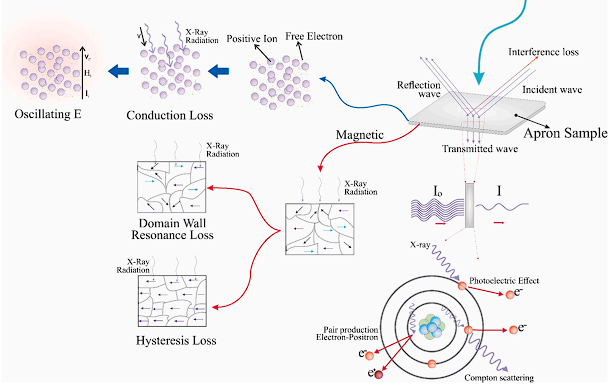
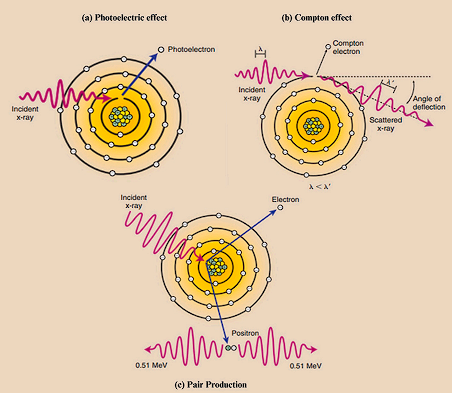
To solve this problem, researchers developed a new composite apron made from PVA and bismuth (III) nitrate, written as Bi(NO3)3. PVA is a flexible and lightweight polymer, while bismuth is a high atomic number element that can effectively absorb X-ray radiation. Unlike lead, bismuth is considered safer and more environmentally friendly.
The study tested apron samples with different bismuth concentrations, from 10% to 40%. The results showed that adding more bismuth improved radiation shielding performance. The best result came from the Bi40 sample, which contained 40 wt% bismuth. It showed the highest Linear Attenuation Coefficient (17.398 cm⁻¹), the highest Mass Attenuation Coefficient (9.719 cm²/g), and the lowest Half Value Layer (0.039 cm), meaning it provided the strongest X-ray protection .
This innovation strongly supports SDG 3: Good Health and Well-Being because better radiation protection means safer working conditions for healthcare professionals. Doctors and medical staff who work with X-ray machines every day need reliable protection to reduce long-term health risks caused by repeated radiation exposure.
The study also connects with SDG 15: Life on Land because replacing toxic lead with bismuth helps reduce hazardous waste and land pollution. Lead disposal can contaminate soil and water, harming ecosystems and human health. Using safer materials helps hospitals become more environmentally responsible.
In addition, this research supports SDG 4: Quality Education, especially in scientific and technological learning. Studies like this encourage universities and research institutions to develop practical innovations that solve real-world healthcare problems. Students and young researchers can learn how materials science directly improves human life.
Mechanical testing also showed promising results. The apron had good tensile strength, flexibility, and durability, making it suitable for repeated hospital use. This means protection does not have to sacrifice comfort.
This research reminds us that healthcare innovation is not always about complex machines—it can also come from improving something as simple as a protective apron. A lighter, safer apron means healthier workers, safer hospitals, and a cleaner environment. So, can replacing lead with smarter materials really change the future of healthcare? Absolutely—because true protection should care for both people and the planet.
Reference:
DOI: https://doi.org/10.1016/j.anucene.2025.111446
Contact:
Prof. Dr. Paulus Lobo Gareso, M.Sc.
+62 813-5511-2925
pgareso@fmipa.unhas.ac.id


