


MAKASSAR, Indonesia Apr 19 2026 /MSM-RG/– Have you ever wondered how an invisible layer on glass could help improve human health and modern medical technology? Scientific innovation often begins with materials too small to be seen by the human eye, yet their impact can be enormous. Thin film technology, especially semiconductor materials such as TiO2 and ZnO, has become an important foundation for healthcare devices, sensors, and optoelectronic systems that support everyday life.
One important study that discusses this innovation is “Influence of Thermal Annealing to Material Properties of TiO2, ZnO, and TiO2/ZnO Bilayer Films by Sol-Gel Method”, published in the Indian Journal of Pure & Applied Physics, issued by the National Institute of Science Communication and Policy Research, and officially published on 01 June 2023. This article explains how improving the quality of semiconductor thin films can contribute to better technological applications, especially in the health sector.
The research focuses on titanium dioxide (TiO2) and zinc oxide (ZnO), two semiconductor materials that are widely known for being low-cost, non-toxic, and highly efficient. These materials are commonly used in sensors, solar cells, photocatalysts, and medical diagnostic devices. In this study, both materials were combined into a bilayer thin film using the sol-gel spin coating method, which is considered simple, affordable, and effective.
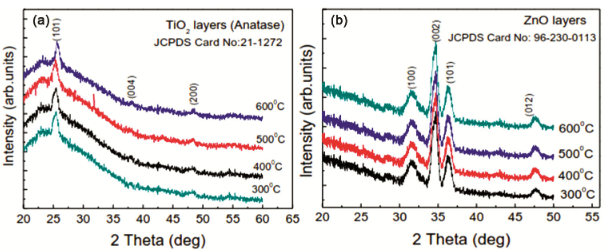
After the films were produced, they were heated at different temperatures between 400°C and 600°C through a process called thermal annealing. This heating process is very important because it improves the internal crystal structure of the material. A stronger crystal structure means better performance, higher stability, and longer durability.
The researchers found that the TiO2/ZnO bilayer film annealed at 600°C showed the best results. It had stronger crystal quality, larger crystallite size, lower internal strain, and higher light transmittance—around 80% in the visible light region. In simple terms, the material became clearer, stronger, and more efficient for optical and electronic applications.
This innovation strongly supports SDG 3: Good Health and Well-Being. Better semiconductor materials can improve biosensors, gas sensors, and optical diagnostic tools used in hospitals and laboratories. For example, medical sensors are used to detect diseases, monitor oxygen levels, and support laboratory testing. If the sensor materials become more sensitive and stable, diagnosis can become faster, more accurate, and more affordable for society.
TiO2 itself is widely used in photocatalysts and gas sensing systems, while ZnO is commonly applied in thin film sensors and light-emitting devices. By combining both materials, researchers create stronger and more reliable devices than using only one material. This is especially important for developing countries where affordable healthcare technology is urgently needed.
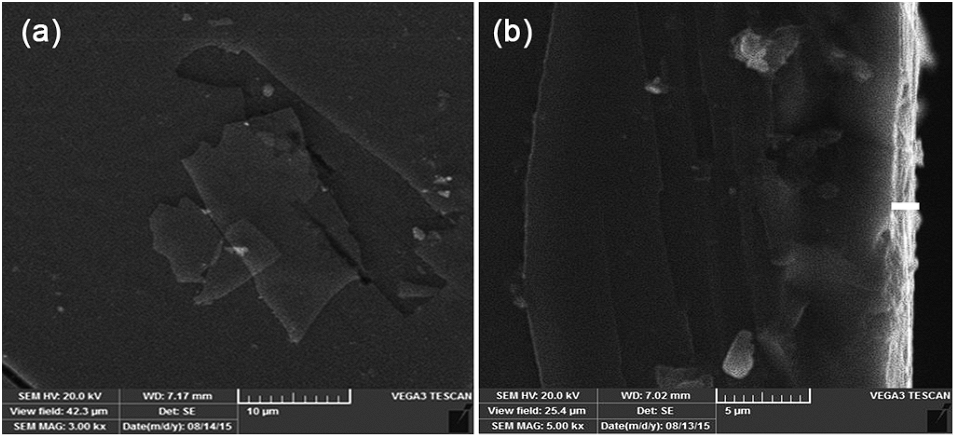
The study also showed that the optical band gap of the bilayer film became more suitable for optoelectronic applications. This means the material can manage light energy more effectively, making it useful for future health monitoring systems and smart medical instruments. Even the SEM results showed a smooth and cluster-free surface, indicating good durability and device performance.
This research reminds us that improving public health does not always start in hospitals—it can begin in a materials science laboratory. A better thin film today may become a better medical sensor tomorrow. Sometimes, the smallest invisible innovation creates the biggest visible impact.
Reference:
DOI: https://doi.org/10.56042/ijpap.v60i3.54410
Contact:
Prof. Dr. Paulus Lobo Gareso, M.Sc.
+62 813-5511-2925
pgareso@fmipa.unhas.ac.id


