


MAKASSAR, Indonesia Apr 19 2026 /MSM-RG/– Have you ever wondered how doctors and radiology workers stay safe while standing near X-ray machines every day? X-ray technology is very important for diagnosing diseases, but repeated exposure to radiation can be dangerous for human health. Because of this, protective aprons are used to reduce radiation exposure and keep medical workers safe.
One important study discussing this innovation is “Fabrication PVA/cellulose/tungsten composite aprons for X-ray shielding: Structural, attenuation, and mechanical evaluation”, published in the Annals of Nuclear Energy, issued by Elsevier, and officially published on 13 December 2025. This research introduces a safer and more environmentally friendly alternative to traditional lead-based aprons used in hospitals and radiology laboratories.
For many years, lead has been the main material used for X-ray shielding because it is very effective at blocking radiation. However, lead is heavy, uncomfortable to wear for long periods, and harmful to the environment because it is toxic. Medical staff who wear lead aprons for hours often experience back pain, shoulder discomfort, and fatigue.
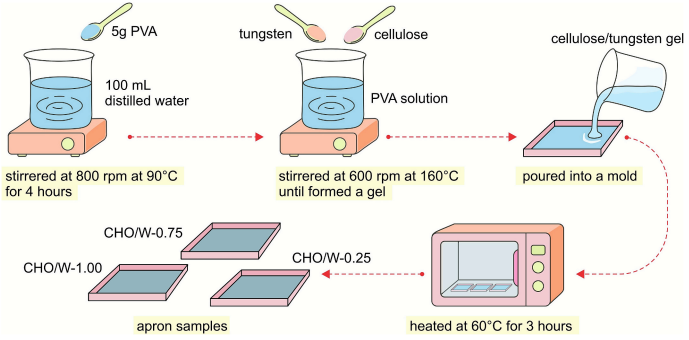
To solve this problem, researchers developed a new composite apron made from PVA (polyvinyl alcohol), cellulose, and tungsten particles. Cellulose is a natural material that can be obtained from plants, while tungsten is a dense metal known for its strong radiation shielding ability. By combining these materials, the researchers created an apron that is lighter, safer, and still highly effective in blocking X-rays.
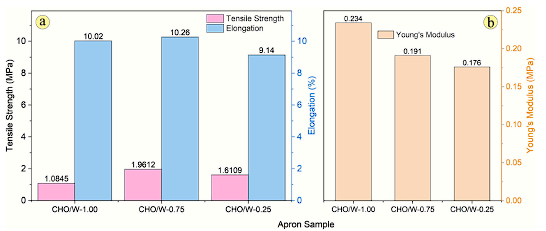
The study evaluated the structural properties, radiation attenuation performance, and mechanical strength of the composite apron. The results showed that adding tungsten significantly improved radiation protection, while cellulose helped improve flexibility and mechanical stability. This means the apron can provide strong shielding without becoming too stiff or uncomfortable.
This innovation strongly supports SDG 3: Good Health and Well-Being. Protecting healthcare workers from radiation exposure is an important part of maintaining a safe working environment in hospitals. Radiologists, dentists, laboratory technicians, and surgeons all rely on radiation-based equipment, and their long-term health must be protected.
A lighter apron also improves daily comfort for medical workers. If healthcare staff can work more safely and comfortably, the quality of patient care also improves. Better protection reduces health risks and helps hospitals provide safer medical services for everyone.
In addition, using cellulose as part of the material supports environmental sustainability because it reduces dependence on toxic lead. This creates a double benefit: protecting human health while also protecting the environment from hazardous waste.
The mechanical evaluation also showed that the composite material has good durability and flexibility, making it suitable for repeated use in medical settings. This is important because hospital equipment must be both reliable and long-lasting.
This research reminds us that innovation in healthcare is not always about advanced machines—it can also come from improving something as simple as a protective apron. A safer apron means safer doctors, safer hospitals, and ultimately safer patients.
So, can a lighter and greener apron really make a big difference in healthcare? Absolutely—because sometimes protection begins with what we wear.
Reference:
DOI: https://doi.org/10.1016/j.anucene.2025.112063
Contact:
Prof. Dr. Paulus Lobo Gareso, M.Sc.
+62 813-5511-2925
pgareso@fmipa.unhas.ac.id


