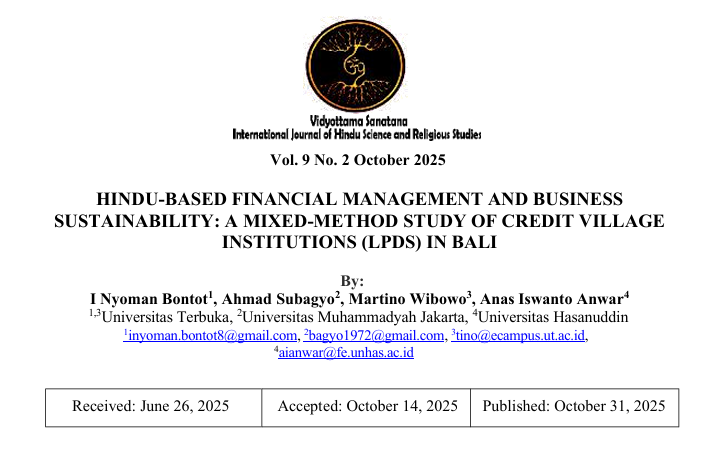

MAKASSAR, Indonesia April 18 2026/MSBDRG/ – What if financial systems were not only about profit—but also about purpose, ethics, and community well-being? A recent study titled “Hindu-Based Financial Management and Business Sustainability: A Mixed-Method Study of Credit Village Institutions (LPDs) in Bali” offers a compelling answer. It shows how integrating spiritual values into financial practices can strengthen economic resilience while directly contributing to SDG 1: No Poverty.
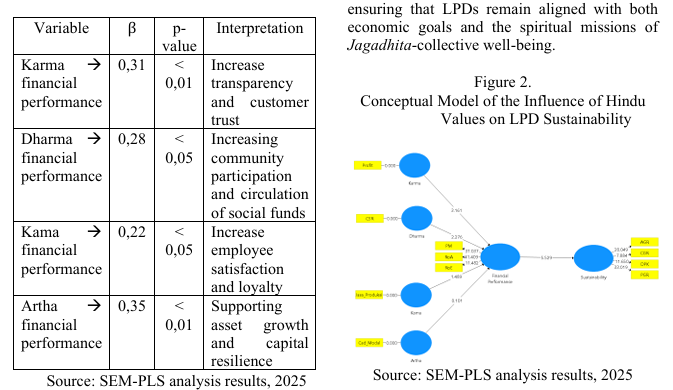
In Bali, community-based financial institutions known as Lembaga Perkreditan Desa (LPDs) have long served rural populations who are often excluded from formal banking. Unlike conventional institutions, LPDs operate not just as economic entities, but as cultural and spiritual institutions rooted in Hindu philosophy. This study reveals that their success is not accidental—it is deeply tied to four key principles: Karma (ethical action), Dharma (social responsibility), Kama (motivation and satisfaction), and Artha (wealth management).
These principles shape how money is earned, distributed, and managed. For example, Dharma ensures that part of the institution’s profit is reinvested into the community through social programs, directly helping reduce poverty. Meanwhile, Karma encourages transparency and accountability, building trust between institutions and the people they serve. This trust is crucial in empowering low-income communities to access financial services, grow small businesses, and improve their livelihoods.
The findings of the study are clear: LPDs that strongly apply these values tend to perform better financially. They show higher profit margins, stronger asset growth, and greater community participation. More importantly, they create inclusive economic opportunities—helping people escape poverty in a sustainable way. This aligns directly with the mission of SDG 1, which seeks to end poverty in all its forms everywhere.
What makes this model unique is its balance. It does not reject profit, but it redefines it. Wealth (Artha) is not the final goal—it must be achieved ethically and shared responsibly. Employees are also valued through Kama, ensuring motivation and satisfaction, which contributes to long-term institutional stability.
This approach offers an important lesson for the global community. In a world facing inequality and economic instability, solutions do not always have to come from modern financial innovations alone. Sometimes, they can emerge from local wisdom and cultural values that have been practiced for generations.
Article Metadata Source:
The insights in this article are based on a published study titled “Hindu-Based Financial Management and Business Sustainability: A Mixed-Method Study of Credit Village Institutions (LPDs) in Bali.” The article was published in Vol. 9 No. 2 (October 2025), with a publication date of October 31, 2025, following submission on June 26, 2025, and acceptance on October 14, 2025 . The authors include I Nyoman Bontot, Ahmad Subagyo, Martino Wibowo, and Anas Iswanto Anwar.
Although the journal name and publisher are not explicitly stated in the document, the study provides strong empirical and philosophical evidence that ethical, culturally grounded finance can be a powerful tool in fighting poverty.
In the end, Bali’s LPDs remind us of something simple yet profound: sustainable development is not just about economic growth—it is about growing together, with values at the center.