
MAKASSAR, Indonesia, April 16 2026 /TRG-MCRG/ – Every child learns to speak at a different pace. Some begin saying words very early, while others need more time. However, when a child aged three to five still struggles to say simple words, rarely responds, or only points and cries to communicate, this may be more than “late talking.” It may be speech delay.
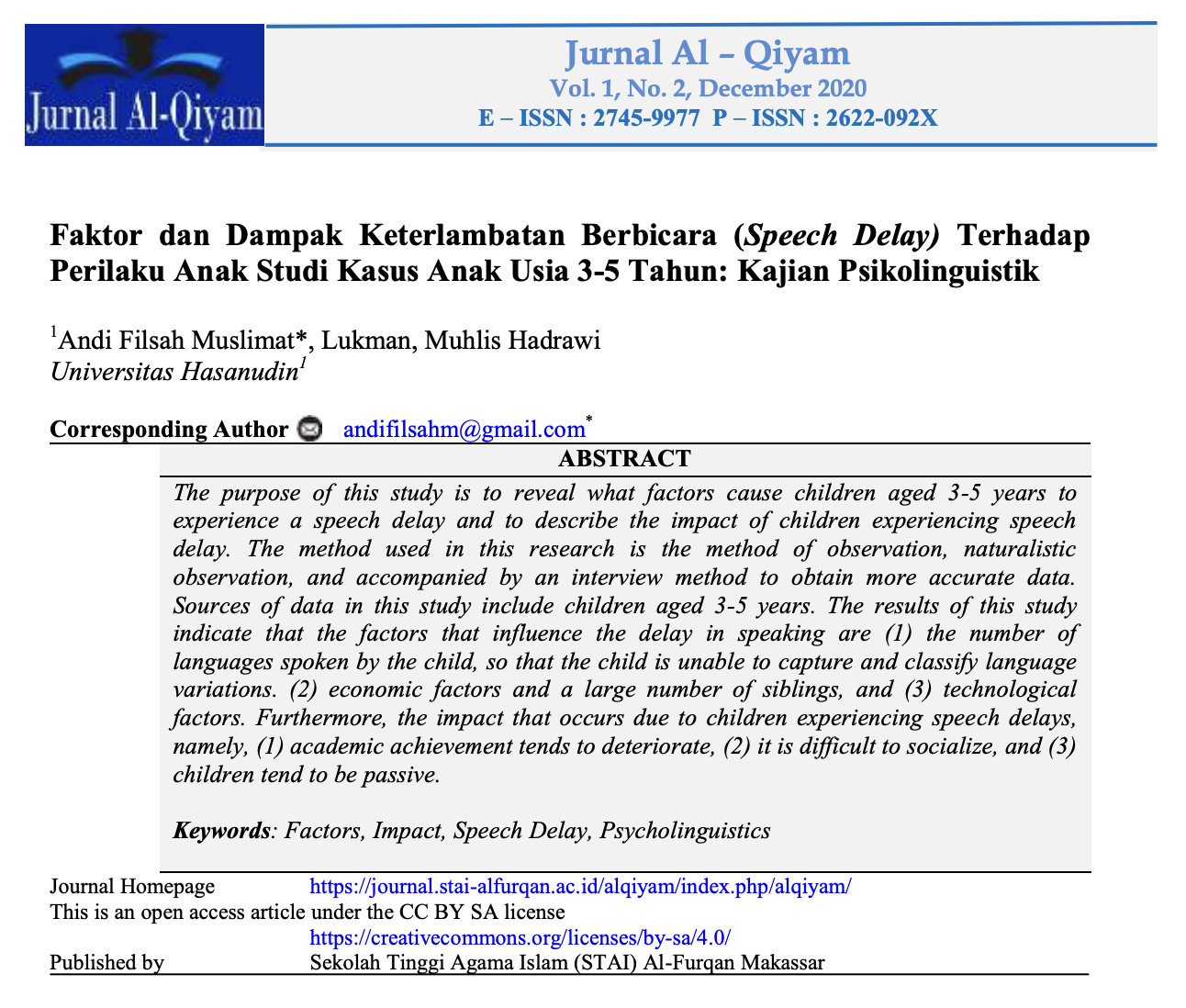
Speech delay is not simply a problem of pronunciation. It affects how children express feelings, interact with other people, and understand the world around them. A study published in 2020 found that many cases of speech delay are caused not by physical illness, but by the child’s environment and daily experiences.
The research showed that one major cause is the overuse of gadgets. Many children spend hours watching videos on smartphones or television. They listen, but they do not practice speaking. A child who only watches a screen receives very little conversation, and language cannot grow without interaction. Children need adults who talk to them, ask questions, read stories, and respond to their words.
Another factor is the lack of attention from parents or caregivers. In families where parents are very busy working, children may spend most of their time with gadgets, older siblings, or caregivers who rarely communicate with them. The study also found that children living in difficult economic conditions or in large families often receive less individual attention. As a result, they have fewer opportunities to practice speaking.
Interestingly, the research found that some children hear too many languages at once. For example, they may hear Indonesian, a local language, and English every day. For some children, this can be confusing in early childhood if they do not receive enough guidance and repetition.
The effects of speech delay can continue for many years. Children with speech delay often find it difficult to make friends because they cannot express what they want or understand what others say. They may become quiet, shy, or withdrawn. At school, they may struggle to answer questions, participate in class, or explain their ideas. Over time, this can lower their confidence.
This issue is closely related to SDG 3: Good Health and Well-Being. SDG 3 is not only about hospitals and medicine. It also includes children’s mental, emotional, and developmental health. Helping children speak and communicate is part of ensuring that they grow up healthy and confident.
Parents do not need expensive tools to help. The most effective solution is simple: spend time talking with children every day. Read stories, sing songs, play together, and reduce screen time. Sometimes, a conversation is more powerful than any gadget.
Article Metadata Source:
- Title: Faktor dan Dampak Keterlambatan Berbicara (Speech Delay) Terhadap Perilaku Anak Studi Kasus Anak Usia 3-5 Tahun: Kajian Psikolinguistik
- Journal: Jurnal Al Qiyam
- Publisher: STAI Al Furqan Makassar
- Publication Date: 29 June 2020
Reference:
DOI: https://doi.org/10.33648/alqiyam.v1i1.122
Contact:
Prof. Dr. Muhlis Hadrawi, S.S., M.Hum.
+62 813-5545-0639
muhlisbugis@yahoo.com