
MAKASSAR, Indonesia, April 16 2026 /TRG-MCRG/ – For centuries, a single narrative has dominated the history of Islam in South Sulawesi: that the faith was spread through war, conquest, and force. The event at the center of this story is called Musu’ Selleng, literally meaning “Islamic War” in the Buginese language. But what if this story has been misread all along? A groundbreaking scholarly article published in the Journal of Al-Tamaddun by Universiti Malaya on December 30, 2024, titled “Musu’ Selleng: Deconstruction of the Text and Context of Islamisation in South Sulawesi, Indonesia”, challenges this long-held assumption and invites us to see history through a fresh, more nuanced lens.
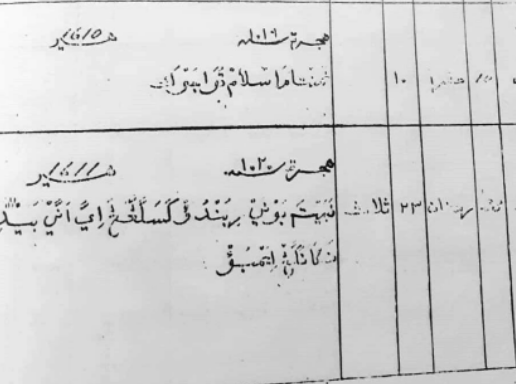
The article, written by Muhammad Amir, Muhammad Nur Ichsan Aziz, Rismawidiawati, Abu Muslim, Husnul Fahimah Ilyas, and Muhlis Hadrawi, uses a method called deconstruction, a philosophy developed by Jacques Derrida, to re-examine ancient texts, particularly the Lontara’ manuscripts of Bugis and Makassar kingdoms. These handwritten records, kept by royal scribes, are considered among the most objective and reliable historical sources in the Indonesian archipelago.
What the researchers found is remarkable. The famous conflicts between the Gowa-Tallo Kingdom and the Tellumpoccoe alliance, comprising Bone, Soppeng, and Wajo, did not begin because of Islam. These wars had already started long before the 17th century, rooted in territorial expansion, trade competition, and political rivalry. The arrival of Islam, officially accepted by Gowa-Tallo in 1603, coincided with this already turbulent era. When Soppeng accepted Islam in 1609, Wajo in 1610, and Bone in 1611, these events were connected to complex power negotiations, not simply to military conquest.
In fact, the research points to strong evidence that Islam was largely accepted through peaceful channels, through trade relations, the influence of Muslim Malay communities, and dedicated Islamic scholars known as Datuks, who used education, Sufism, and community engagement to spread their faith. Long before formal “Islamisation,” a mosque had already been built in Makassar for Malay Muslim traders as early as the mid-16th century.
This story matters far beyond academic debate. It speaks directly to Sustainable Development Goal 16 (SDG 16): Peace, Justice and Strong Institutions, which calls for inclusive societies built on accurate historical understanding, narratives that reduce violence, and just institutions. When we misread history, portraying religion as primarily a tool of war, we risk reinforcing division and prejudice. Correcting these narratives builds the foundation for more peaceful, tolerant, and just communities.
Understanding that Islam in South Sulawesi was embraced through trade, education, and dialogue rather than purely through conquest is not just historically accurate; it is empowering. It reminds people of all backgrounds that cultural and religious transformation is possible without violence, and that cooperation and knowledge-sharing have always been among humanity’s most powerful forces.
History, when read carefully, can heal divisions that centuries of misunderstanding have created.
Reference:
DOI: https://doi.org/10.22452/JAT.vol19no2.2
Contact:
Prof. Dr. Muhlis Hadrawi, S.S., M.Hum.
+62 813-5545-0639
muhlisbugis@yahoo.com