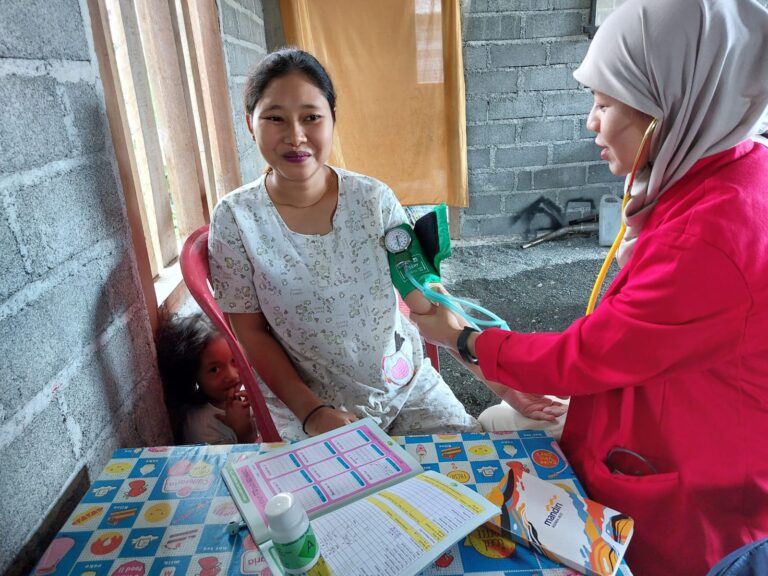
Banggai, Indonesia, July 11, 2024/MC-Nutrition/-Why do so many adolescent girls still experience anemia even when iron supplements and nutrition programs are already available in schools? Is the problem only about access to supplements, or is there something deeper related to behavior, knowledge, and dietary habits?
These questions are explored in a scientific article titled “Effect of Multiple Micronutrient Supplements and Nutritional Education Based on the ‘Aksi Bergizi’ Program on Hemoglobin Levels of Adolescent Girls,” published in Gac Méd Caracas (Vol. 132, No. 3, 2024), DOI: 10.47307/GMC.2024.132.3.9. This study was conducted by Fina Astary, focusing on adolescent girls living in boarding school environments in Indonesia .
The research involved 53 adolescent girls from boarding schools and used a pretest–posttest intervention design. Participants were given Multiple Micronutrient Supplements (MMS) combined with nutrition education based on the “Aksi Bergizi” program for a period of three months. Hemoglobin levels were measured before and after intervention using standardized clinical procedures .
When Eating Habits Become a Silent Risk
Before the intervention, anemia was still a significant problem among participants, with 31% of adolescent girls classified as anemic. Many students also showed poor dietary behavior, including skipping meals and relying more on snacks than balanced meals. This reflects a common issue in boarding school environments, where food choices are often limited and nutrition awareness is low.
After the intervention, the number of adolescents with anemia dropped significantly to 9%, showing a clear improvement in nutritional status and iron-related health outcomes .
How MMS and Education Work Together
The intervention combined two key strategies: biological supplementation and behavioral education. MMS provided essential micronutrients such as iron, folic acid, and multiple vitamins, while nutrition education sessions improved awareness about balanced diets, iron intake, and healthy eating behavior.
This dual approach is important because nutrition problems are not only caused by nutrient deficiency, but also by behavior patterns such as skipping meals and poor food choices. Education helps adolescents understand why nutrition matters, while supplementation ensures the body receives what it needs.
Stronger Blood, Better Learning Potential
The study found a statistically significant increase in hemoglobin levels, rising from 11.9 g/dL to 12.6 g/dL, with a mean increase of 0.7 g/dL (p = 0.0001) . This improvement is clinically important because hemoglobin plays a critical role in oxygen transport, energy levels, and cognitive performance.
Better hemoglobin levels mean improved concentration, reduced fatigue, and better learning capacity—key factors for adolescent development.
Why Schools Matter in Nutrition Interventions
The study also highlights that boarding schools are strategic settings for nutrition intervention because they provide structured environments where supplementation and education can be delivered consistently. However, long-term success depends on compliance, routine habits, and continuous health promotion.
Implications for Public Health
This research strongly supports SDG 3: Good Health and Well-being, particularly in reducing anemia among adolescent girls. It also aligns with SDG 4: Quality Education, since improved nutrition directly supports learning performance. Furthermore, it contributes to SDG 17: Partnerships for the Goals, through collaboration between universities, health programs, and educational institutions.
DOI Referensi
: https://doi.org/10.47307/GMC.2024.132.3.9
Kontak:
Prof.dr. Veni Hadju, M.Sc., Ph.D
+62811441803