
Observation of Toddler Posyandu in Slametharjo Village
As part of the Study on Improving the Quality of Health and Handling Stunting in the JOB Tomori Sulawesi Operating Area, an Observation of Toddler Posyandu activity was conducted to monitor the implementation of Posyandu services, evaluate the application of the Integration of Primary Services (ILP) approach, and observe the growth and development of infants and toddlers. The activity was conducted by Prof. Veni Hadju together with the team, in collaboration with health workers, Posyandu cadres, and enumerators.
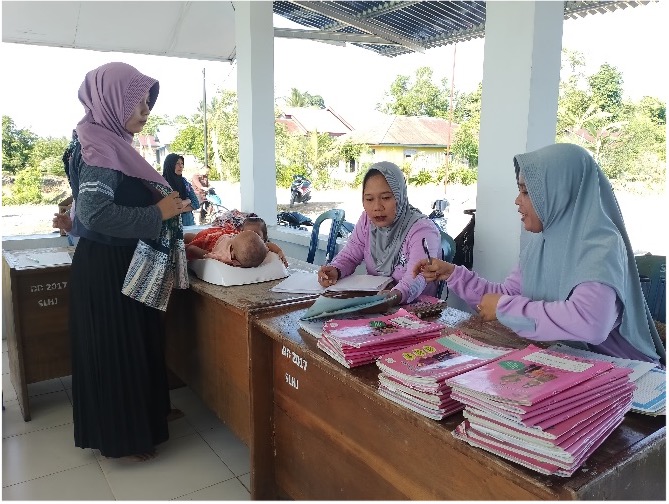
The activity was carried out on Tuesday, January 21, 2025, at the Slametharjo Village Polindes, following the Posyandu schedule established by Puskesmas Toili 1. The activity started at 08.00 WITA and ended at 11.00 WITA. The main activities included immunization, weighing of infants and toddlers, and counseling on balanced nutrition and the importance of a healthy diet, delivered by cadres and health workers.
The Posyandu activity was attended by 41 of 91 registered toddlers (45%). Health personnel involved included Puskesmas nutrition officers, immunization officers, HIV and Hepatitis officers, PROMKES officers, and the Slametharjo Village midwife, together with village health cadres and enumerators. The collaboration among these parties supported the provision of integrated health services for infants and toddlers.
The observation also identified several challenges in the implementation of Posyandu. Community participation remained low, as many parents did not bring their toddlers to Posyandu. Consequently, the D/S coverage did not reach 50%, and cadres had to actively follow up with families and encourage toddlers to attend for weighing.
Another challenge was the lack of orderly participation among some attendees. Many mothers returned home immediately after their children were weighed or immunized, resulting in limited opportunities for cadres and health workers to provide nutrition counseling. In addition, some cadres were not yet fully proficient in completing the KMS (Child Health Card), so KMS recording was sometimes completed after the Posyandu session.
These observations indicate the need to strengthen community participation, cadre capacity in growth monitoring and KMS recording, and the delivery of nutrition counseling during Posyandu services. Improving these aspects is important to ensure that Posyandu functions not only as a place for weighing and immunization, but also as an integrated community-based platform for monitoring child growth and supporting stunting prevention and management.
Overall, the activity provided a field-based assessment of Posyandu implementation in Slametharjo Village and identified practical challenges that need attention to improve the quality of primary health services for infants and toddlers in the JOB Tomori Sulawesi operating area.