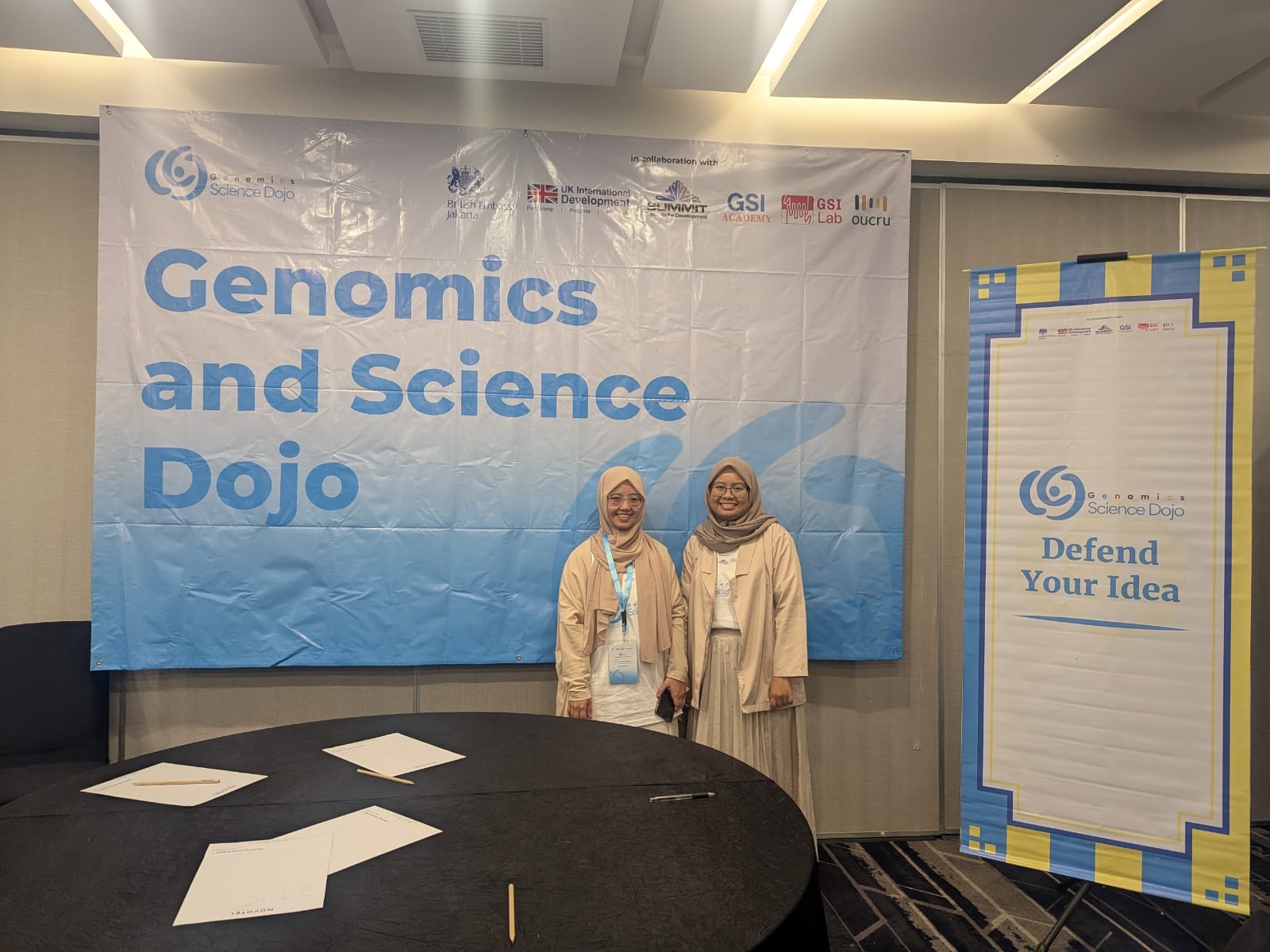

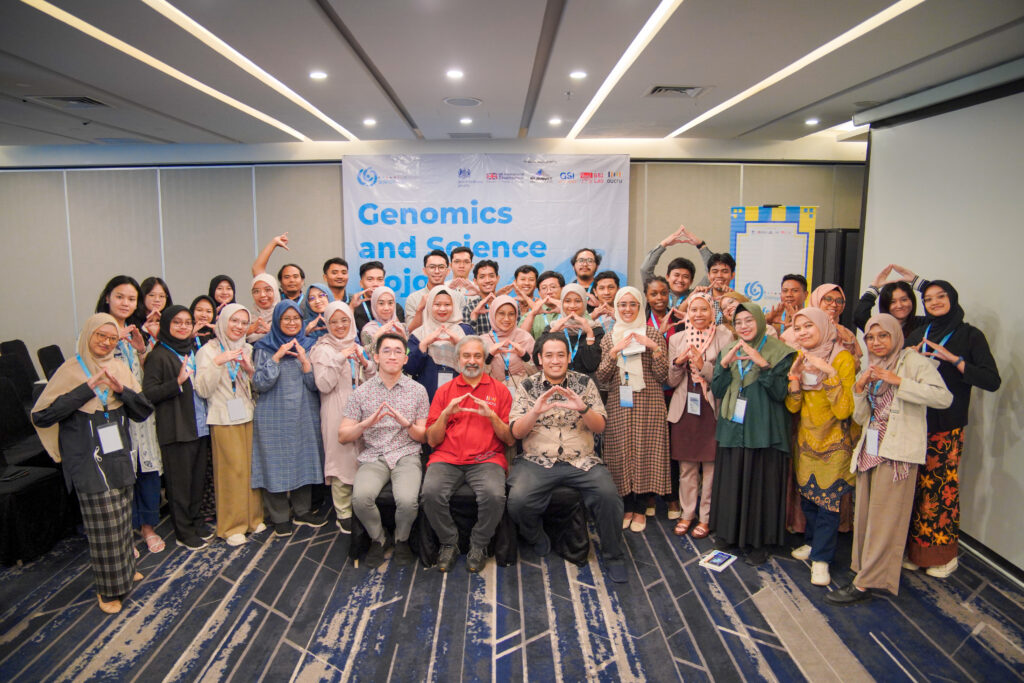
Two members of our research group, dr. Siti Arifah Lacante, Ph.D, and Dr. dr. Najdah Hidayah, were selected to join the Genomics and Science Dojo 2.0 Cycle 3, held on May 19–22, 2025, at Novotel Cikini, Jakarta, Indonesia. This prestigious program is an intensive training initiative designed to strengthen the capacity of Indonesian researchers in genomics and scientific practice. Supported by the British Embassy Jakarta and the Summit Institute for Development, the Genomics and Science Dojo adopts an immersive and hands-on learning approach. It uniquely combines martial arts philosophy with critical thinking and scientific methodology, enabling researchers to refine their skills and advance their research projects effectively.
The program brought together 19 selected teams from various institutions across Indonesia, creating a diverse and highly collaborative learning environment. Throughout the four-day program, participants engaged in a series of interactive sessions covering essential topics, including overcoming scientific barriers, identifying research gaps and limitations, strengthening research design, enhancing science communication, and conducting critical manuscript reviews. These sessions were led by experienced “Senseis,” consisting of both national and international experts with extensive scientific backgrounds. One of the most engaging sessions, titled “Strike with Arguments, Defend Your Ideas,” emphasized the importance of strong scientific reasoning, logical argumentation, and constructive critique in advancing high-quality research.
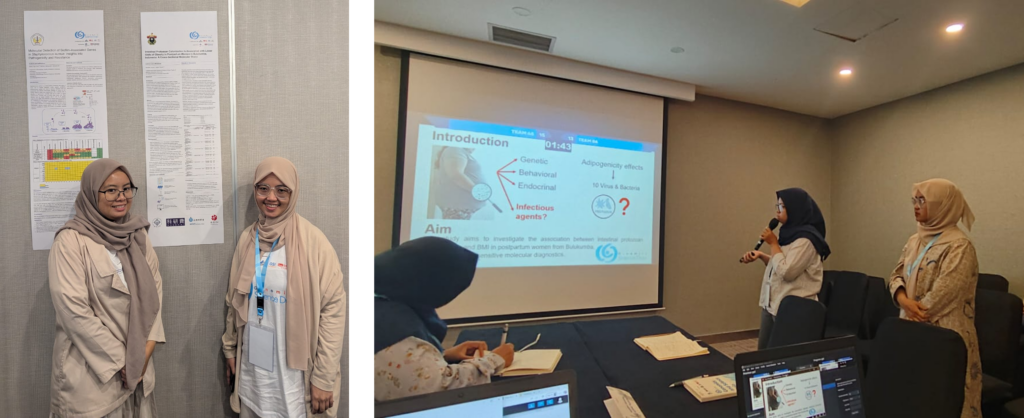
As part of the training, Arifah and Najdah’s team received a dedicated mentorship session on scientific poster development from Prof. dr. Rina Agustina, M.Sc, Ph.D. During this session, they were guided to improve the clarity, structure, and scientific impact of their research poster entitled “Molecular Screening of Intestinal Protozoans in Postpartum Women from Bulukumba, Indonesia: A Preliminary to Early Childhood Gut Microbiome Study.” This mentorship significantly contributed to enhancing their ability to communicate complex scientific findings in a clear and impactful manner.
In addition to the core sessions, the program also featured various workshops, networking opportunities, and the Shinjitsu Mini Tournament—a genomics-themed scientific debate that challenged participants to defend their ideas while critically evaluating opposing arguments. The program provided comprehensive support, including mentorship, training facilities, accommodation, and transportation for all selected participants, ensuring an inclusive and productive learning experience.
This activity directly contributes to several Sustainable Development Goals (SDGs). It strongly supports SDG 4 (Quality Education) by enhancing the knowledge, skills, and scientific capacity of researchers through intensive training and mentorship. It also strengthens SDG 17 (Partnerships for the Goals) by fostering collaboration among researchers, institutions, and international partners. Furthermore, this initiative aligns with SDG 1 (No Poverty), as improving research capacity and scientific innovation can contribute to better health solutions, increased productivity, and long-term socioeconomic development. In addition, the program indirectly supports SDG 3 (Good Health and Well-being) by promoting research that contributes to improved public health outcomes.
Overall, participation in the Genomics and Science Dojo 2.0 Cycle 3 represents a valuable opportunity for capacity building, collaboration, and scientific growth. The experience gained from this program is expected to strengthen ongoing research and contribute to advancing scientific excellence in Indonesia.