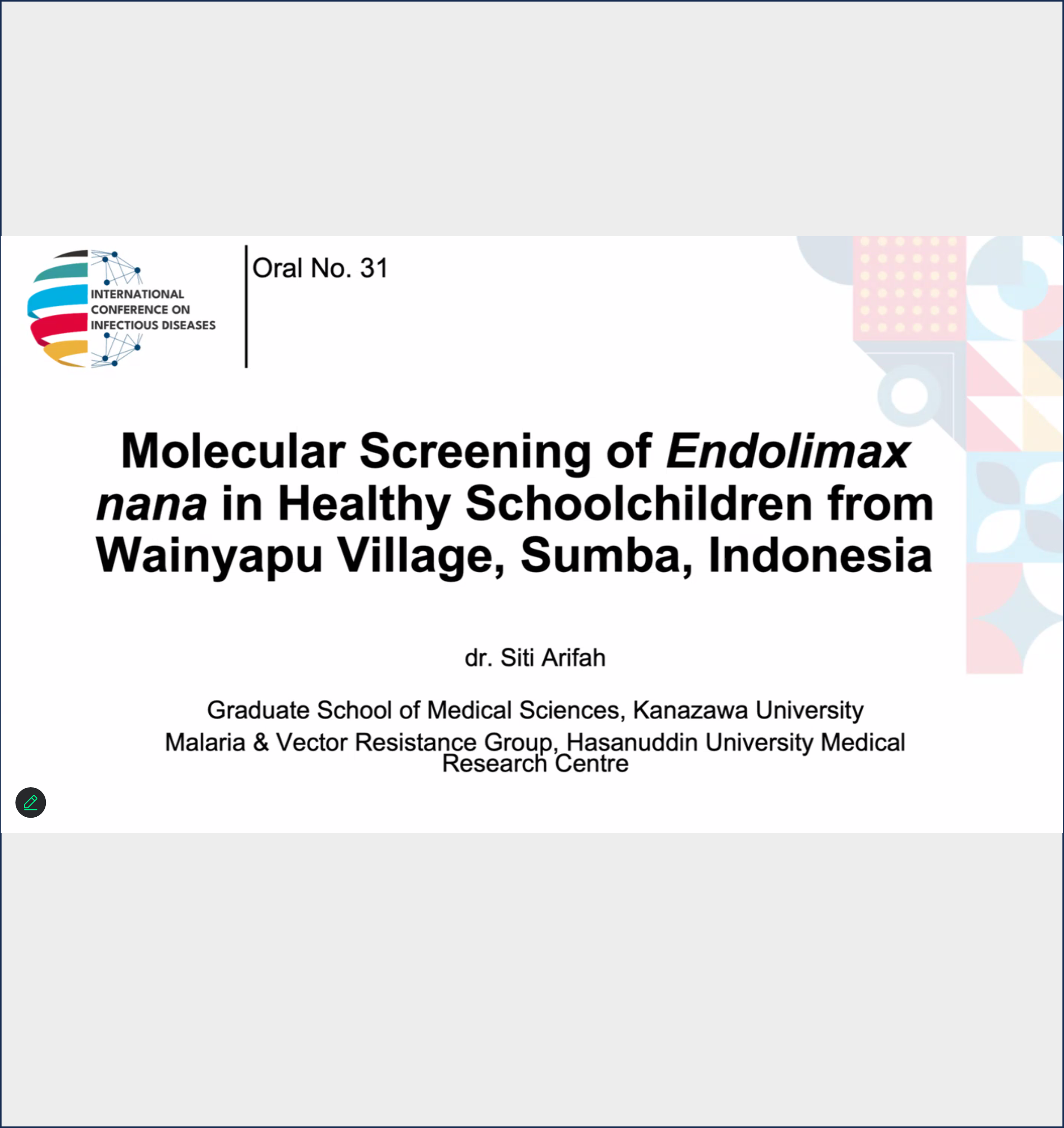

(February 3, 2025) Our research group recently held an insightful Zoom session titled “Molecular Screening of Endolimax nana in Healthy Schoolchildren from Wainyapu Village, Sumba, Indonesia,” bringing together lab members for an interactive and productive discussion. The session was attended not only by researchers from our laboratory but also by collaborators, including Dr. Puji Budi Setia Asih, S.Si, Dr. Ismail Ekoprayitnorozi, M.Eng., Rusdiyah, SKM, Ph.D., and Lepa Syahrani, S.Si., M.Si., from PRBM Eijkman, OR Kesehatan, BRIN. All participants actively engaged in the discussion by asking questions, sharing insights, and providing constructive feedback, which enriched the overall scientific exchange.
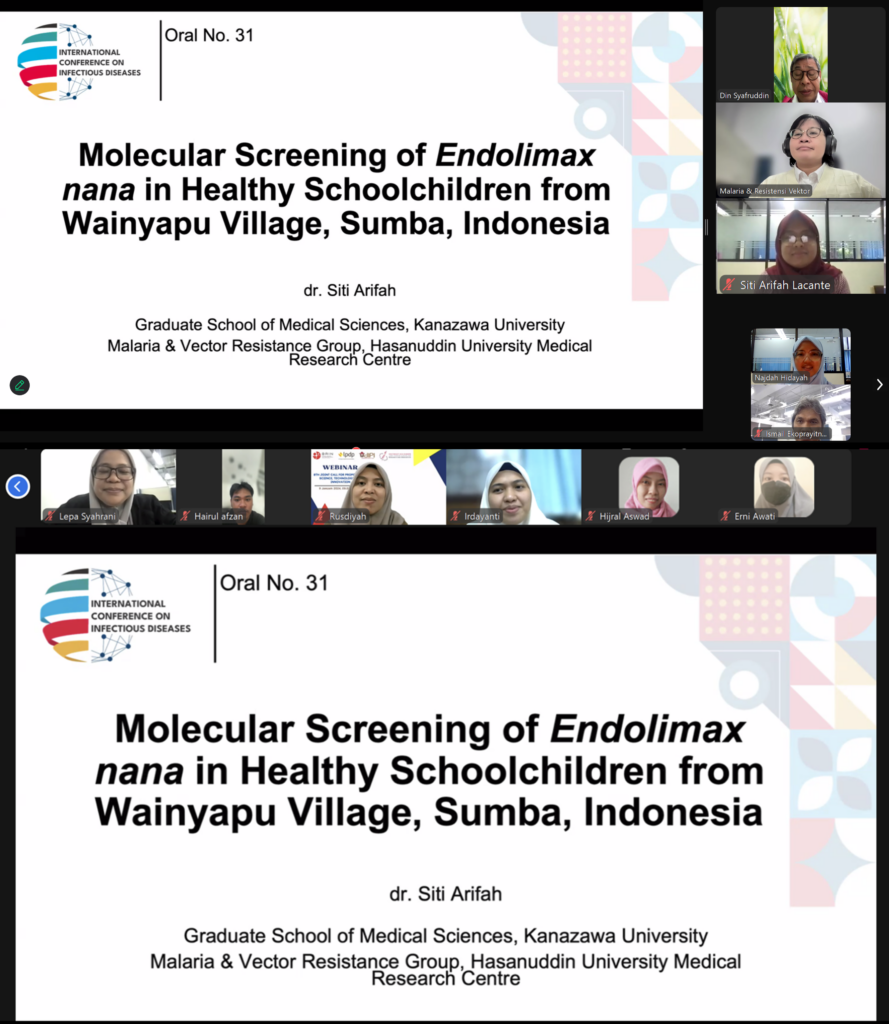
During the presentation, Dr. Arifah explained the key findings of the study, highlighting the identification of four distinct groups within the species Endolimax nana. This protozoan species was detected in stool samples collected from healthy schoolchildren, indicating its presence and distribution among individuals without clinical symptoms. These findings are important because they suggest that E. nana may play a role as a commensal organism in the human gastrointestinal tract. The study demonstrates how molecular screening approaches can improve the detection and classification of intestinal protozoa, offering more precise insights compared to conventional microscopic methods.
Furthermore, Dr. Arifah emphasized the novelty and scientific contribution of this research in expanding our understanding of gut microbiota diversity, particularly in populations from endemic and underrepresented regions such as Sumba, Indonesia. The findings also highlight the need for further investigation into the functional role of E. nana, including its interaction with other gut microorganisms, its potential contribution to maintaining gut homeostasis, and its broader implications for human health. Such research is essential to better understand the balance between commensal and pathogenic organisms in the human body.
Prof. Syafrudin and Dr. Puji provided valuable input throughout the session by offering guidance on research methodologies, data interpretation, and future directions. Their expertise helped clarify key aspects of the study and supported the development of more robust research approaches. This collaborative discussion not only enhanced participants’ scientific understanding but also contributed to the advancement of ongoing and future research projects.
This activity directly contributes to several Sustainable Development Goals (SDGs). It supports SDG 4 (Quality Education) by promoting knowledge sharing, scientific discussion, and capacity building among researchers. It also aligns with SDG 3 (Good Health and Well-being) by advancing research on intestinal microorganisms that may influence human health. Additionally, the collaboration strengthens SDG 17 (Partnerships for the Goals) by fostering active cooperation between research institutions. In the long term, this research may contribute to SDG 1 (No Poverty), as improved understanding of health and disease can support better public health strategies and enhance community well-being, particularly in resource-limited settings.
Overall, the session served as an important platform for scientific exchange and collaboration, reinforcing our commitment to advancing research and contributing to global health knowledge.