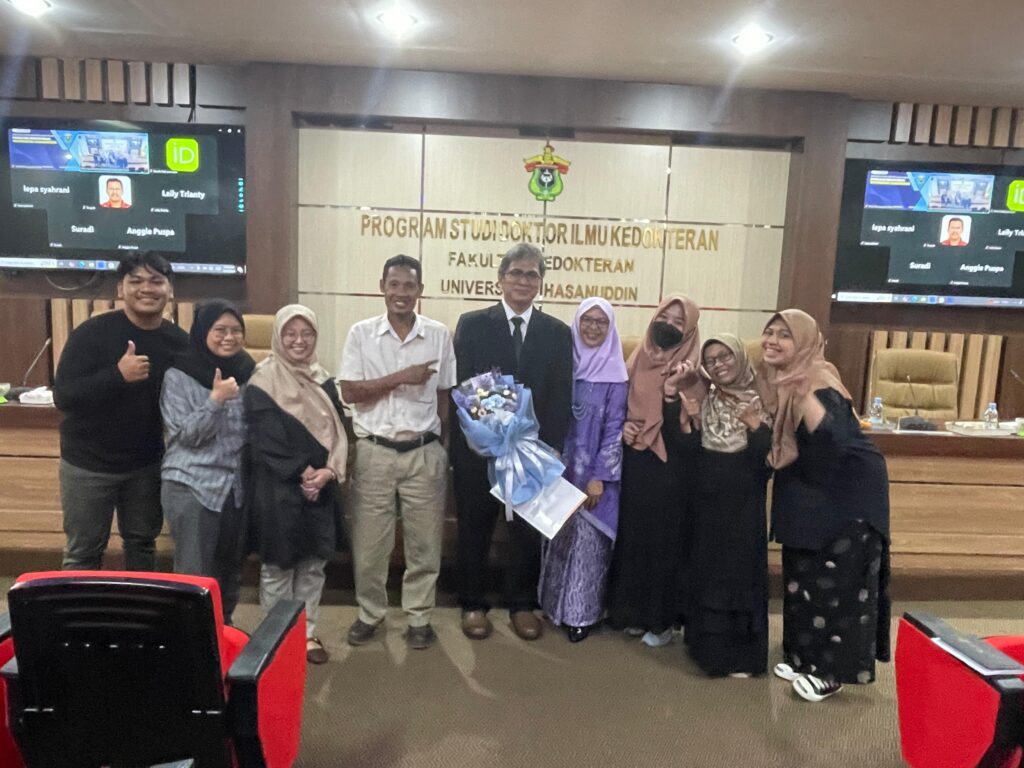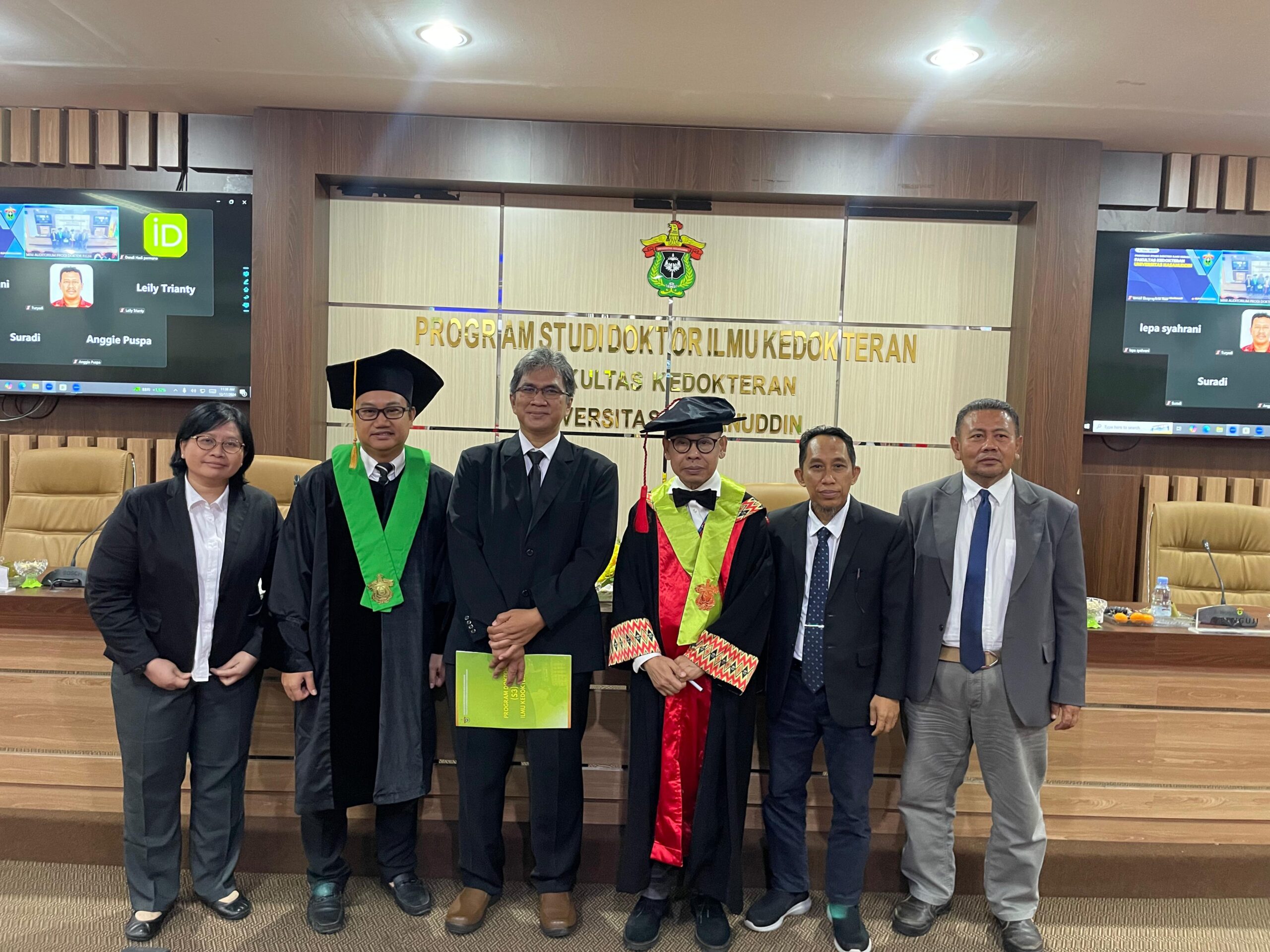

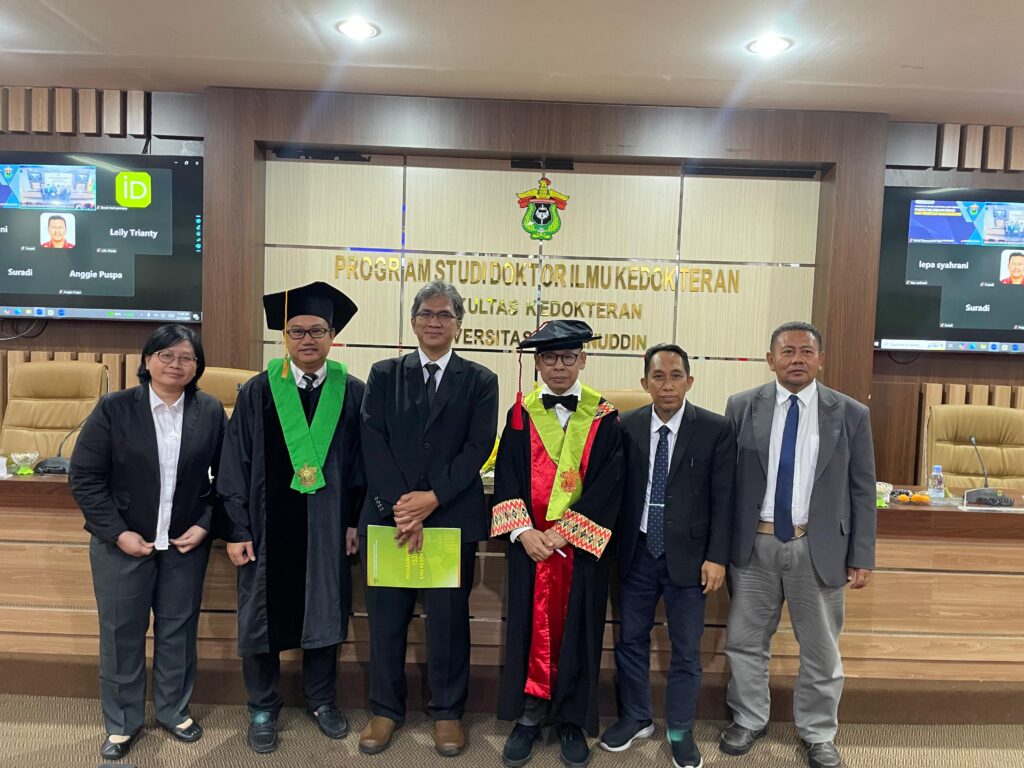

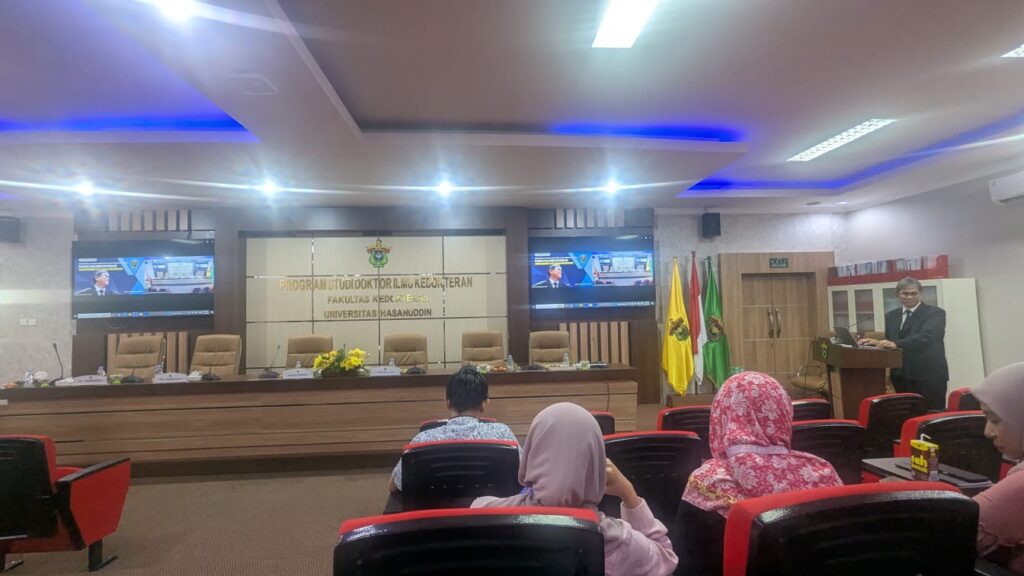
On December 17, 2024, Ismail Ekoprayitno Rozi, from our group, a doctoral candidate in the degree-by-research program (by Badan Riset dan Inovasi Nasional, BRIN) in the Faculty of Medicine, successfully defended her dissertation titled “Development of Vector-Based Interventions to Accelerate Malaria Elimination Programs in Papua Province”.
The research was supervised by Prof. dr. Syafruddin, Ph.D and Dr. Puji Budi Setia Asih (PRBM Eijkman, OR Kesehatan, BRIN), who provided guidance throughout the study. The doctoral examination was conducted by Prof. Dr. dr. Irfan Idris, M.Kes, dr. Isra Wahid, Ph.D and Dr. dr. Alfian Zainuddin, M.KM, alongside an external examiner, Prof. Neil Lobo, Ph.D from the University of Notre Dame, USA. Also present at the event was Elisabeth Farah Novita Coutrier, S.Si, Ph.D., Head of PRBM Eijkman, OR Kesehatan, BRIN, showing support and appreciation for Dr. Rozi, who is also part of PRBM Eijkman.
Dr. Rozi was awarded the distinction of cum laude for his outstanding work. His research has produced two publications in internationally reputed journals, one of which is Scientific Reports, with a third article currently under review in another international journal.
Key Findings of Dissertation and Implications
His study provided crucial evidence confirming that Anopheles spp. from the Punctulatus Group is highly prevalent across all eight regencies in Papua. Three major species—An. koliensis, An. punctulatus, and An. farauti—were identified in various ecosystems within the region, playing a significant role in malaria transmission both indoors and outdoors.
The findings highlight why current malaria control measures focusing exclusively on indoor interventions have been insufficient in significantly reducing malaria incidence. To address these challenges, Dr. Rozi suggests several strategies:
- Indoor Interventions: Optimizing the use of insecticide-treated nets (ITNs) and installing mosquito screens to further reduce indoor transmission.
- Outdoor Interventions: Implementing community-centric approaches to eliminate larval sources near villages, guided by locally stationed entomologists.
- Health Education: Social and Behavior Change (SBC) programs to encourage the adoption of mosquito protection measures during outdoor activities.
Broader Impact
The innovative interventions proposed in his dissertation are expected to contribute significantly to Papua’s malaria elimination efforts. By addressing both indoor and outdoor transmission, his study provides a comprehensive framework for reducing malaria incidence and improving public health outcomes in the region.
Congratulations to Dr. Rozi, Prof. Syafruddin, and the entire supervisory team for this remarkable achievement. May this work contribute to further advancements in malaria control and elimination.