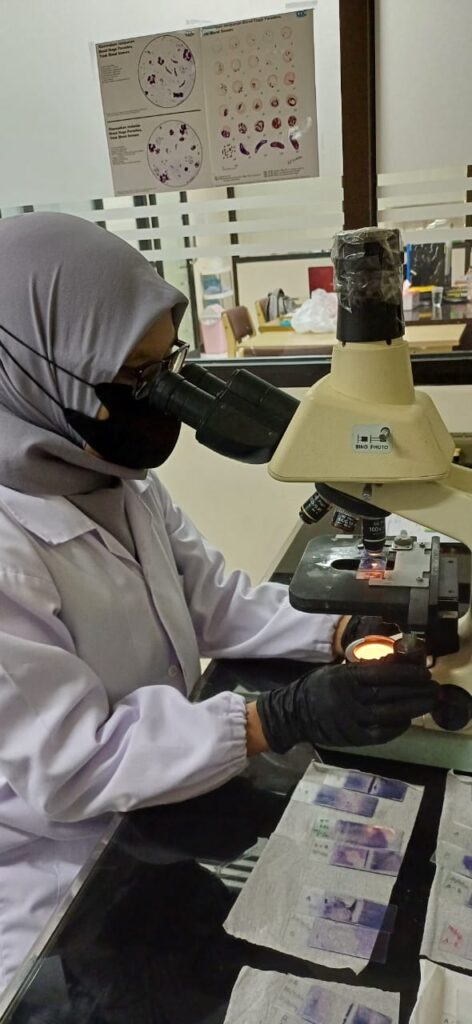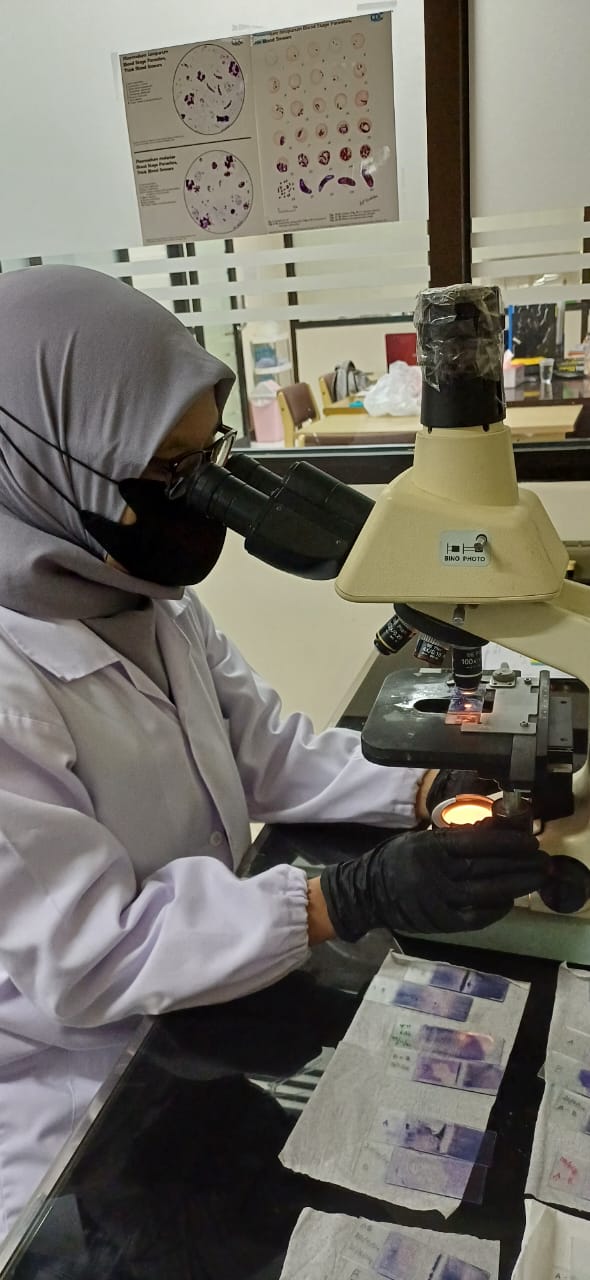

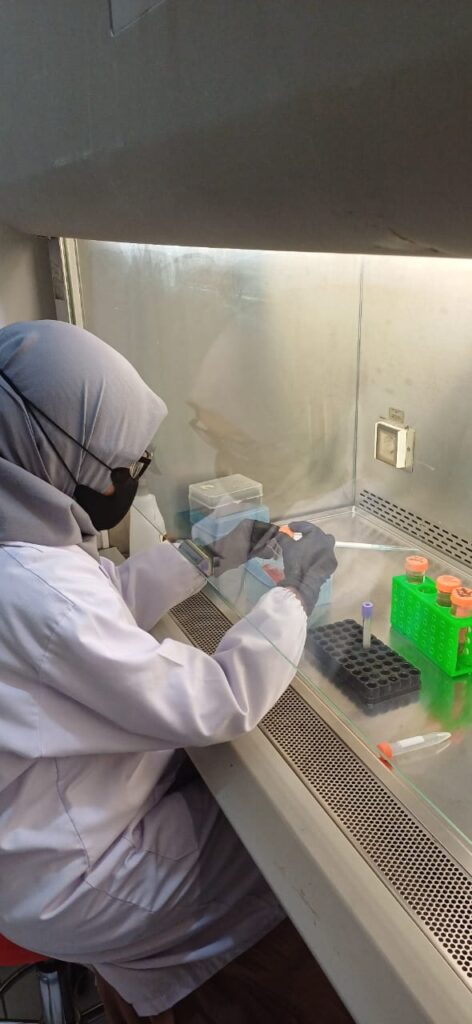
In vitro cultivation of Plasmodium falciparum is an essential step in parasite biology research, drug development, and vaccine efficacy testing. Culture activities are carried out by growing Plasmodium parasites in media containing human red blood cells as hosts. To ensure a successful culture, regular checks are required through staining and microscopic observation. Giemsa staining is used to highlight parasite structures within erythrocytes, allowing identification of developmental stages such as rings, trophozoites, or schizonts. Microscopic observation confirms the presence of parasites, assesses the level of infection, and detects contamination that could damage the culture. These observations are essential to maintain optimal conditions for parasite growth, allowing reliable and valid experiments in studying the Plasmodium life cycle, pathogenesis, or mechanisms of resistance to antimalarial drugs.