


Makassar, South Sulawesi – As part of the commitment to advancing agricultural research and developing future food resources, the Horticulture Breeding and Biotechnology Research Group conducted a research activity entitled “Sweet Corn Gets an Upgrade: New Superior Lines Emerge.” The research was carried out at the Experimental Farm, Faculty of Agriculture, Hasanuddin University, Makassar, with the main objective of developing superior sweet corn lines through systematic plant breeding and evaluation processes.
Sweet corn is one of the most popular horticultural commodities due to its attractive taste, nutritional value, and high market demand. Beyond being a favored food product, sweet corn also provides economic opportunities for farmers and contributes to agricultural diversification. However, increasing consumer demand requires the continuous development of improved varieties with better performance, including higher productivity, desirable quality traits, and strong adaptation to cultivation environments.
The development of superior sweet corn varieties requires a long-term research process involving genetic exploration, selection, and evaluation. Plant breeders must identify promising genetic combinations that can produce plants with valuable characteristics. Through scientific breeding approaches, researchers can improve crop performance while maintaining important traits that meet both farmer and consumer expectations.
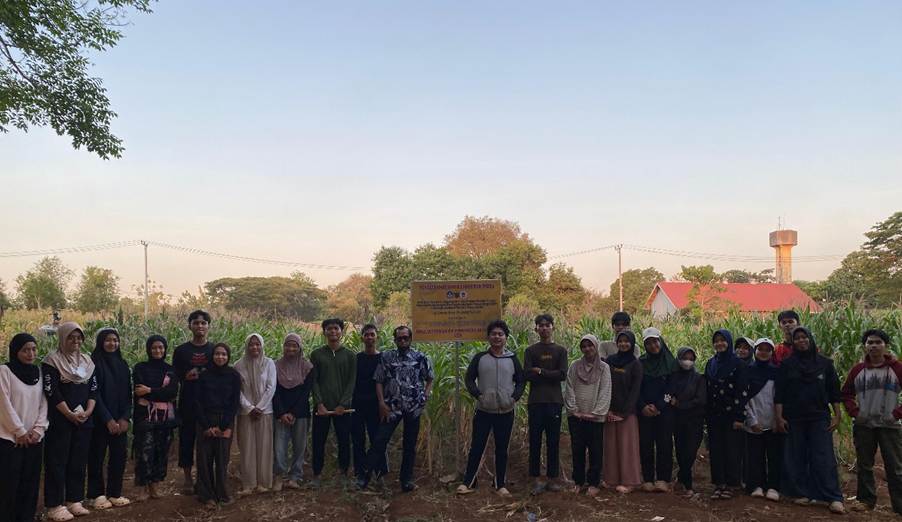
The research activity was conducted on 23 August 2026 at the Experimental Farm of the Faculty of Agriculture, Hasanuddin University. This research involved 23 undergraduate students who participated in the research process as part of their scientific learning and practical experience in plant breeding activities. Under the guidance of researchers from the Horticulture Breeding and Biotechnology Research Group, students were involved in observing plant growth, understanding breeding methods, and supporting data collection activities in the field.
The main focus of this research was to produce superior sweet corn lines through evaluation and selection of promising genetic materials. Researchers assessed various plant characteristics to identify lines with desirable agronomic performance and potential for further development. The selection process is an essential stage in plant breeding because it determines which genetic materials have the greatest opportunity to become improved varieties in the future.
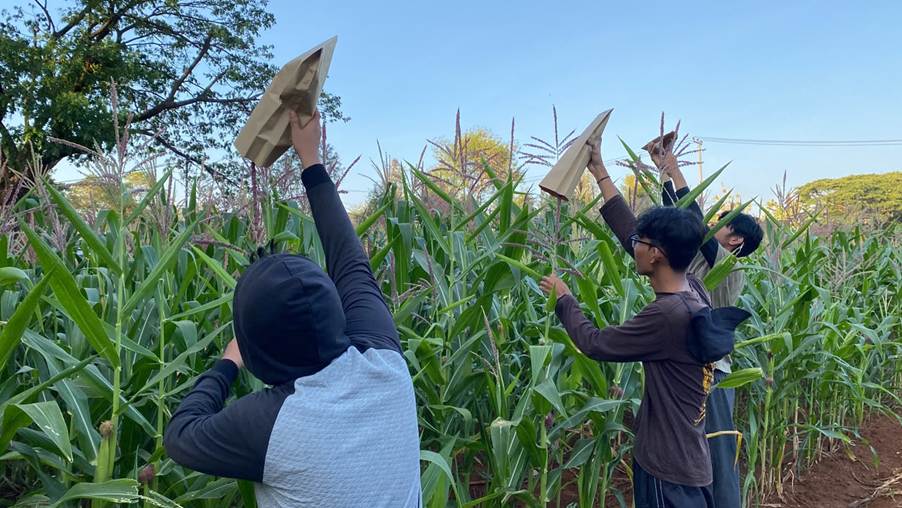
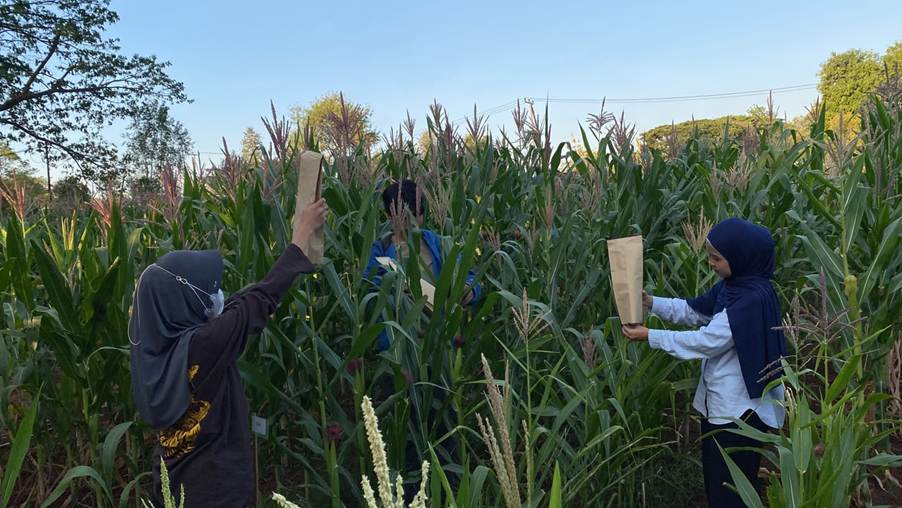
This research also provided an important learning platform for students. Through direct involvement in experimental activities, students gained experience in applying theoretical knowledge to real agricultural conditions. This approach strengthens the connection between academic education and practical research, preparing future agricultural professionals who understand both scientific concepts and field challenges.
The development of superior sweet corn lines contributes to sustainable agricultural advancement by improving crop efficiency and productivity. Better varieties can help farmers achieve more stable production while optimizing the use of available agricultural resources.
This research supports the Sustainable Development Goals (SDGs), particularly SDG 4: Quality Education, by providing students with hands-on research experiences and strengthening scientific capacity in agricultural innovation. It also contributes to SDG 15: Life on Land by promoting sustainable crop improvement through responsible utilization of plant genetic resources. Furthermore, the activity aligns with SDG 17: Partnerships for the Goals by strengthening collaboration between researchers, academic institutions, and students in advancing agricultural development.
Through “Sweet Corn Gets an Upgrade: New Superior Lines Emerge,” the Horticulture Breeding and Biotechnology Research Group demonstrates that agricultural innovation begins with careful research, education, and collaboration. Developing improved sweet corn varieties is not only about producing better crops but also about creating a foundation for sustainable agriculture and future food security.
By investing in plant breeding research and empowering the next generation of agricultural scientists, innovative solutions can continue to emerge for a more productive and resilient agricultural future.


