
In many cities across the developing world, change does not always come from government policies alone. Often, it is driven by local organizations working closely with communities. In Makassar, Indonesia, local non-governmental organizations (NGOs) are playing a key role in empowering the urban middle class—an increasingly important group in shaping social and economic development.
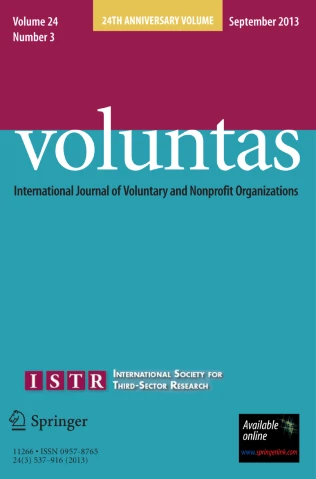
A recent study titled “Empowering the Urban Middle Class: Sustainability Strategy for Local NGOs in Makassar, Indonesia”, published in the journal Voluntas by Springer Nature on 27 January 2025, explores how these organizations operate and why their strategies matter. The research highlights how NGOs are shifting their focus toward the urban middle class as a more independent and impactful target for empowerment.
Makassar, a growing metropolitan hub with around 1.5 million people, has seen a rapid rise in its middle-class population, driven by expanding education and economic opportunities. As described in the study (see page 8), the city hosts over 90 universities and thousands of small businesses, making it a center for youth, students, traders, and entrepreneurs.
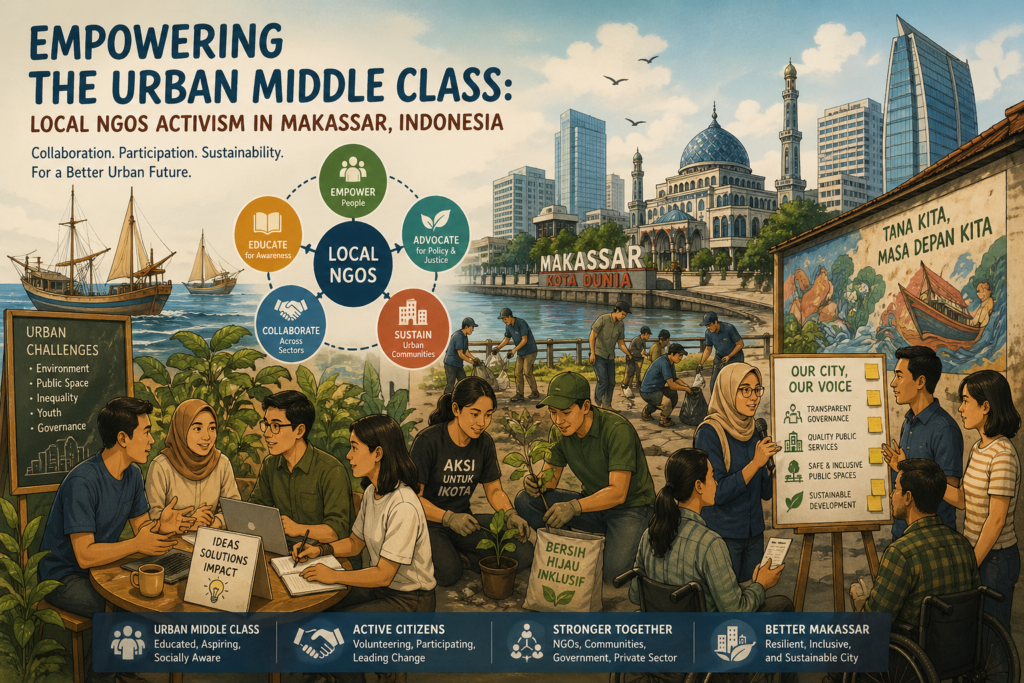
Local NGOs in Makassar are responding to this shift by designing programs that target two key middle-class groups: students and young people, and small business owners (MSMEs). These groups are seen as having strong potential—not only to improve their own lives but also to contribute to wider community development.
Two organizations highlighted in the study—Active Society Institute (AcSI) and Dompet Dhuafa—demonstrate different but complementary approaches. AcSI focuses on political empowerment, helping communities understand their rights and engage in advocacy. For example, as described on page 14, the organization worked with market traders facing eviction, providing them with knowledge and skills to defend their interests and participate in public discussions.
On the other hand, Dompet Dhuafa emphasizes economic empowerment. Through scholarships, business training, and financial support, the organization helps young people and entrepreneurs build sustainable livelihoods. As shown on page 16, its programs include capital assistance and hands-on business training, allowing participants to gain practical experience while earning income.
These efforts are closely linked to SDG 17: Partnerships for the Goals, which highlights the importance of collaboration between civil society, communities, and institutions. The success of these NGOs shows that sustainable development cannot be achieved by governments alone—it requires strong partnerships and community-driven initiatives.
However, challenges remain. Many NGOs face limited funding, especially those not connected to large donor networks. As noted in the study (page 10), local organizations often rely on community support, which can restrict the scale of their activities.
Despite these obstacles, the research offers an important message: empowering the middle class can create a ripple effect. When individuals gain skills, confidence, and resources, they are more likely to support others, contribute to the economy, and participate in civic life.
In the end, the story of Makassar shows that real change often begins at the local level. By investing in people and building strong partnerships, NGOs are helping create a more inclusive and sustainable future—one community at a time.
Reference:
DOI: https://doi.org/10.1007/s11266-025-00718-2
Contact:
Prof. Nurlinah
+62 812-4249-867
nurlinah@unhas.ac.id
or
Muhammad Chaeroel Ansar
+62 852-4221-2842
mchaeroel@unhas.ac.id