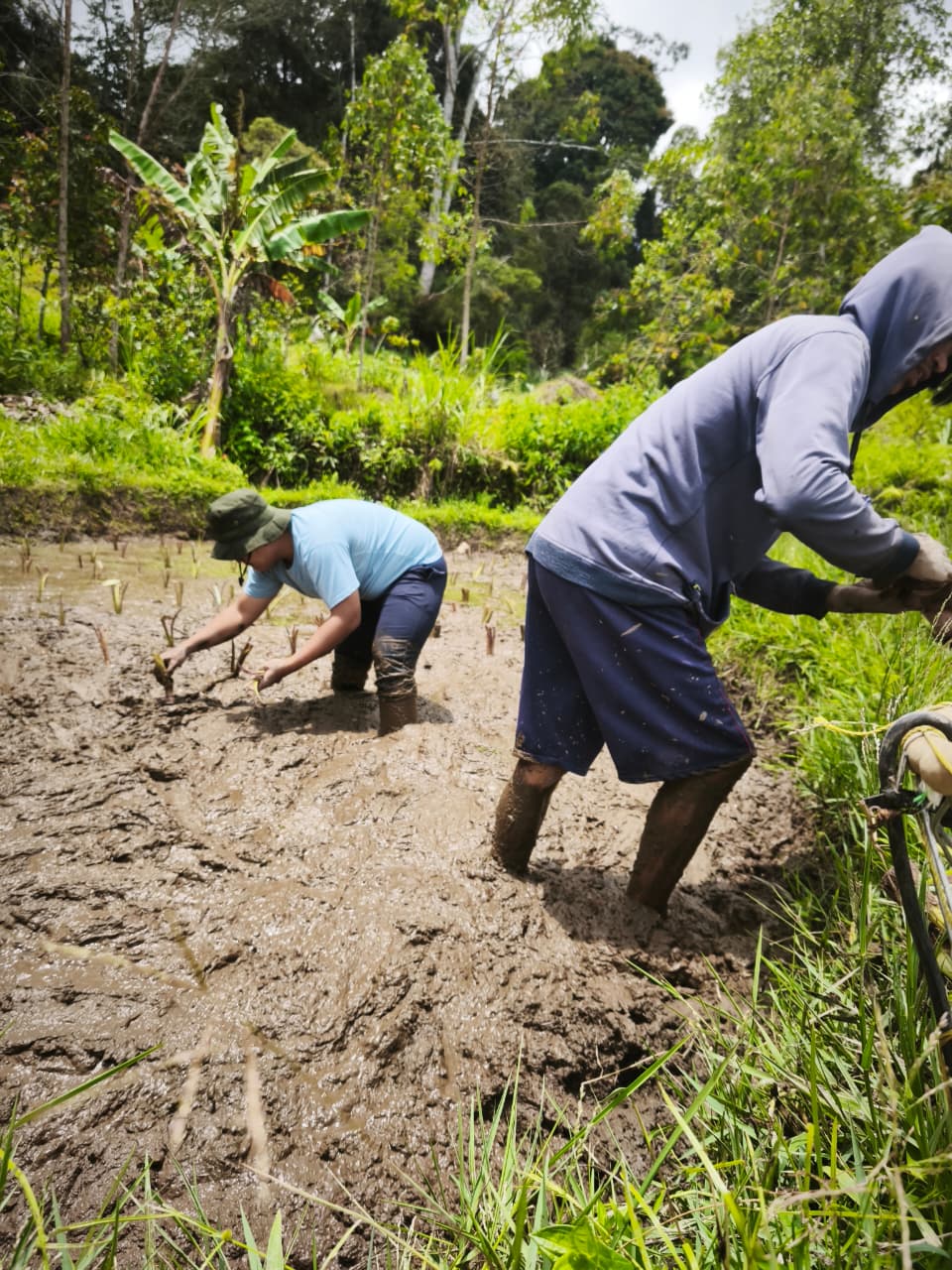

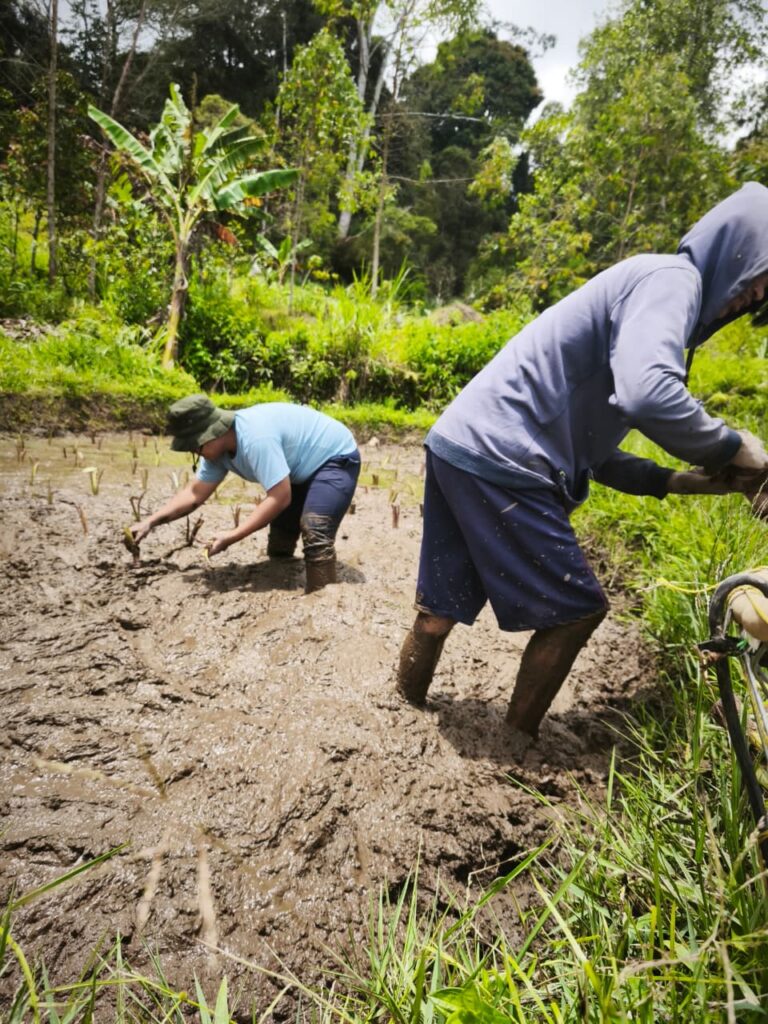
On 27 March 2026, a research team carried out a taro seedling planting activity in North Toraja Regency, South Sulawesi, as part of a research initiative entitled “Biodiversity of Toraja Taro: Genetic Characterization, Morphometry, Ethnobotany, and Nutritional Content as a Climate-Resilient Food Crop for Climate Change Adaptation and Stunting Mitigation.” The activity marked an important stage in establishing research materials for understanding the potential of local taro as a resilient and nutritious food resource. The main objective of the activity was to plant taro seedlings as part of the research process for characterizing the biodiversity of Toraja taro. Establishing the plants in their cultivation environment will allow researchers to observe their growth and development while collecting information relevant to genetic characteristics, morphology, ethnobotanical significance, and nutritional potential. These different dimensions are important for understanding not only the biological diversity of taro but also its potential contribution to local food systems.
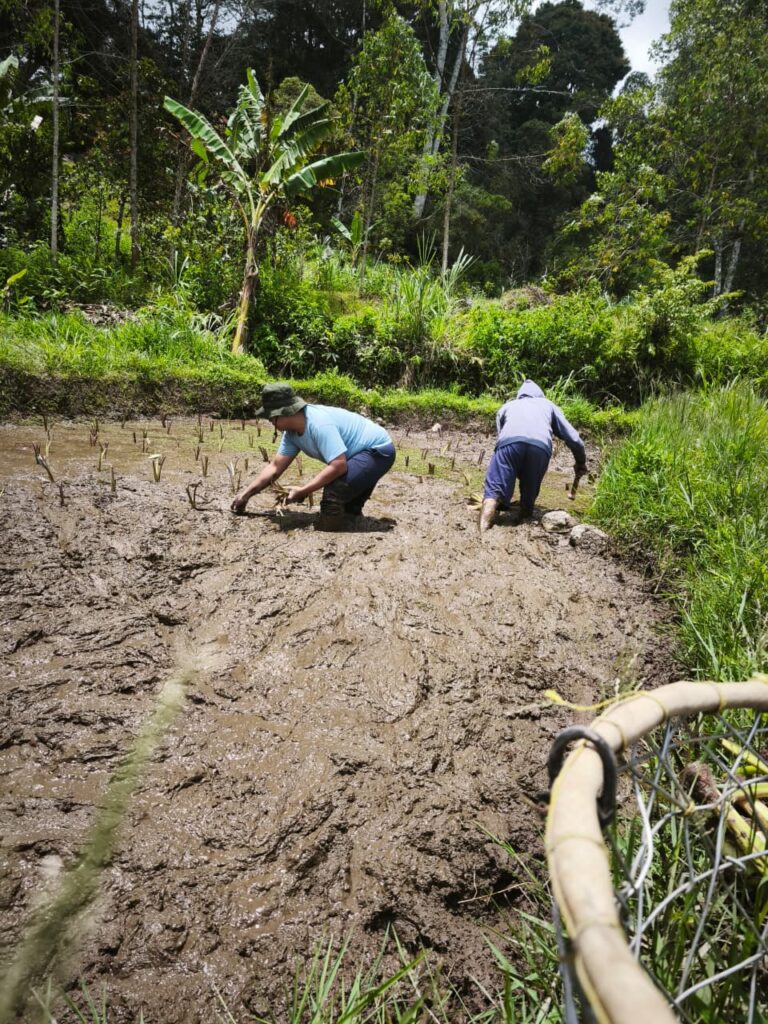
The activity involved 2 participants, consisting of 1 research lecturer and 1 researcher. Although the activity involved a small research team, careful field implementation was essential to ensure that the planted seedlings could serve as reliable research materials for subsequent observations and analyses. Direct involvement in the field also provides researchers with an opportunity to understand local cultivation conditions and the relationship between taro plants and their surrounding environment.
Taro has considerable potential as an alternative food crop, particularly in the context of climate change and food diversification. Local crop varieties may possess characteristics that enable them to adapt to specific environmental conditions. Studying these characteristics can help researchers identify valuable biological resources that may support more resilient agricultural systems in the future. At the same time, investigating the nutritional content of Toraja taro can provide valuable information regarding its potential role in improving dietary diversity and supporting efforts to address nutritional challenges, including stunting.
The activity contributes directly to Sustainable Development Goal (SDG) 1: No Poverty by supporting research and innovation that can strengthen local food resources and create opportunities for sustainable agricultural development. It also supports SDG 4: Quality Education through research-based learning and the development of scientific knowledge and field research capacity.
In addition, the activity contributes to SDG 15: Life on Land by promoting the documentation, conservation, and sustainable utilization of local plant biodiversity. Preserving knowledge and biological resources associated with traditional food crops is increasingly important as agricultural systems respond to environmental and climatic changes.
The activity also advances SDG 17: Partnerships for the Goals, emphasizing the importance of collaboration and knowledge exchange in addressing interconnected challenges involving biodiversity, food security, nutrition, and climate change.
Through the planting of Toraja taro seedlings, this research lays an important foundation for discovering the biological, cultural, and nutritional value of a local food resource. The findings are expected to contribute to sustainable food diversification, climate-resilient agriculture, biodiversity conservation, and improved community well-being.