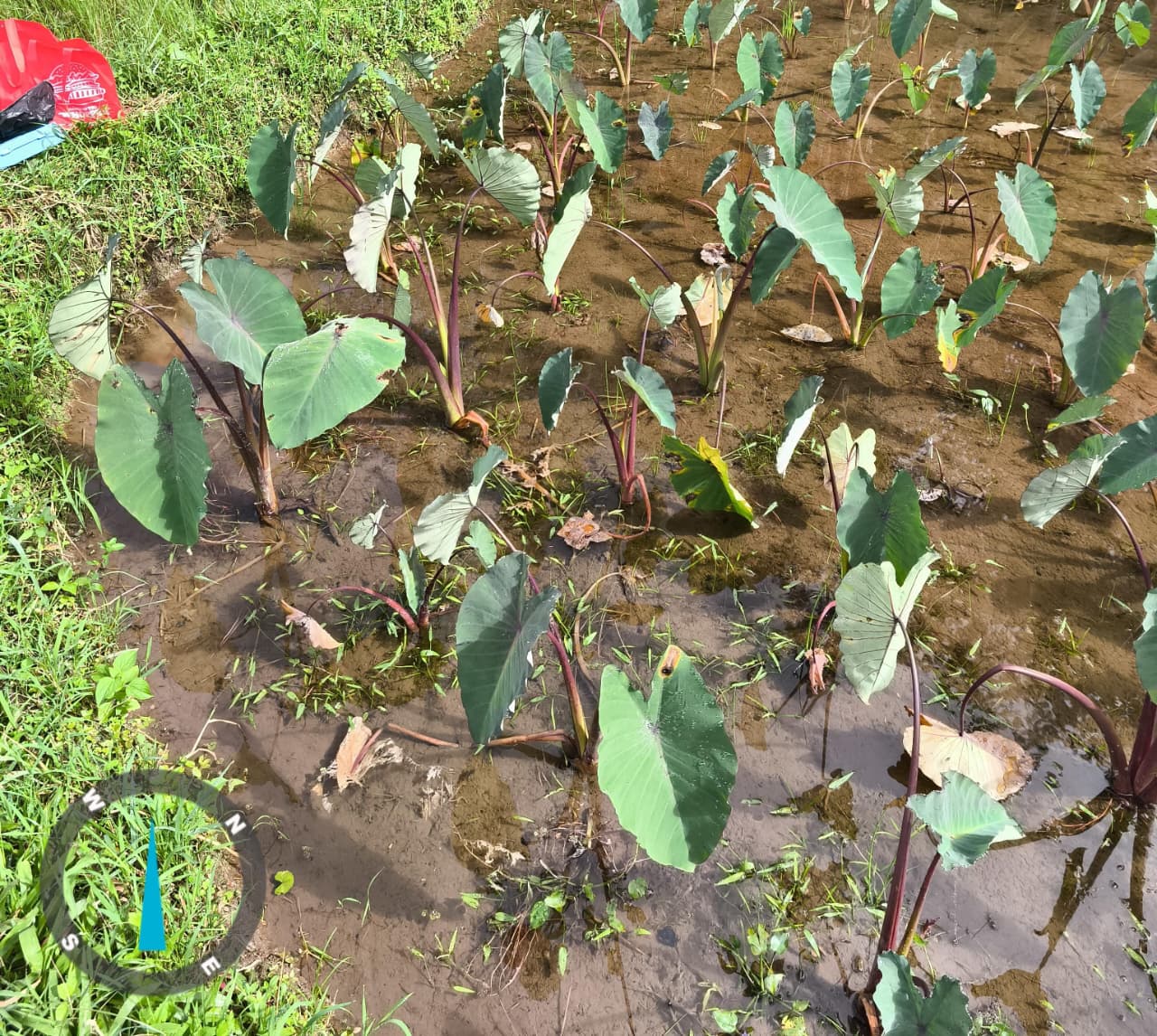

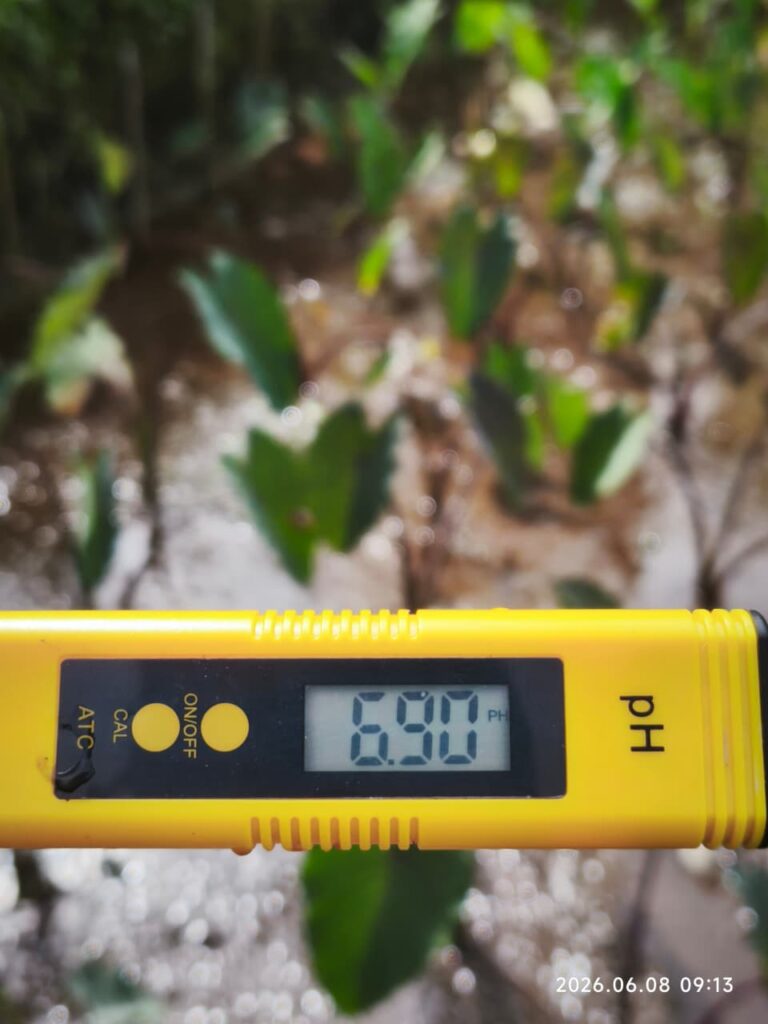
On 27 July 2026, a research team conducted an environmental data collection activity in taro cultivation areas in North Toraja Regency, South Sulawesi. The activity was part of the research project entitled “Biodiversity of Toraja Taro: Genetic Characterization, Morphometry, Ethnobotany, and Nutritional Content as a Climate-Resilient Food Crop for Climate Change Adaptation and Stunting Mitigation.” The field activity represented an important step in documenting the environmental conditions surrounding taro cultivation and generating scientific information to support the broader research objectives.
The primary objective of the activity was to collect environmental data from taro cultivation sites in North Toraja. Environmental information is essential for understanding the conditions in which local taro varieties grow and develop. By documenting the characteristics of the cultivation environment, researchers can establish a stronger relationship between environmental factors and the biological characteristics of taro plants. These observations will complement genetic, morphological, ethnobotanical, and nutritional analyses conducted as part of the research. The activity involved 2 participants, consisting of 1 research lecturer and 1 researcher. Although conducted by a small research team, the field activity was strategically important because accurate environmental observations provide a foundation for interpreting subsequent research findings. Direct field data collection also enables researchers to understand taro cultivation within its local context rather than relying solely on laboratory or secondary information.
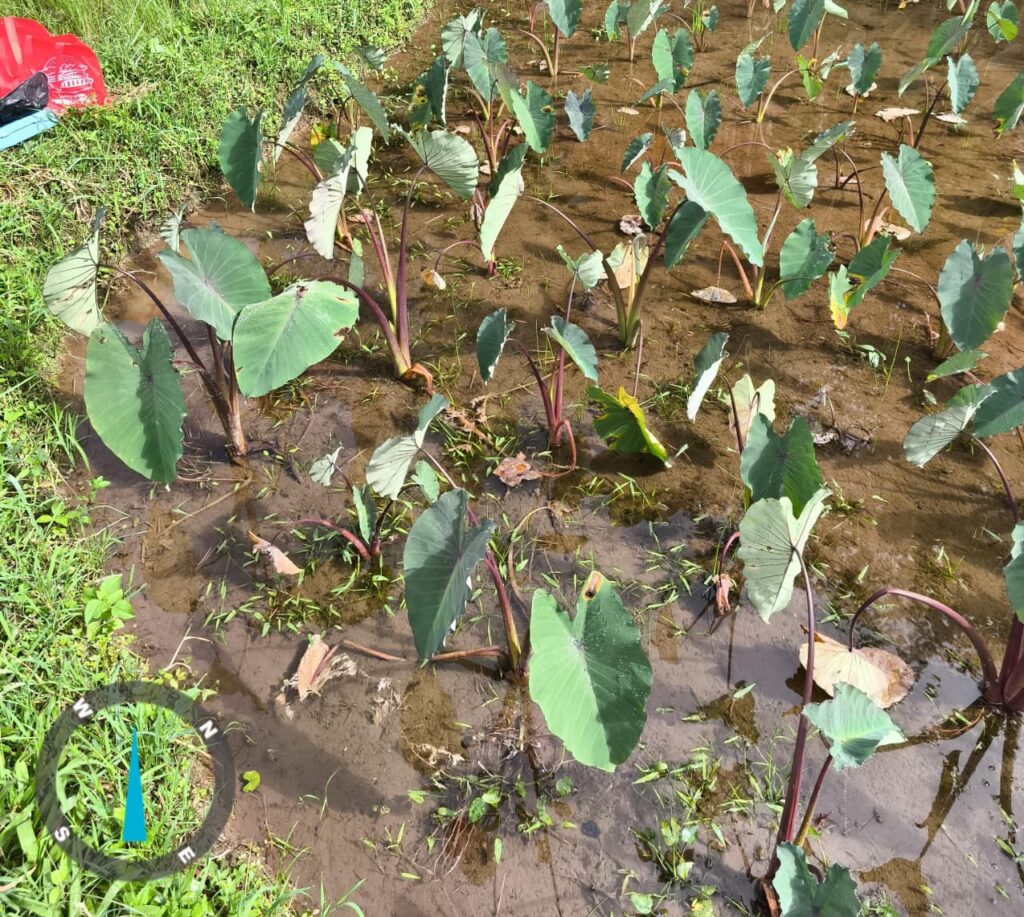
Taro is particularly important to this research because it represents a potential food resource that can contribute to diversification of local food systems. Understanding the environmental conditions associated with its cultivation may help identify characteristics that support its resilience under changing climatic conditions. The information generated from the research is expected to contribute to a better understanding of the potential of local taro resources as part of strategies for strengthening food security and adapting agriculture to environmental change.
The activity directly supports Sustainable Development Goal (SDG) 1: No Poverty by contributing to research that may strengthen local food resources and create opportunities for sustainable agricultural development. It also supports SDG 3: Good Health and Well-Being, particularly through the research focus on nutritional potential and its relevance to stunting mitigation. Furthermore, the involvement of researchers in systematic field observation contributes to SDG 4: Quality Education by strengthening scientific knowledge, research capacity, and practical field-based learning.
The activity also reflects SDG 17: Partnerships for the Goals, as research collaboration and knowledge exchange are essential for addressing complex challenges related to food security, climate change, biodiversity, and nutrition. Through systematic environmental data collection, the research team is building an evidence base that can connect local agricultural resources with broader scientific and development objectives.
The field activity in North Toraja therefore represents more than routine data collection. It is an important foundation for understanding the relationship between taro biodiversity, environmental conditions, climate resilience, and nutritional potential. The resulting knowledge is expected to support the recognition and sustainable utilization of Toraja taro as a valuable local food resource for future generations.