
Japan, October 2025 — How do communities respond when their forests, livelihoods, and territories are transformed by changing policies and competing interests? For Prof. Dr. Forest. Muhammad Alif K. Sahide, S.Hut., M.Si., the answer can often be found in the everyday actions of people living at the forest frontier.
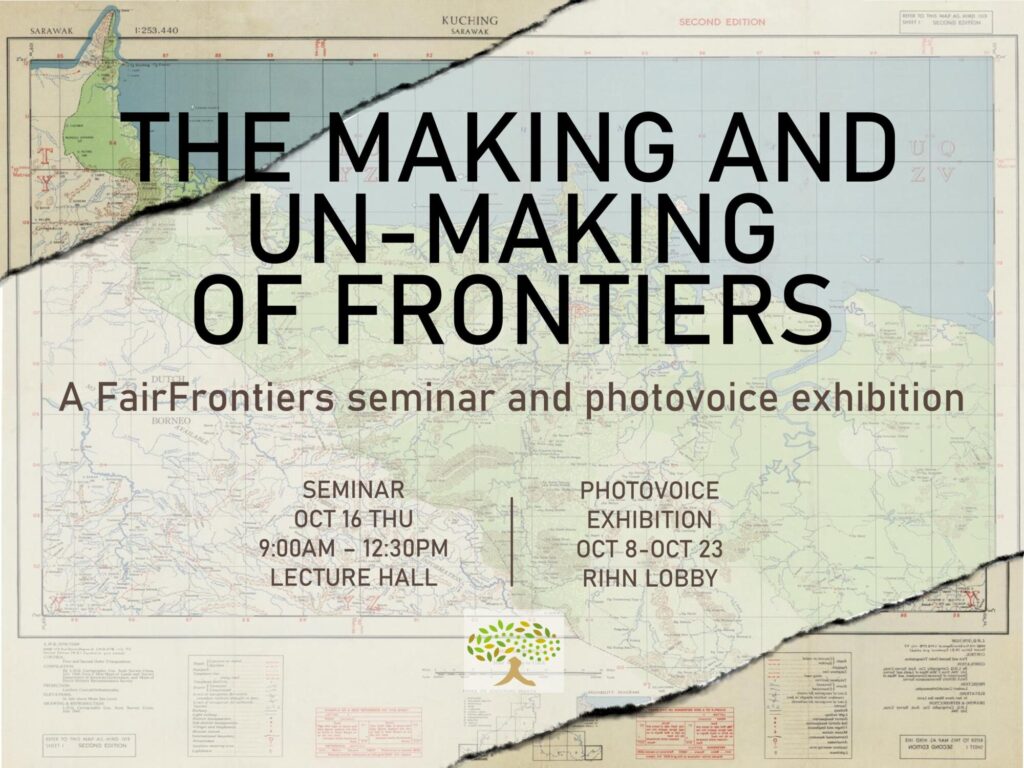
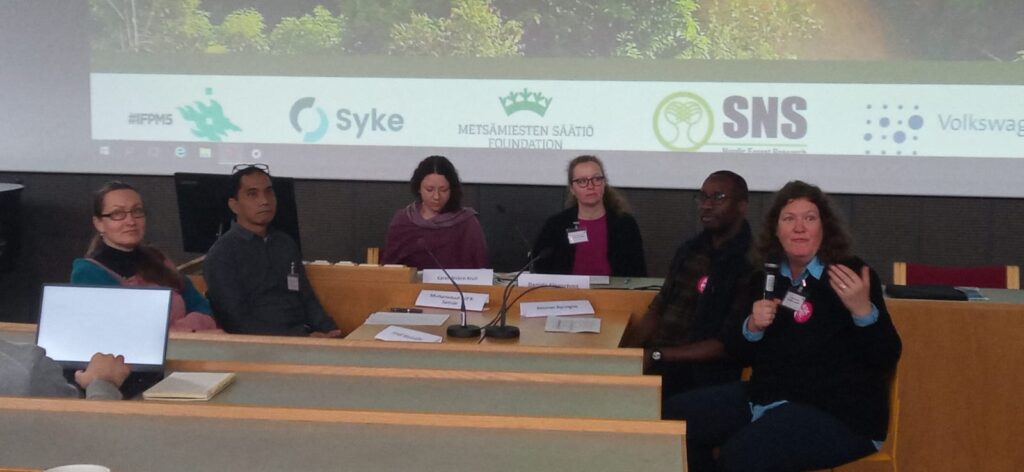
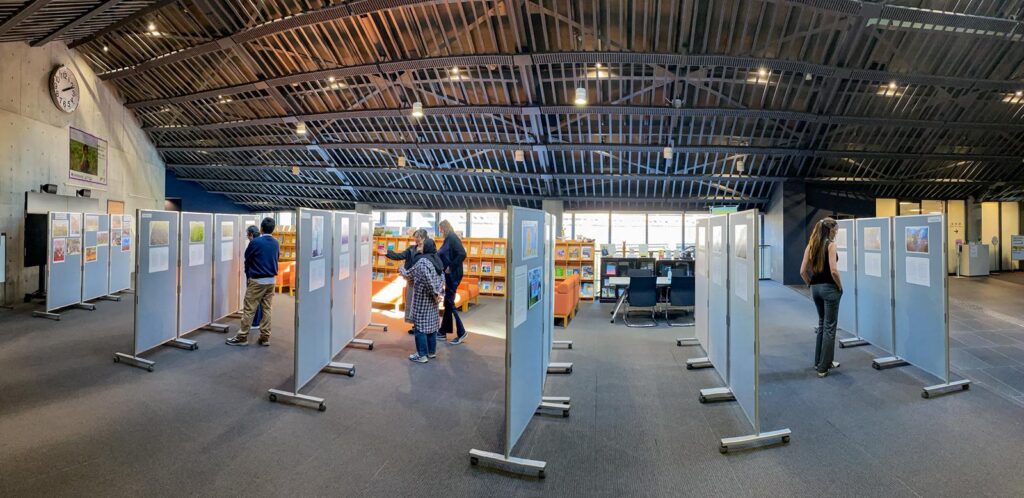
Prof. Alif brought this perspective to the international stage through the FairFrontiers Project public seminar, “The Making and Un-Making of Frontiers,” held by the Research Institute for Humanity and Nature (RIHN), Japan. The seminar brought together researchers working across Southeast Asia and Central Africa to discuss how forest-agriculture frontiers are created, transformed, and contested, as well as possibilities for more equitable development pathways.
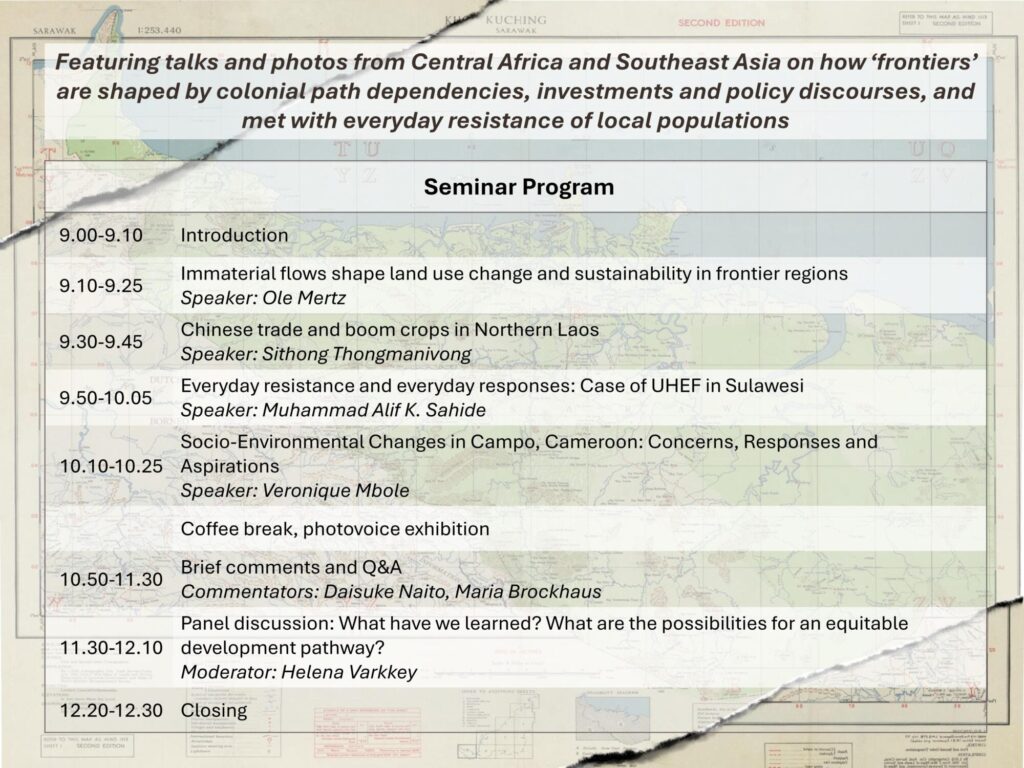
Representing Universitas Hasanuddin and the Forest and Society Research Group (FSRG), Prof. Alif presented “Everyday resistance and everyday responses: Case of UHEF in Sulawesi.” His presentation brought attention to the experiences and responses of communities living within a landscape shaped by state interests and changing forest boundaries.
The presentation reflects the broader FairFrontiers research agenda, which examines how the transformation of swidden landscapes into commodity-driven agriculture is shaped by political narratives, institutional arrangements, power relations, and local agency. The Indonesia component of the project is led by Prof. Alif at the Faculty of Forestry, Universitas Hasanuddin, in collaboration with research and community partners.
Rather than viewing frontier communities simply as recipients of environmental and development policies, FairFrontiers examines how people actively respond to changing conditions. In Sulawesi, this includes paying attention to everyday forms of resistance, adaptation, and negotiation that may not always appear in formal policy processes.
Prof. Alif’s contribution also connects to his wider work on forest governance, political ecology, and questions of power and equity in Indonesia’s forest landscapes. His involvement in FairFrontiers has positioned research from Sulawesi within a broader international conversation on who shapes forest frontiers, whose interests are prioritized, and what equitable pathways for transformation might look like.
The seminar concluded with a panel discussion on what researchers have learned from different frontier landscapes and the possibilities for building more equitable development pathways.
Through FairFrontiers, Prof. Alif and the FSRG continue to connect research from Sulawesi with wider international debates, while bringing local experiences and community perspectives into conversations about the future of forests, livelihoods, and land.