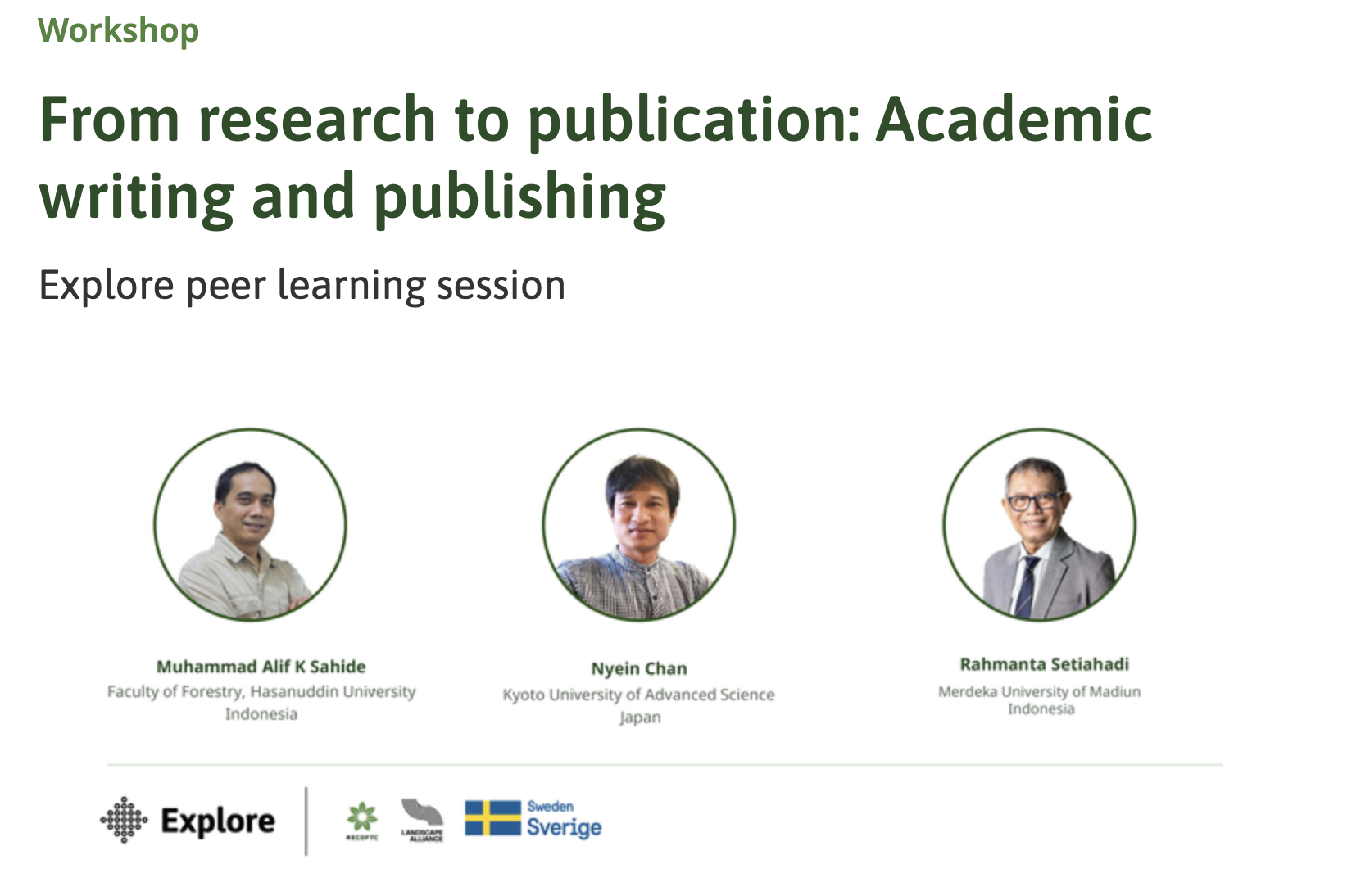

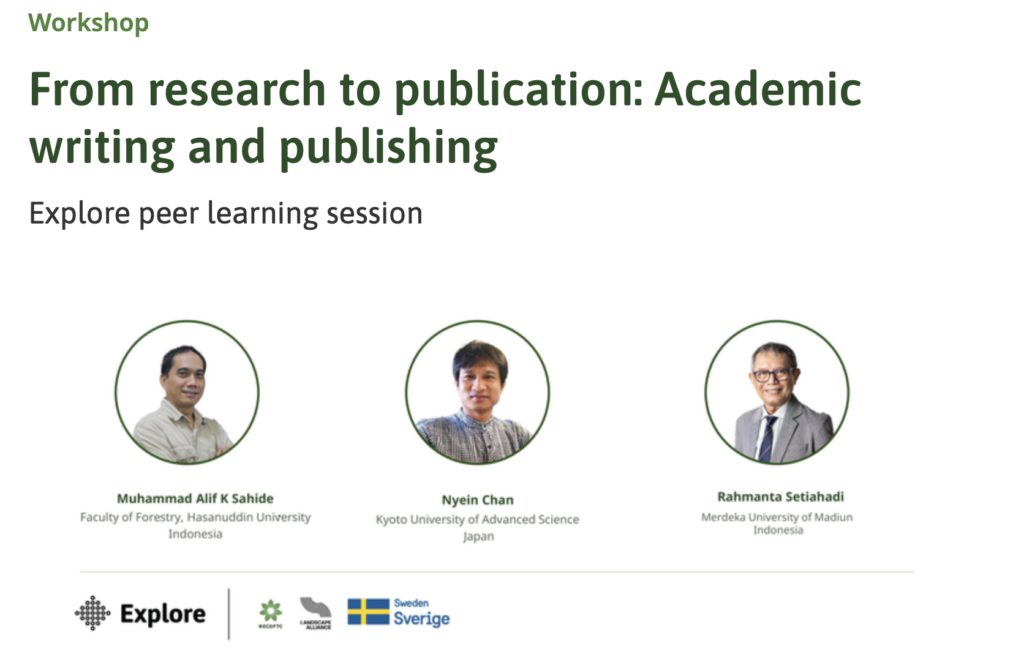
Zoom, Webinar, September 2026 | Academic publishing comes with rejection, revision and uncertainty. For researchers beginning their publication journey, these challenges can often feel discouraging. But according to Prof. Dr. forest. Muhammad Alif K Sahide, rejection should not be seen as a reason to stop.
Speaking during a peer learning session organised by the Explore Secretariat at RECOFTC on 3rd September 2026, Prof. Alif encouraged researchers across the Explore network to see rejection as a normal part of the academic journey.
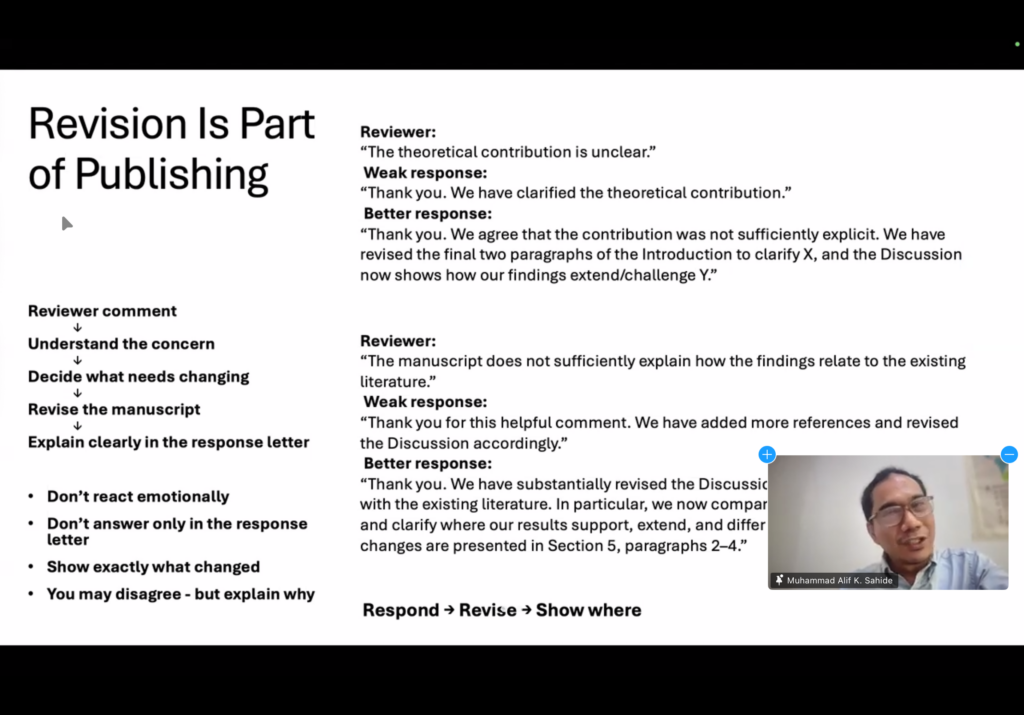
“We don’t need to be afraid of rejection. Rejection is part of the academic journey,” he shared, drawing on his extensive experience in peer-reviewed academic publishing.
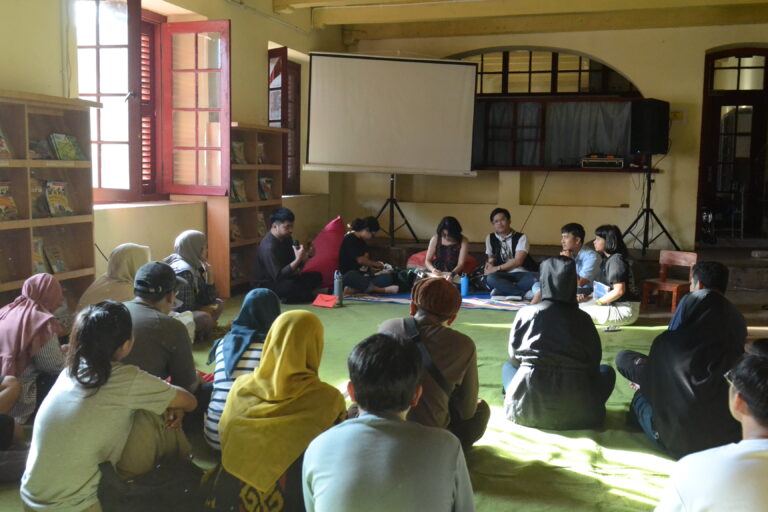
The session brought together 30 principal investigators, co-principal investigators, researchers, graduate students and early-career researchers, including Pamula Mita Andary, a researcher of FSRG and also Nur Fadila Sunardi, master student as well as student researcher of FSRG, involved in Explore-supported projects. The session was organised in response to an Explore-wide needs assessment that identified academic writing and publication as a priority area for capacity development.
As Explore research moves from data collection and analysis toward synthesising findings and communicating research outcomes, publishing in peer-reviewed journals provides an important pathway for sharing research on forest landscape governance with wider academic, policy and practice communities.
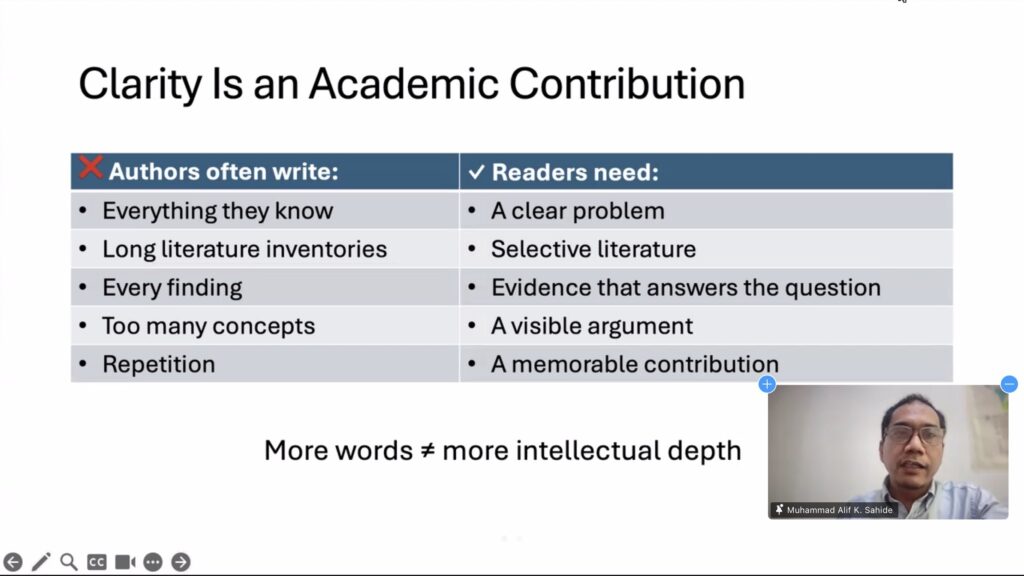
Prof. Alif also challenged a common assumption about academic writing: that longer papers necessarily demonstrate deeper thinking. He emphasised that more words do not automatically mean more intellectual depth. Instead, effective academic writing should communicate ideas clearly, develop a strong argument and ensure that every part of the manuscript contributes to the central message.
His reflections encouraged participants to think beyond simply producing longer manuscripts and instead focus on the quality, clarity and contribution of their research.
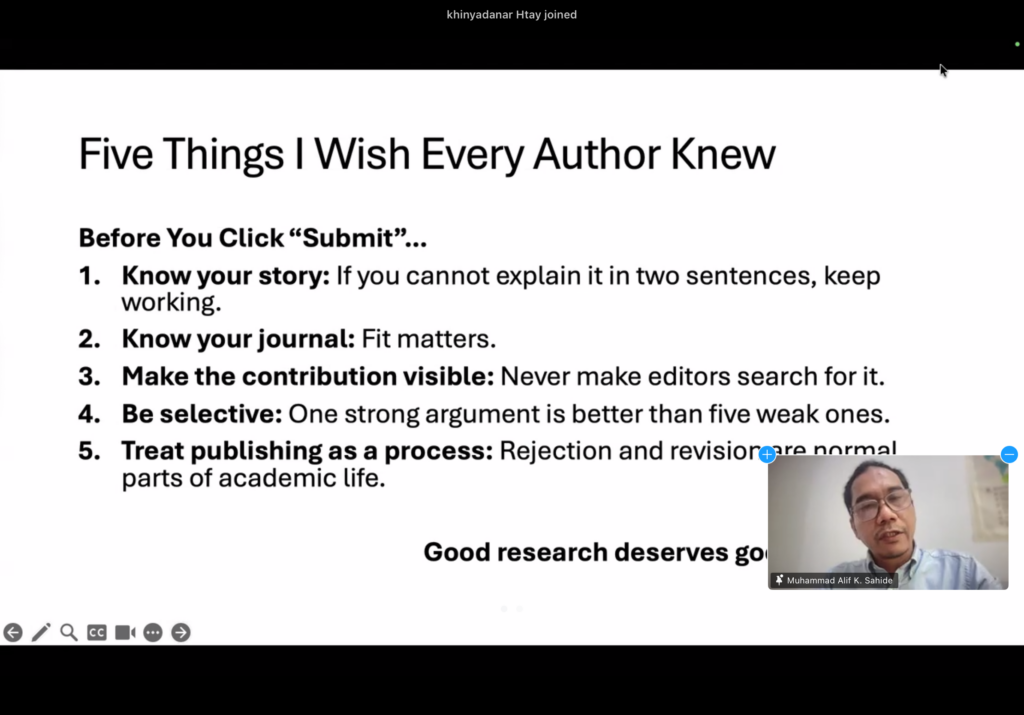
The session covered practical aspects of the publication process, including preparing manuscripts, selecting appropriate journals, managing co-authorship, responding to reviewers and dealing with common publication challenges. Prof. Alif’s contribution connected these practical issues with the realities of academic publishing, where manuscripts may go through several rounds of revision or may not be accepted at all.
For early-career researchers and graduate students, this perspective offered an important reminder that publication is not a straightforward path from manuscript to acceptance. Rejection, feedback and revision can instead become opportunities to strengthen both the paper and the researcher’s skills.
The peer learning session also supported knowledge exchange across the Explore network, allowing researchers to share experiences and learn from one another as teams move toward developing publications from their research findings.
Through initiatives such as this, the Explore Secretariat aims to strengthen researchers’ confidence and practical capacity to prepare, submit and revise manuscripts, while encouraging research teams to identify publication opportunities and develop strategic publication plans for the remainder of the programme.
Prof. Alif’s message was simple but important: academic publishing is a process of learning, and rejection is not the end of the journey.
The session represents a strategic contribution to the Sustainable Development Goals (SDGs), particularly SDG 4 (Quality Education) and SDG 16 (Peace, Justice and Strong Institutions). By strengthening researchers’ skills in academic writing, publishing and knowledge communication, the session advances SDG 4 through continuous learning, professional development and peer-to-peer knowledge exchange. At the same time, the production and dissemination of credible research evidence supports SDG 16 by contributing to more informed, transparent and accountable environmental governance. For the Explore network, strengthening researchers’ ability to communicate evidence on forest landscapes is particularly important in connecting research with policy and institutional decision-making. Through collaboration and shared learning, the session helps ensure that knowledge generated through research can contribute to more effective and evidence-informed approaches to forest landscape governance