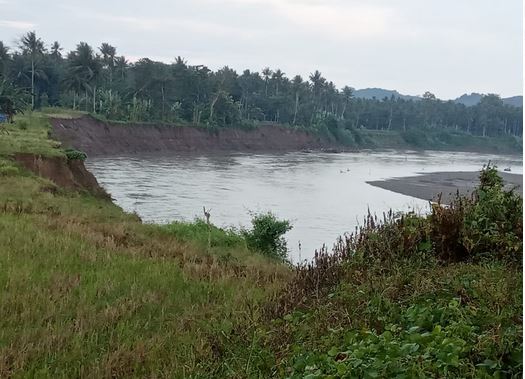
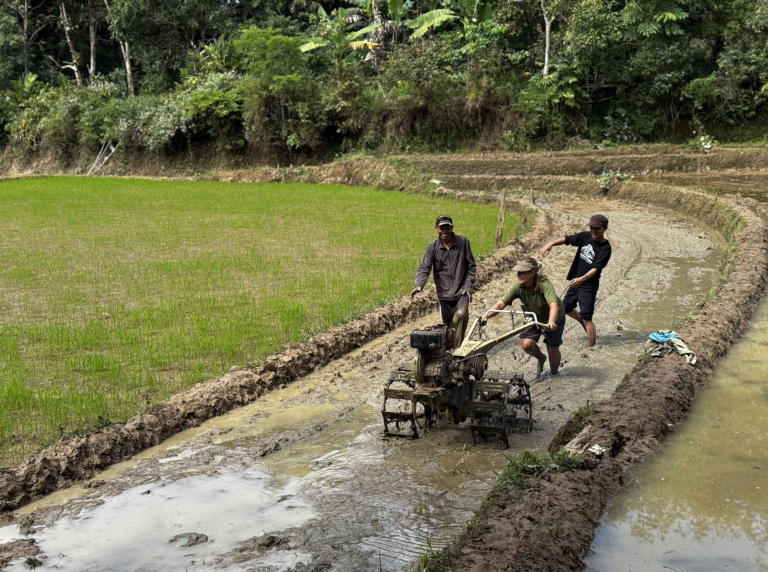
During the student exchange program in Khon Kaen, Thailand, one of the main activities we conducted was visiting a village to learn directly about rural life in Thailand through field observation and several conversations with local residents. The village we visited is called Ban Kham, which is inhabited by around 35 families. Most of the villagers still depend on agriculture and whisky production as their main sources of livelihood. During this visit, I was particularly interested in observing two topics: migration and the condition of youth in the village. I chose these two themes because they are personally interesting to me, especially since I want to understand how these phenomena occur in rural Thailand and compare them with situations that are often found in rural areas in Indonesia.
From the perspective of migration, the experiences shared by local residents who had the opportunity to talk with us show that population mobility in Ban Kham village follows various patterns. Not all people living in this village are native residents. Some of them moved to the village after getting married and followed their spouse or their spouse’s family. This shows that marriage can be one of the factors influencing residential mobility. In addition, migration does not always occur in a permanent form. Several residents explained that they had previously worked in the city for a certain period of time but later decided to return to the village. The decision to return is often influenced by various personal and family considerations.
For example, one resident explained that she chose to return to the village because both of her parents were sick and needed care. In situations like this, the village is sometimes seen as a place where stronger family support can be found compared to life in the city. In addition, some residents also mentioned that the cost of living in the village is relatively lower than in the city. Although the income in villages and cities cannot easily be compared and cities are often considered to offer greater economic opportunities, not everyone succeeds in achieving a better life there. Therefore, some people feel that staying in the village can still provide a certain level of stability, especially if they own land that can be used for farming.
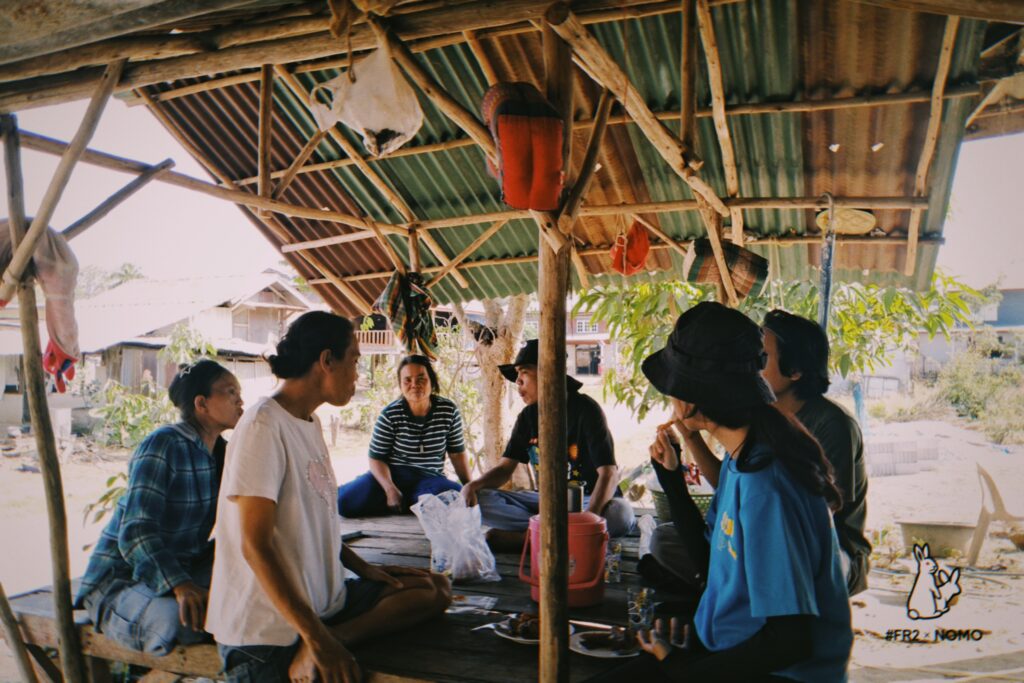
Meanwhile, when looking at the condition of the younger generation in this village, the number of young people who still live in the village is relatively very small, and the population is dominated by older adults and elderly people. In several conversations with local residents, the term “young people” is sometimes used to refer to individuals who are around 40 years old or older, and in some cases 40 years old is considered the youngest age among people who still live in the village. This indicates that most of the younger generation of working age no longer live in the village. Many of them choose to pursue education and work in cities such as Bangkok or the center of Khon Khaen, as these places are considered to offer better economic opportunities.
In addition, there is also a shift in aspirations between generations regarding occupations and the
future. Some parents do not expect their children to continue working as farmers. Instead, they hope their children can achieve a better life, for example through jobs in the city. This shows that cities are often perceived as places that offer greater opportunities for social and economic mobility compared to rural areas.
When compared with the situation in Indonesia, this phenomenon shows several similarities, particularly in migration patterns. In many villages in Indonesia, young people also tend to leave their villages to look for work in cities due to the limited economic opportunities in rural areas. However, on the other hand, villages still play an important role as a place to return for some people, especially because of family ties and land ownership.
Through this observation, it can be seen that migration and the condition of youth in Ban Kham reflect social changes that are also occurring in many other rural areas. For me, this experience provides a new and broader perspective on how rural communities in different countries face similar challenges,particularly related to population mobility and changing aspirations among the younger generation.
*this fieldnote was written by Firstly Christynova