Makassar, 23 Agustus 2026/FoNE-RG-Red rice is already valued as a nutritious staple, but some of its potential may be lost during post-harvest processing. What if a simple step—allowing the grain to germinate before milling—could help improve the final product? Research from Hasanuddin University explored this possibility by looking at how temperature and humidity shape the germination process and the quality of red rice.
The scientific article behind this popular science story is titled “Quality improvement of post-harvest red rice through grain germination.” It was written by M. R. R. Amir S., A. N. F. Rahman, and A. Syarifuddin, and published in IOP Conference Series: Earth and Environmental Science, Volume 486, Article 012050. The publisher is IOP Publishing Ltd, and the article was published on 26 May 2020. The study focused on finding suitable germination conditions for producing better-quality red rice.
Why germinate rice at all? During soaking and germination, water enters the grain and activates biological processes that prepare the seed for growth. The article explains that germinated rice can contain important components such as gamma-aminobutyric acid (GABA), dietary fiber, vitamin E, niacin, lysine, B vitamins, and magnesium. This makes germination interesting not only as an agricultural process, but also as a food-processing strategy.
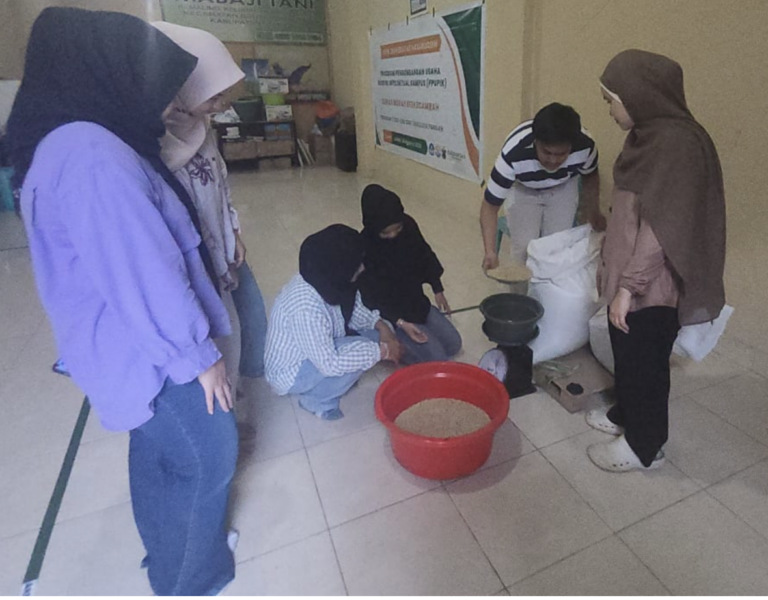
In the experiment, freshly harvested local red rice from Sidenreng Rappang, South Sulawesi, was soaked in water for 48 hours. The grains were then germinated at 20°C or 30°C under relative humidity levels of 70%, 80%, and 90%. Another batch was kept under uncontrolled room conditions. Germination continued until the sprouts reached about one centimeter.
The results were clear: warmer and more humid conditions generally shortened germination time. At 30°C and 90% relative humidity, the grain reached the target sprout length in 48 hours. The same germination time was recorded under uncontrolled room conditions, while treatments at 20°C and lower humidity required up to 76 hours.
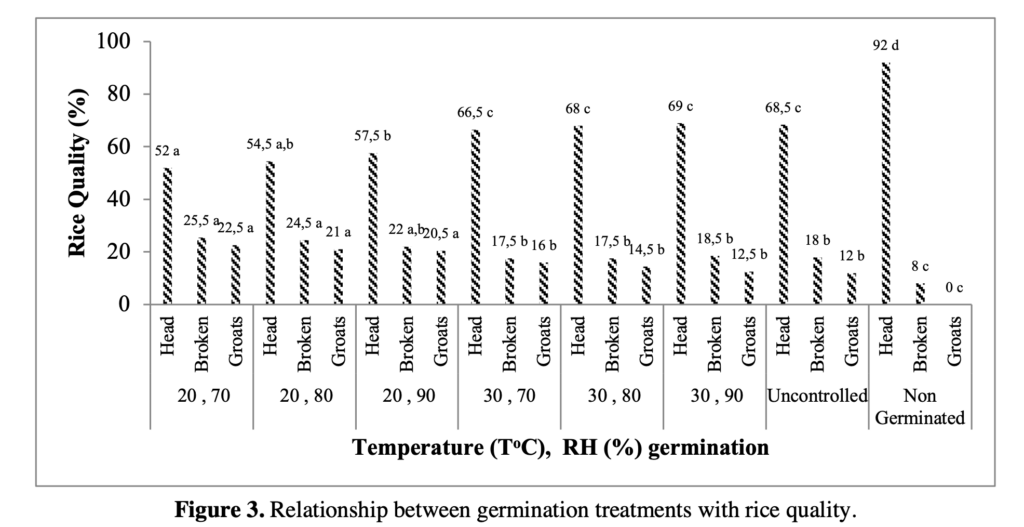
However, germination also affected milling yield. Non-germinated red rice had the highest yield at 92%. Among germinated samples, the highest yield was 71% under uncontrolled conditions, while the lowest was 53% at 20°C and 70% humidity. Longer germination was associated with more fragile grain structure, which increased the risk of breakage during milling. The study ultimately identified 30°C and 90% humidity as the best controlled germination treatment.
These findings connect directly with Sustainable Development Goal 3 (SDG 3): Good Health and Well-Being. Improving the processing of staple foods can support the development of foods with better nutritional potential while maintaining acceptable quality. Because rice is consumed so widely, even modest improvements in how it is processed can matter.
The message is simple: better rice does not always require a new crop. Sometimes, it requires a better understanding of what happens after harvest. By controlling temperature and humidity during germination, food science can help turn familiar red rice into a more carefully managed and potentially more nutritious product.
Reference: 10.1088/1755-1315/486/1/012050
Contact Person: +6282192267099
Andi Nur Faidah Rahman
andinurfaidahrahman@unhas.ac.id