Makassar, 23 Agustus 2026/FoNE-RG-Rice is more than a staple food in Indonesia; it is part of everyday life. Yet the journey from grain to the dinner table can reduce both quality and nutritional value. A study from Hasanuddin University shows that a simple biological process—germination—may help improve rice, but only when temperature, humidity, and processing time are carefully managed.
The scientific article behind this story is titled “Effect of Temperature and Humidity to the Yield and Quality of Germinated Rice (Oriza sativa L) Produced.” It was written by Nikmah, A. N. F. Rahman, and J. Langkong and published in IOP Conference Series: Earth and Environmental Science, Volume 486, Article 012057. The publisher is IOP Publishing Ltd, and the article was published on 26 May 2020. The research examined how different temperature and humidity conditions influence the germination time, milling yield, and physical quality of rice.
Why germinate rice in the first place? During germination, water enters the grain and activates enzymes that wake the seed from dormancy. The process can also change nutritional and functional components. The article notes that germinated rice may contain valuable compounds such as gamma-aminobutyric acid (GABA), dietary fiber, vitamin E, B vitamins, niacin, lysine, and magnesium.
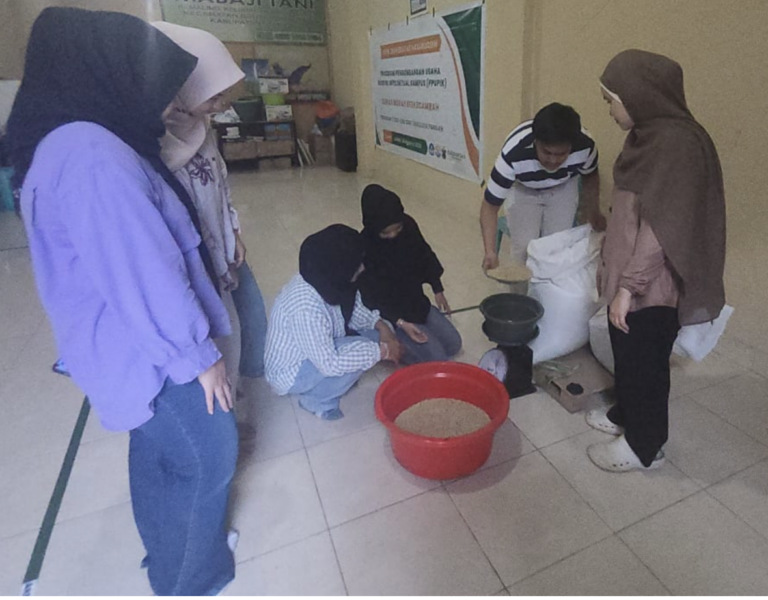
In the experiment, freshly harvested rice grain from Sidrap, South Sulawesi, was soaked and then germinated at 20°C or 30°C under relative humidity levels of 70%, 80%, and 90%. A separate batch was germinated under uncontrolled room conditions. The researchers waited until the sprouts reached about one centimeter before drying and milling the grain.
Temperature and humidity clearly influenced how quickly the grain sprouted. Under room conditions, germination took only 28 hours. At 30°C and 90% humidity, it took 30 hours, while the slowest treatment—20°C and 70% humidity—required 44 hours. In general, higher temperature and humidity shortened germination time.
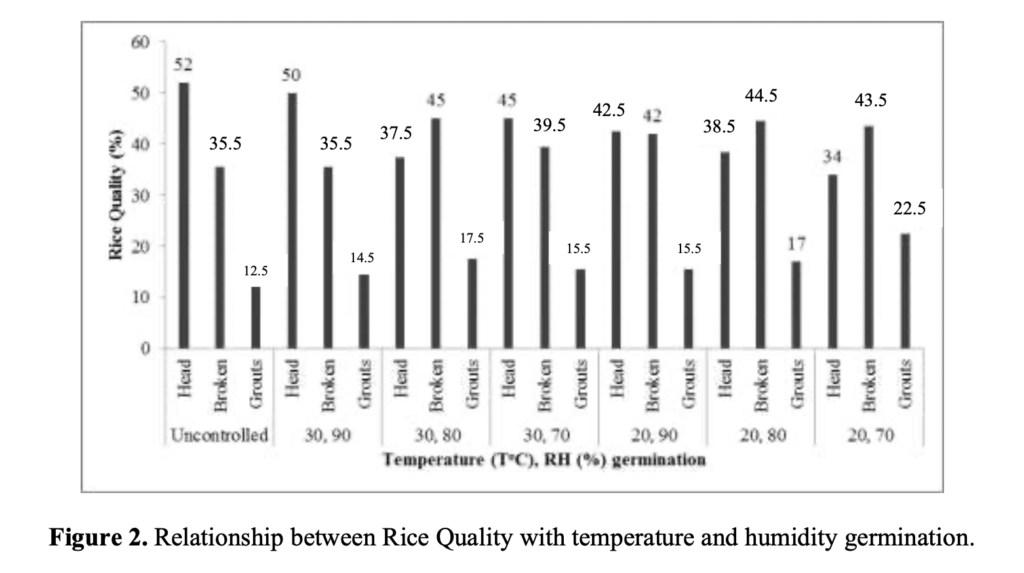
But faster was not automatically better. Milling yield and grain quality also mattered. The highest milling yield, 86%, was obtained under uncontrolled room conditions. The same treatment produced the highest proportion of head rice, at 52%. Longer germination tended to reduce yield and increase broken grains because the developing seed structure became more fragile during milling.
The researchers ultimately identified room temperature and humidity as the best conditions for producing good-quality germinated rice. Their conclusion also highlights an important lesson for food processing: controlling post-harvest conditions can be just as important as growing the crop itself.
This research connects directly with Sustainable Development Goal 3 (SDG 3): Good Health and Well-Being. Improving the quality of staple foods and exploring processing methods that can preserve or enhance nutritional components may contribute to healthier diets. Because rice is eaten so widely, even small improvements in its processing can potentially have a broad impact.
The message is simple: germination is more than watching a seed sprout. With the right conditions, it can become a practical food-processing strategy that brings science closer to the everyday bowl of rice.
Reference: 10.1088/1755-1315/486/1/012057
Contact Person: +6282192267099
Andi Nur Faidah Rahman
andinurfaidahrahman@unhas.ac.id