Makassar, 23 Agustus 2026/FoNE-RG-Red rice is already known as a nutritious staple, but what happens when the grain is allowed to sprout before it reaches our plate? A study from Hasanuddin University shows that something as simple as temperature and humidity can change both the speed of germination and the nutritional profile of red rice.
The scientific article behind this story is titled “Effect of Temperature and Relative Humidity on Chemical Analysis of Red Rice Germination.” It was written by A. N. F. Rahman, A. Syarifuddin, and Amir M. R. R. S., and published in IOP Conference Series: Earth and Environmental Science, Volume 807, Article 022060, by IOP Publishing Ltd on 15 July 2021. The study explored how different temperatures and levels of relative humidity affect germination time and several nutrients in red rice.
Why study germination? When a seed begins to sprout, it becomes biologically active. Enzymes start working, stored nutrients are used for growth, and the chemical composition of the grain begins to shift. Red rice itself contains protein, iron, zinc, fiber, and natural pigments called anthocyanins. Germinated rice is also widely studied as a functional food because the sprouting process can alter vitamins, minerals, dietary fiber, and antioxidant-related compounds.
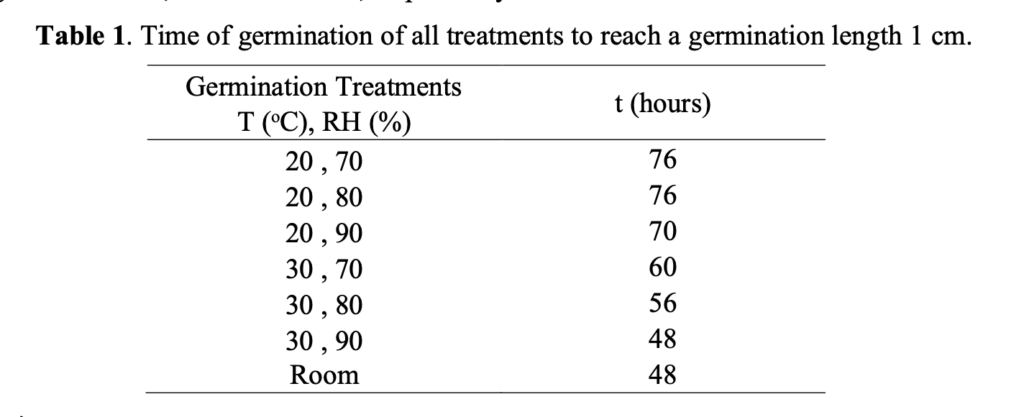
In the experiment, dry grain was soaked for 48 hours and then germinated under different combinations of temperature and relative humidity. The researchers compared room conditions with 20°C and 30°C, combined with humidity levels up to 90%. Higher temperature and humidity made the grains sprout faster. At 30°C and 90% relative humidity, germination reached a 1-centimeter sprout in about 48 hours, while at 20°C and lower humidity it took much longer.
The nutritional changes were not all in one direction. Vitamin B6 increased strongly in all germinated samples, reaching almost three times the level found in non-germinated rice. Ash content also increased, which the authors linked to changes in mineral availability during soaking and germination. However, vitamin B1, protein, iron, magnesium, and manganese tended to decrease. This shows that germination is not simply a process that “adds nutrients”; it reshapes the nutritional balance of the grain.
Another important finding was that all germinated treatments still showed strong antioxidant activity. In the study, their IC50 values remained within the range classified as strong antioxidant activity, even though the values changed across treatments.
These findings connect directly with Sustainable Development Goal 3 (SDG 3): Good Health and Well-Being. Improving the nutritional quality of everyday staple foods is one practical pathway toward healthier diets. Research like this helps explain how processing conditions can be adjusted to retain or enhance desirable nutritional characteristics.
The lesson is clear: a grain of rice is not nutritionally static. Once germination begins, temperature and humidity become powerful tools that can shape what the grain ultimately offers. By understanding these changes, food science can help turn a familiar local staple into a more carefully designed functional food.
Reference: 10.1088/1755-1315/807/2/022060
Contact Person: +6282192267099
Andi Nur Faidah Rahman
andinurfaidahrahman@unhas.ac.id