
Rice is more than a daily staple. For millions of people, it is one of the main sources of energy. But not all rice offers the same nutritional value, and simple processing methods may change what ends up on our plates. A recent study from Indonesia explored whether germination—or sprouting—could improve the quality of red rice while keeping it acceptable for consumers.
The scientific article behind this popular science story is titled “Assessing the Effects of Diverse Germination Methods on Red Rice Quality: A Physicochemical and Sensory Approach.” It was published in Current Research in Nutrition and Food Science, by Enviro Research Publishers, in April 2025, Volume 13, Issue 1, pages 258–270. The study was conducted by Andi Nur Faidah Rahman and colleagues and examined different ways of germinating red rice and unhusked dry rice using either water or chitosan.
Why germinate rice at all? Germination wakes a seed from its dormant state. Once water enters the grain, enzymes become active and begin breaking down stored nutrients to support new growth. During this process, the nutritional profile of the grain can also change.
One of the most striking findings involved gamma-aminobutyric acid, better known as GABA. In ungerminated rice, GABA was measured at 21.97 mg/kg. When unhusked dry rice was germinated with chitosan, the level rose to 231.96 mg/kg—more than ten times higher. Chitosan-treated red rice also showed the highest phosphorus and magnesium levels, reaching 238.71 mg/100 g and 112.28 mg/100 g, respectively.
The study also found that germination affected rice quality after milling. Red rice germinated with water produced the highest milled yield at 87.21% and the highest proportion of whole grains at 87.63%. In contrast, germinating unhusked rice for a longer soaking period increased grain damage and reduced milling quality.
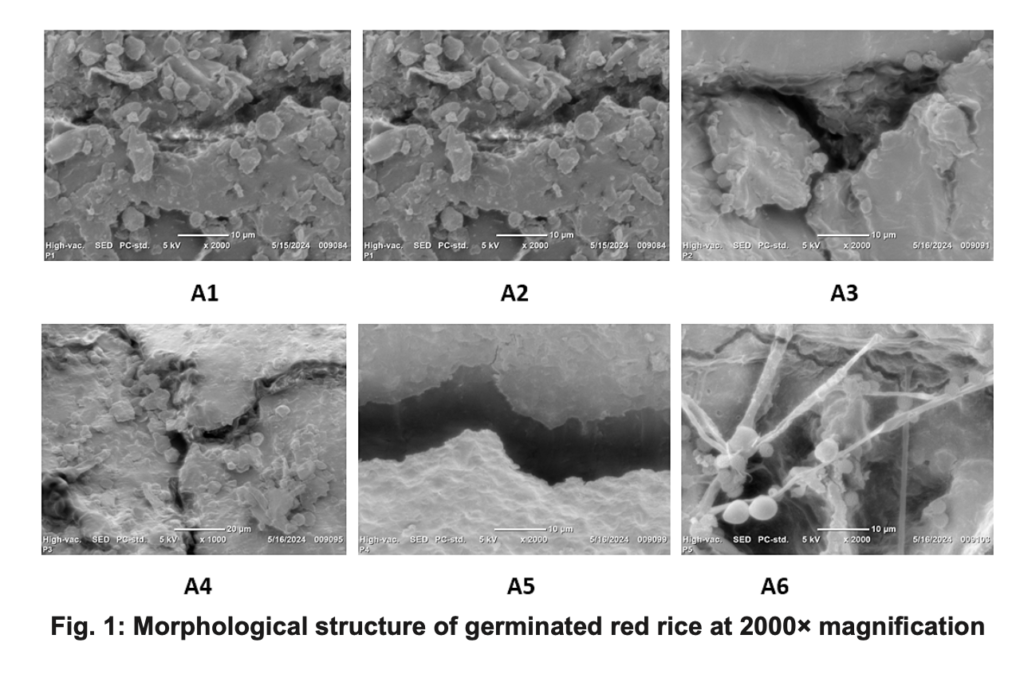
Not every change was beneficial. Some germination treatments reduced antioxidant activity or altered the grain structure, showing that sprouting is not simply a “more is better” process. The method, soaking conditions, and stage at which the grain is germinated all matter.
Importantly, better nutrition does not automatically mean better taste. The researchers found no significant differences in panelists’ preference for color, aroma, or texture among the treatments. This suggests that nutritional improvement through germination may be possible without dramatically changing how people perceive the rice.
These findings connect directly with Sustainable Development Goal 3: Good Health and Well-Being. SDG 3 promotes healthier lives and better well-being for people of all ages. Developing nutrient-rich staple foods is one practical way food science can contribute to that goal. Red rice is already valued for its nutritional potential, and germination may make it even more useful as a functional food ingredient.
The message is simple: sometimes, improving food does not require inventing something entirely new. It may begin by understanding how a familiar grain changes when we allow it to sprout.
References