Fluid Dynamics and Energy Research Group (FDERG) at Hasanuddin University continues to strengthen its research activities in renewable energy and computational fluid dynamics through a study on the aerodynamic characteristics of small-scale Horizontal-Axis Wind Turbines (HAWTs). The research investigates how variations in the number of turbine blades affect aerodynamic performance and energy conversion under low-wind-speed conditions, which are relevant to various regions of Indonesia.
The study, entitled “Computational Fluid Dynamics Analysis of Aerodynamic Characteristics in a Small-Scale Horizontal-Axis Wind Turbine,” was conducted by researchers from Hasanuddin University and FDERG, involving Faisal Mahmuddin, Syerly Klara, Andi Ardianti, Balqis Shintarahayu, Zinzaisal Bakri, and Audrye Kezya Nathania Rampo. The research was published in Wind, an open-access journal published by MDPI, Volume 6, Issue 2, Article 18, in April 2026.
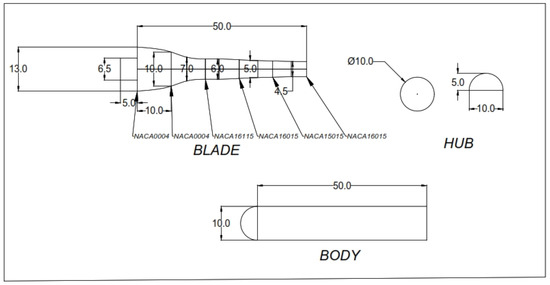
The research focused on evaluating three different turbine configurations consisting of three, four, and five blades. The analysis was conducted at wind speeds ranging from 3 to 6 m/s, representing lower-wind-speed conditions that are particularly relevant for the development of small-scale wind energy systems. To maintain a consistent basis for comparison, the turbine configurations used the same simplified NACA0004 airfoil and blade geometry while varying only the number of blades.
As part of the research activity, the FDERG team combined experimental measurements, Computational Fluid Dynamics (CFD) simulations, and QBlade-based performance prediction. The turbine model was developed using SolidWorks, while CFD simulations were performed using ANSYS CFX 2022. The numerical analysis was used to investigate parameters such as turbine torque and flow velocity around the rotor, while experimental measurements were used to obtain turbine rotational speed. The results were subsequently cross-validated using QBlade to provide a broader assessment of turbine performance.
The research demonstrated that the number of blades has a significant influence on the aerodynamic and power performance of small-scale HAWTs under low-wind-speed conditions. In the investigated configurations, the five-bladed turbine produced the highest power output, reaching 46.25 W at a wind speed of 6 m/s. The five-bladed configuration also achieved the highest reported efficiency of 38.00% at 3 m/s, while its efficiency at 6 m/s was 34.80%.
Beyond evaluating turbine performance, the CFD simulations provided insight into the behavior of airflow around the rotor. The analysis showed a reduction in flow velocity after the air passed through the turbine, illustrating the aerodynamic interaction between the incoming wind and the rotor blades. This numerical approach enables the research team to examine aerodynamic behavior that is difficult to obtain solely through experimental measurements.
The activity forms part of FDERG’s broader research direction in fluid dynamics, renewable energy, wind energy conversion, and computational modeling. The study also demonstrates the group’s approach to integrating experimental investigation with numerical simulation and engineering prediction tools to support the development of wind energy technologies for low-wind-speed environments.
The research was supported by Hasanuddin University through the Thematic Research Group (TRG) Scheme under Contract Number 00518/UN4.22/PT.01.03/2025, further demonstrating the role of FDERG within Hasanuddin University’s research ecosystem.
Through this research, FDERG continues to contribute to the development of renewable energy technologies while strengthening its research capabilities in Computational Fluid Dynamics, aerodynamic analysis, and small-scale wind turbine performance. The findings provide a basis for further research into turbine blade configuration, aerodynamic optimization, and the development of wind energy systems suitable for areas with relatively low wind speeds.