



MAKASSAR, Indonesia May 27 2026/f-analysis/ – Angles are familiar in everyday life. They help us describe the slope of a roof, the direction of a road, or the position of two intersecting lines. In advanced mathematics, however, angles are not limited to two- or three-dimensional space. They can also be studied in spaces with many dimensions, including spaces so large that they contain infinitely many directions.
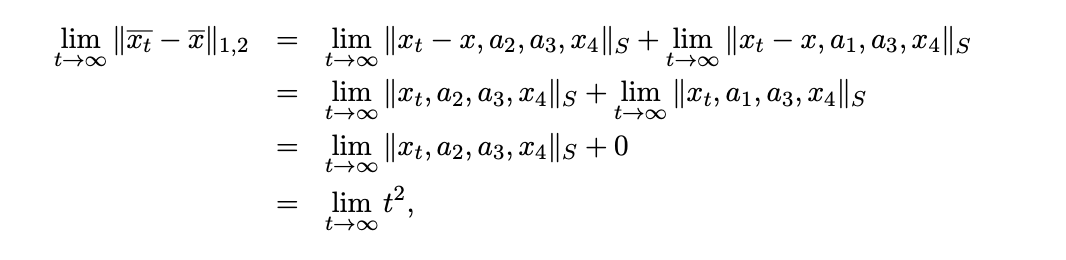
MAKASSAR, Indonesia July 27 2026/f-analysis/ – Many people imagine advanced mathematics as a world of symbols far removed from everyday life. Yet one of its central goals is surprisingly practical: finding clearer ways to understand complicated structures. This idea lies at the heart of the research article “On the n-inner product spaces from the perspective of its quotient spaces,” published in the Bulletin of the Karaganda University. Mathematics Series by Karaganda National Research University named after Academician Ye.A. Buketov on July 26, 2026. The study was written by Harmanus Batkunde, Muh Nur, and Meilin Imelda Tilukay.
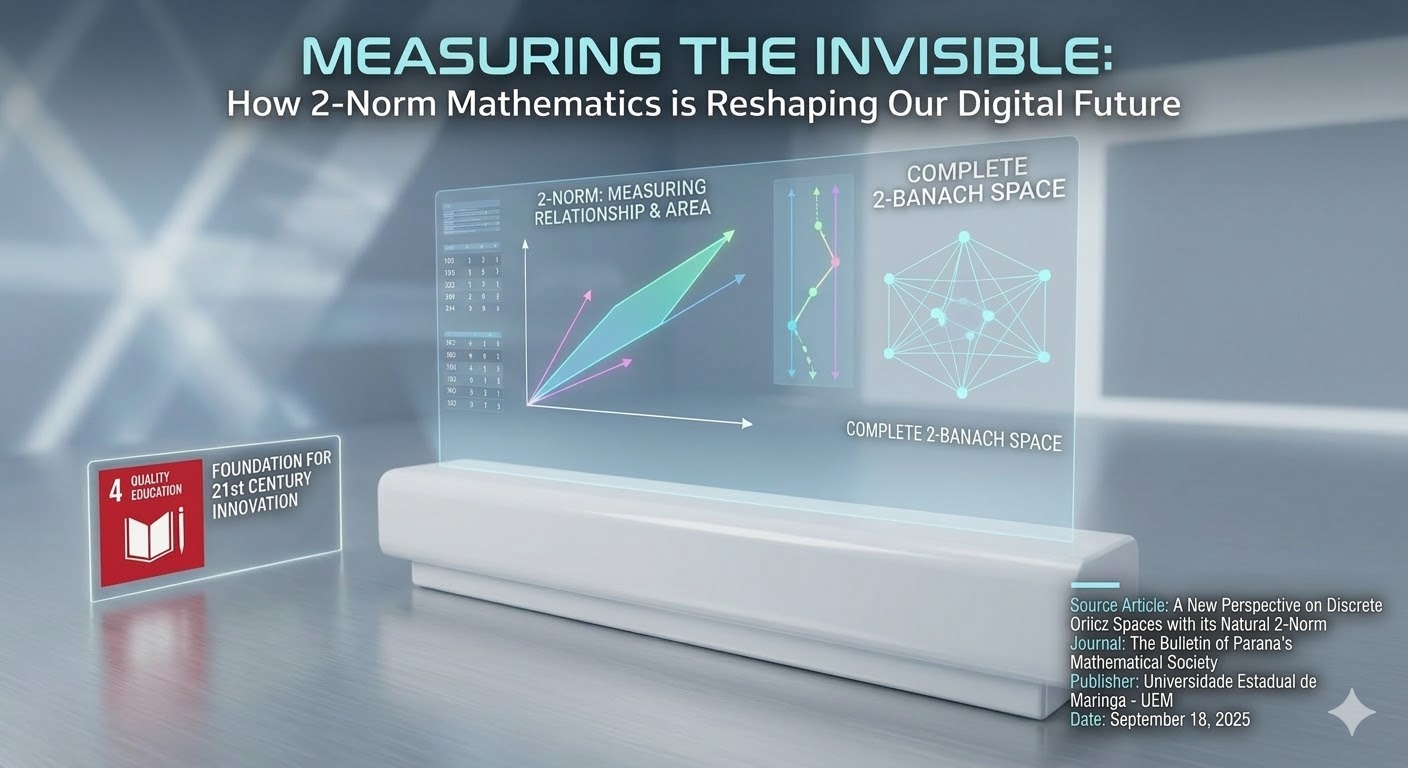
MAKASSAR, Indonesia Mar 12 2026/f-analysis/ - In our daily lives, we measure things simply: a ruler for length, a scale for weight, or a clock for time. But in the high-speed digital age, data is far more complex than a single line. This is the premise of a fascinating breakthrough in higher mathematics that moves us beyond one-dimensional thinking. Researcher Muh Nur from Hasanuddin University has introduced a fresh perspective on how we analyze "Discrete Orlicz Spaces," which are essentially mathematical frameworks used to categorize and manage infinite sequences of information. While these spaces have long been part of the mathematical landscape, the introduction of a "natural 2-norm" allows for a deeper, more relational understanding of data interactions.

MAKASSAR, Indonesia Mar 12 2026/f-analysis/ - Have you ever stopped to think about the invisible "magic" that allows your phone to download a high-definition video in seconds or helps a doctor see a clear image of a heartbeat on a monitor? Behind every clear signal and sharp image lies a world of complex mathematics. We live in an era of "big data," where the tools we used yesterday are becoming too slow for the tech of tomorrow. Recently, a team of brilliant minds from Indonesia and Malaysia published a breakthrough that might just be the "software upgrade" our digital processing systems need.
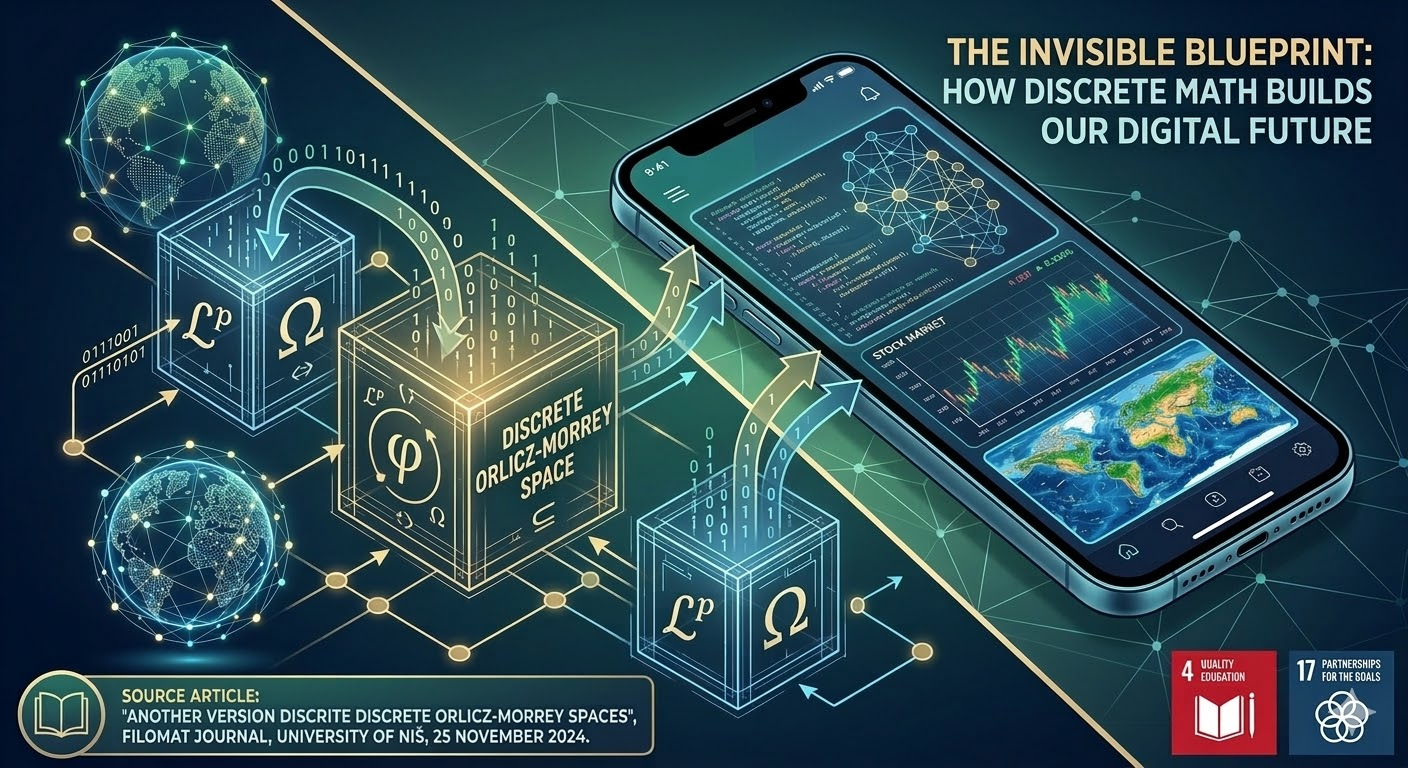
MAKASSAR, Indonesia Mar 12 2026/f-analysis/ - Have you ever stopped to wonder what actually holds our digital world together? Behind every sharp image on your smartphone, every fluctuating stock market graph, and every complex weather prediction lies a hidden architecture of numbers. While most of us only see the final result, mathematicians are busy building the "containers" that allow us to process this information efficiently. A groundbreaking study recently published in the journal Filomat offers a fascinating look into this invisible world, proving that even the most abstract mathematics plays a vital role in our global progress.
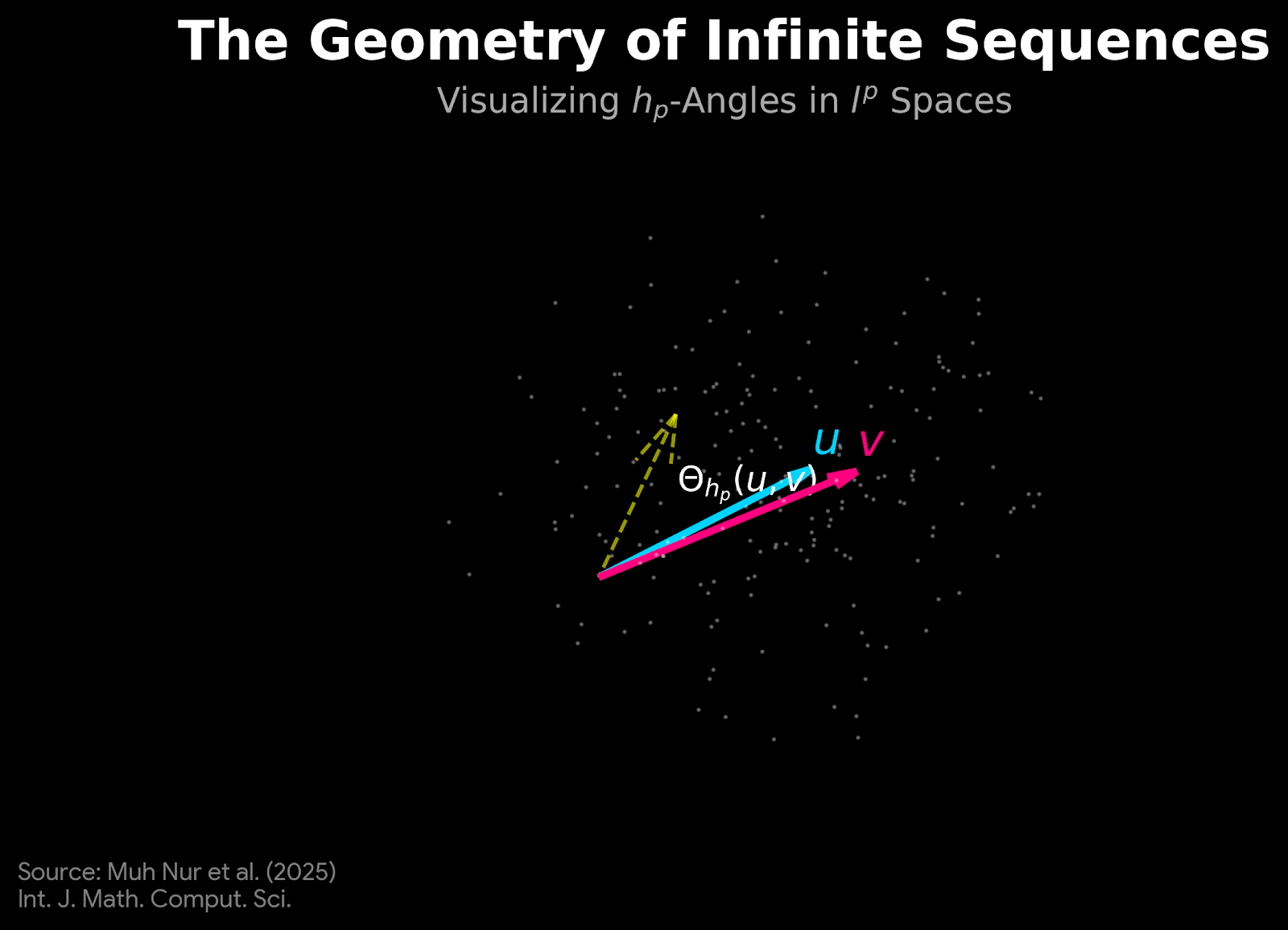
MAKASSAR, Indonesia Mar 12 2026/f-analysis/ - MAKASSAR, Indonesia Mar 12 2026/f-analysis/ - Have you ever wondered how we measure the "shape" of things we cannot see? In school, we learn to measure angles using plastic protractors on flat paper. However, as our modern world shifts into a landscape of massive data—ranging from predicting global stock market fluctuations to training complex artificial intelligence—the simple rulers of the past are no longer enough. To navigate these digital frontiers, we need a new kind of mathematical compass. A recent research paper by Muh Nur and his team provides exactly that: a sophisticated way to define geometry in the abstract world of infinite sequences.
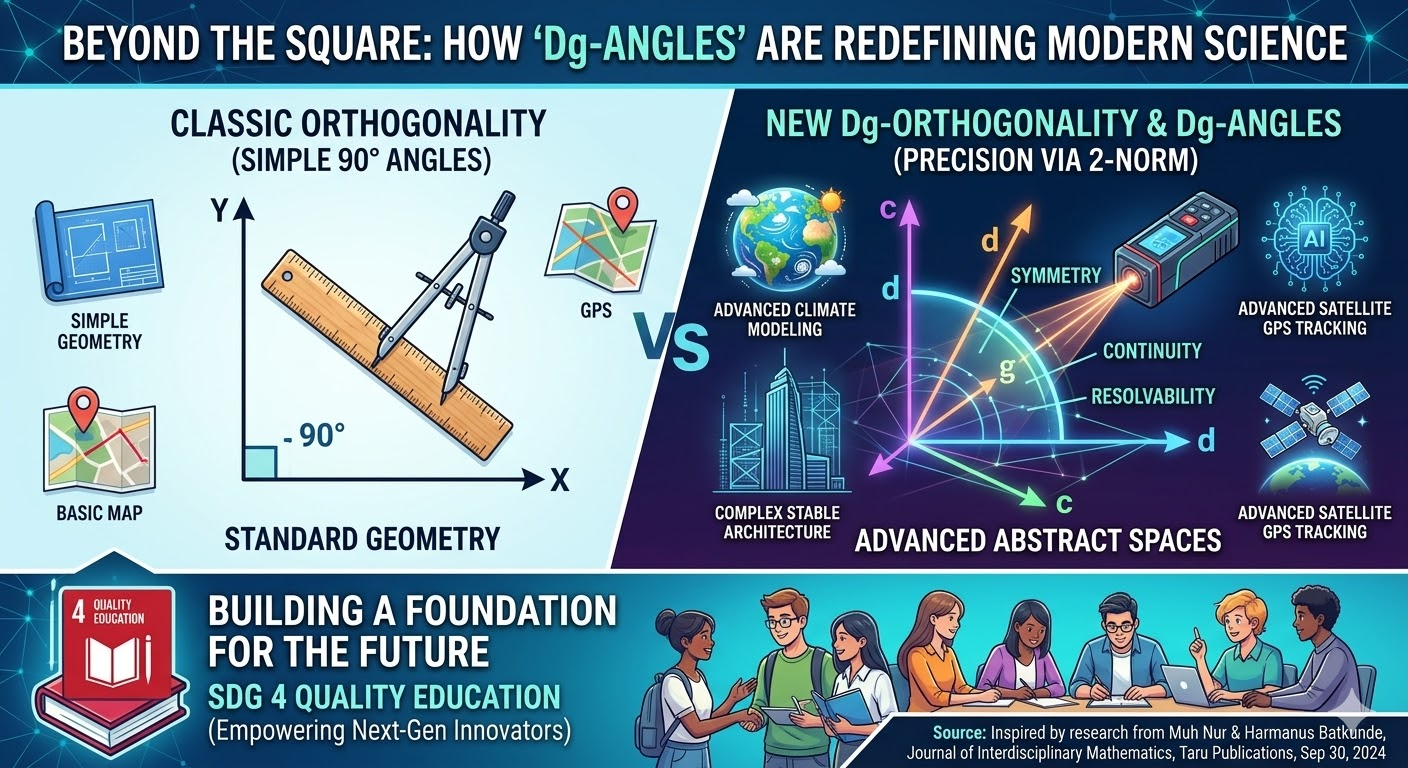
MAKASSAR, Indonesia Mar 12 2026/f-analysis/ - Have you ever wondered how your GPS knows exactly where you are, or how architects ensure that a skyscraper doesn't topple over? At the heart of these daily miracles is a concept called orthogonality—the mathematical way of saying things are "square" or at a perfect right angle. While we learn about simple 90-degree angles in school, the modern world operates in complex "normed spaces". These are abstract mathematical playgrounds where standard rules of geometry are stretched and reshaped to handle massive amounts of data and multi-dimensional problems.

MAKASSAR, Indonesia Mar 11 2026/f-analysis/ - To understand this work, imagine a standard flat map. In this 2D world, we use "inner products" to calculate the shortest distance between two points or the angle of a turn. However, modern data—like the thousands of variables used to track global climate patterns or economic shifts—doesn't fit on a flat map. It exists in n-normed spaces, where "distance" is measured not by lines, but by the volume of shapes created by multiple points