
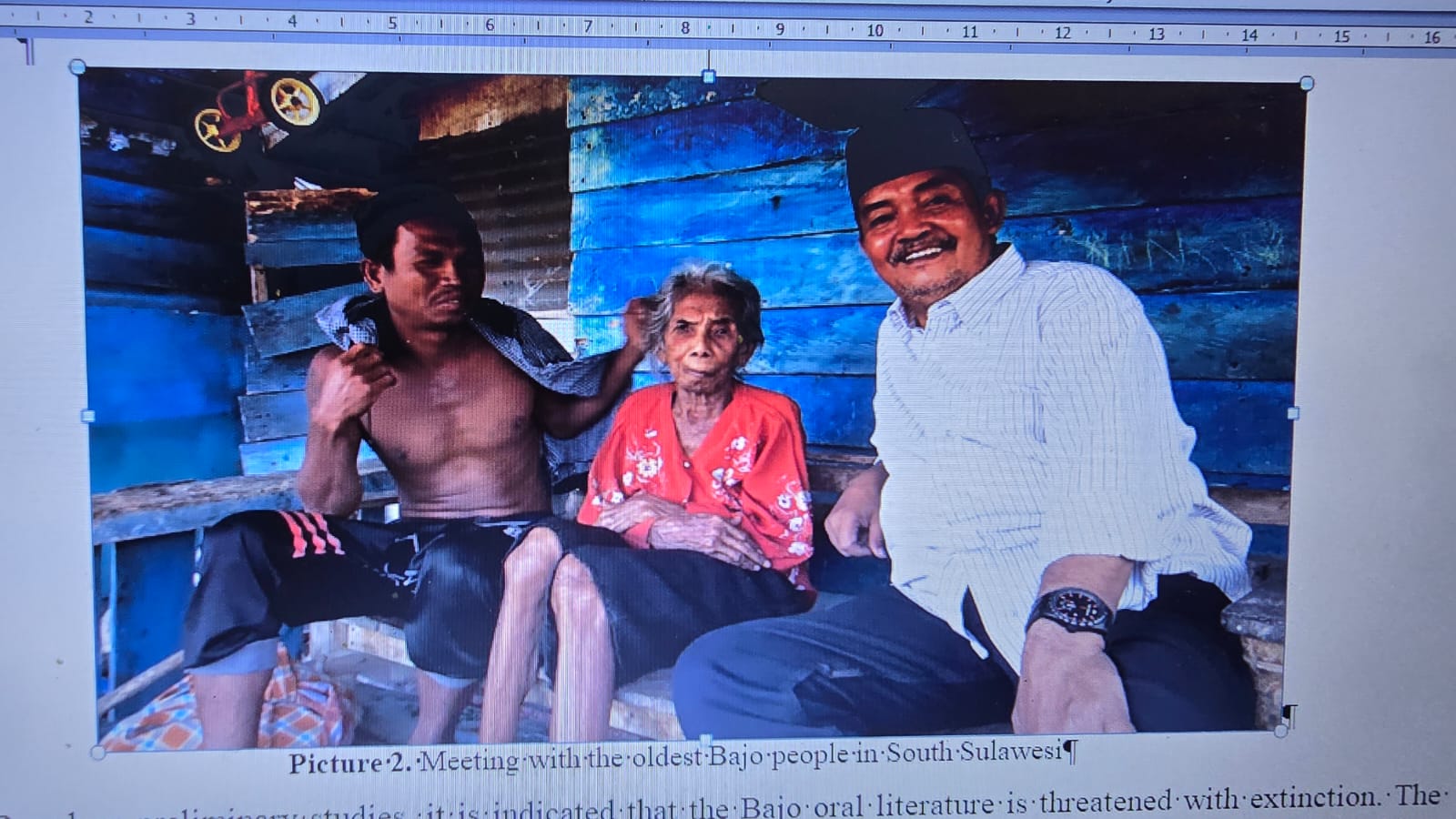

On January 9, 2026, a dedicated research team from the Faculty of Cultural Sciences (FIB) returned to the heart of the maritime community in Kelurahan Bajoe, Bone, for a follow-up session titled “Meeting with Bajo Elders.” This ethnographic mission was specifically designed to facilitate deep-dive interviews with the senior custodians of the Bajo culture. The primary objective was to capture the nuanced oral histories, traditional ecological knowledge, and ancestral narratives that remain the bedrock of the “Sea Nomad” identity in the Indonesian archipelago.
This field activity involved a total of nine participants, creating an intimate atmosphere conducive to sharing sacred and historical knowledge. A vital component of this expedition was the active involvement of student researchers: Fakhreny Fathu Rahman, Andi Nurul Mawaddah Malik, and Nurul Ilmi. Their participation represents the faculty’s commitment to immersive learning, where students are challenged to apply qualitative methodologies in real-world settings. The narrative of this meeting was defined by mutual respect, as the elders imparted wisdom that has survived generations, bridging the gap between historical tradition and modern academic inquiry.
The significance of this engagement is explicitly linked to several Sustainable Development Goals (SDGs), ensuring that local cultural preservation contributes to global progress. Firstly, the initiative is a cornerstone of SDG 4 (Quality Education). By involving students in direct field research, the university provides a high-caliber, equitable education that transcends textbook learning. This experience equips future researchers with the cultural literacy and ethical sensitivity required to document indigenous knowledge systems, ensuring that these vital perspectives are integrated into the broader educational landscape of Indonesia.
Furthermore, the collaboration between the academic team and the Bajo elders exemplifies SDG 17 (Partnerships for the Goals). Building a sustainable future requires strong partnerships between institutional researchers and community stakeholders. This meeting in Bajoe reinforces a collaborative framework where indigenous voices are given a formal platform within the scientific community. These local-level partnerships are essential for the mobilization of diverse knowledge, ensuring that regional development strategies are inclusive of the traditional wisdom held by coastal and maritime groups.
Finally, the documentation of these cultural assets aligns with SDG 1 (No Poverty). Socio-economic resilience in maritime communities often stems from their traditional social structures and unique relationship with the marine environment. By systematically interviewing elders, the research team uncovers the cultural capital that can be leveraged for community-based empowerment. Identifying and protecting these traditional systems is a critical step in ensuring that the Bajo people can achieve sustainable livelihoods and long-term economic stability without losing their cultural roots.
The meeting on January 9 underscores the Faculty’s role as an objective observer and preserver of Indonesia’s rich diversity. As the sun set over the waters of Bone, the research team departed with a wealth of data that will serve as a vital resource for future cultural studies, ensuring that the legacy of the Bajo elders continues to resonate in the academic world and beyond.


