
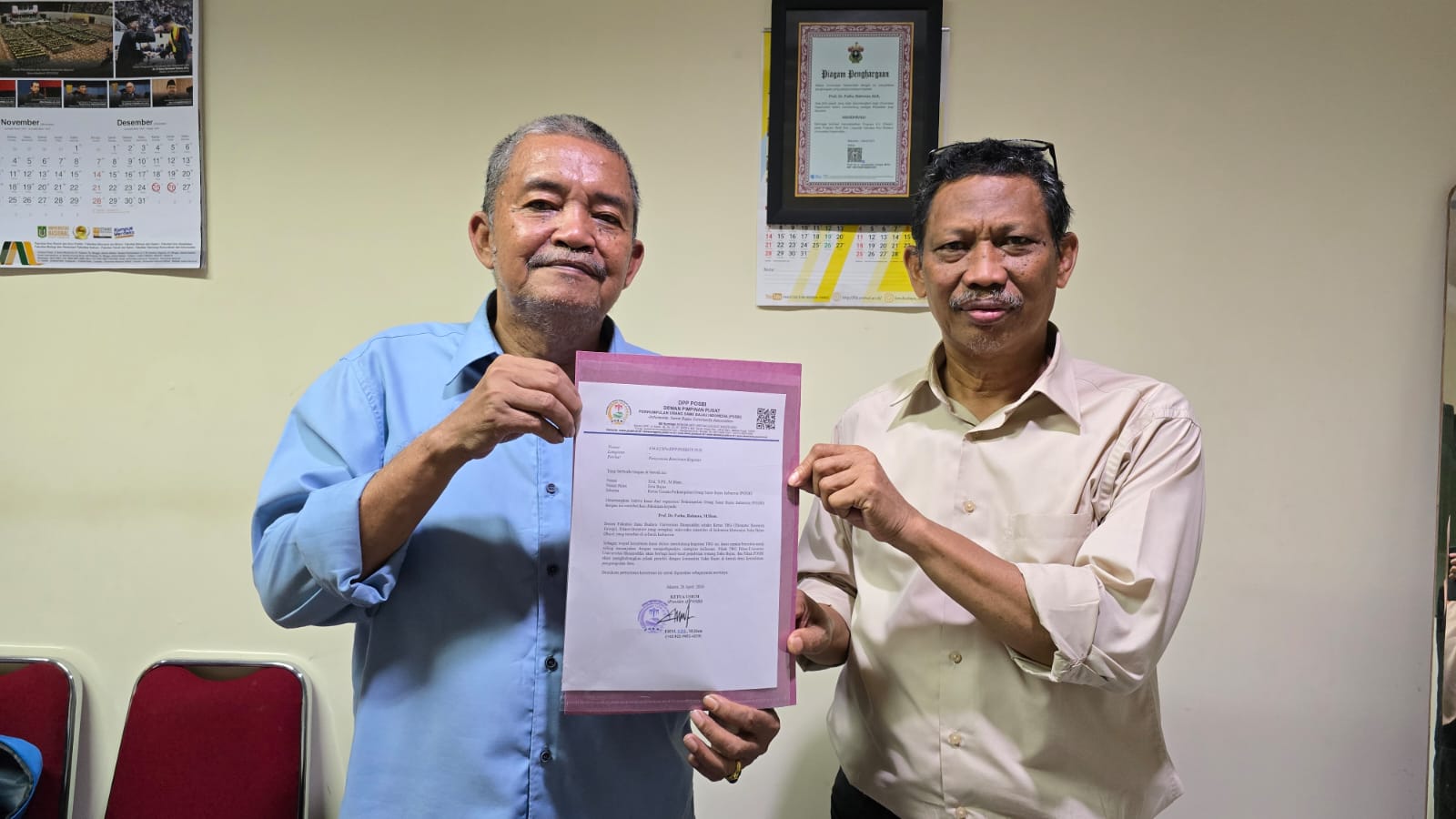

In a significant stride toward the safeguarding and scientific exploration of Indonesia’s maritime heritage, the Thematic Research Group (TRG) Ethno-Literature at the Faculty of Cultural Sciences (FIB), Hasanuddin University, officially formalized a collaboration with the Central Board of the Indonesian Bajau People’s Association (DPP POSBI). On January 3, 2026, a formal meeting was held at the Faculty of Cultural Sciences to mark the receipt of the Statement of Activity Partnership (Surat Pernyataan Kemitraan Kegiatan). This partnership signifies a unified commitment to supporting comprehensive research initiatives concerning the Bajo people across the Indonesian archipelago.
The narrative of this event highlights the vital intersection between academic rigor and community representation. By partnering with DPP POSBI, TRG Ethno-Literature ensures that its research is not only academically sound but also culturally sensitive and grounded in the lived experiences of the Bajo community. The meeting was attended by five participants, including key representatives from both the faculty and the association. Furthermore, the inclusion of dedicated students—Citra Andini, Fakhreny Fathu Rahman, and Ahmad Jaelani Asha—emphasizes the faculty’s mission to integrate undergraduate and graduate researchers into high-impact, real-world projects.
This strategic collaboration is deeply aligned with the global framework of the Sustainable Development Goals (SDGs), particularly SDG 17 (Partnerships for the Goals). By establishing a formal bridge between an academic research group and a community-led national organization, the partnership enhances the mobilization of local knowledge and scientific expertise. This synergy is crucial for the development of sustainable policies that respect indigenous identities while fostering national progress through multi-stakeholder cooperation.
The focus on studying the Bajo people also contributes directly to SDG 4 (Quality Education). This research provides a rich, empirical basis for cultural education, ensuring that the history and oral traditions of maritime communities are preserved and integrated into the broader Indonesian educational discourse. By involving students like Citra, Fakhreny, and Ahmad, the project provides hands-on “Quality Education” that prepares the next generation of scholars to handle complex ethnographic data with integrity and respect.
Moreover, the research outcomes are intended to support SDG 1 (No Poverty). Understanding the socio-cultural landscape of the Bajo people is a prerequisite for any effective poverty-reduction strategy in coastal regions. By documenting their unique maritime knowledge and economic structures, the TRG and POSBI provide the data necessary to design inclusive programs that protect the livelihoods of these communities. This research aims to empower the Bajo people by ensuring their cultural assets are recognized as a foundation for sustainable economic resilience.
As this partnership moves forward, the Faculty of Cultural Sciences continues to demonstrate its role as a guardian of cultural diversity. The formalization of this bond with DPP POSBI ensures that the study of ethno-literature serves a higher purpose: the preservation of identity in the face of modern challenges. Through meticulous research and institutional collaboration, TRG Ethno-Literature is turning academic inquiry into a beacon of hope for Indonesia’s maritime heritage.


