
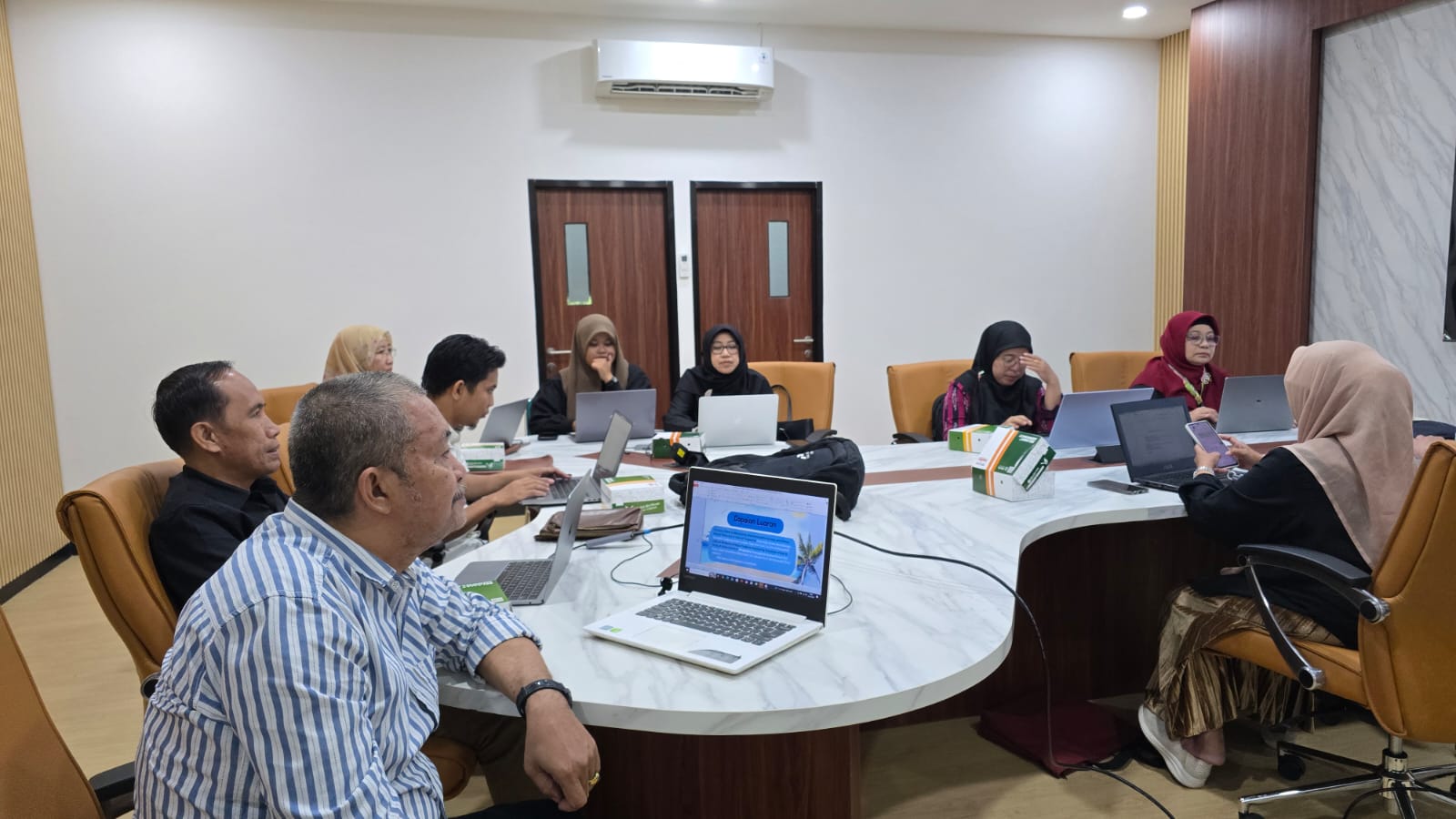

The pursuit of academic excellence requires more than just innovative ideas; it demands rigorous oversight and a commitment to continuous improvement. On March 31, 2026, the Faculty of Cultural Sciences (FIB) at Hasanuddin University reached a vital milestone in its research governance with the execution of the “Phase 1 Monitoring and Evaluation (Monev) for Thematic Research Groups (TRG).” Held at the LPPM Unhas office, this session served as a strategic touchpoint to assess the progress, challenges, and future trajectories of the university’s specialized research clusters.
The event brought together approximately 20 TRG leaders, each representing a diverse spectrum of cultural, social, and linguistic inquiries. The narrative of the day was defined by “Reflective Progress”—a systematic approach to ensuring that every research initiative aligns with the university’s high standards of scientific integrity and social relevance. Through this evaluation process, the faculty aims to identify potential bottlenecks early and provide the necessary institutional support to ensure that every TRG can achieve its maximum potential.
A key pillar of this evaluation process is its alignment with the United Nations’ Sustainable Development Goals (SDGs). Specifically, this monitoring phase is a direct implementation of SDG 17 (Partnerships for the Goals). By gathering 20 research leaders in a unified forum at LPPM, the university strengthens the internal partnerships necessary for multidisciplinary success. This collaborative oversight ensures that research resources are utilized efficiently and that knowledge is shared across different thematic groups, fostering a cohesive ecosystem of scientific advancement.
Furthermore, the rigorous standards maintained during this Monev session contribute significantly to SDG 4 (Quality Education). Monitoring and evaluation are essential to ensure that the research produced within FIB Unhas remains at the forefront of global academic discourse. By holding TRG leaders accountable for their research outputs, the university guarantees that the knowledge passed down to students and the wider community is grounded in verified, high-quality data. This, in turn, promotes a culture of lifelong learning and excellence that benefits the entire educational landscape.
The broader implications of these research activities also touch upon SDG 1 (No Poverty). Many of the Thematic Research Groups under evaluation focus on social dynamics and cultural resilience. By ensuring these groups operate effectively, the university produces actionable insights that can inform policies aimed at social empowerment and economic stability. Effective research helps identify the root causes of vulnerability, providing a foundation for interventions that protect the marginalized and support the eradication of poverty through informed social innovation.
As the Phase 1 Monev concluded, the atmosphere at LPPM was one of renewed focus and clarity. The leaders departed with a sharpened vision of their objectives, understanding that their work is part of a larger global effort toward sustainable development. Through such diligent monitoring, FIB Unhas ensures that its Thematic Research Groups are not just academic entities, but powerful engines for social change and scientific discovery.


