
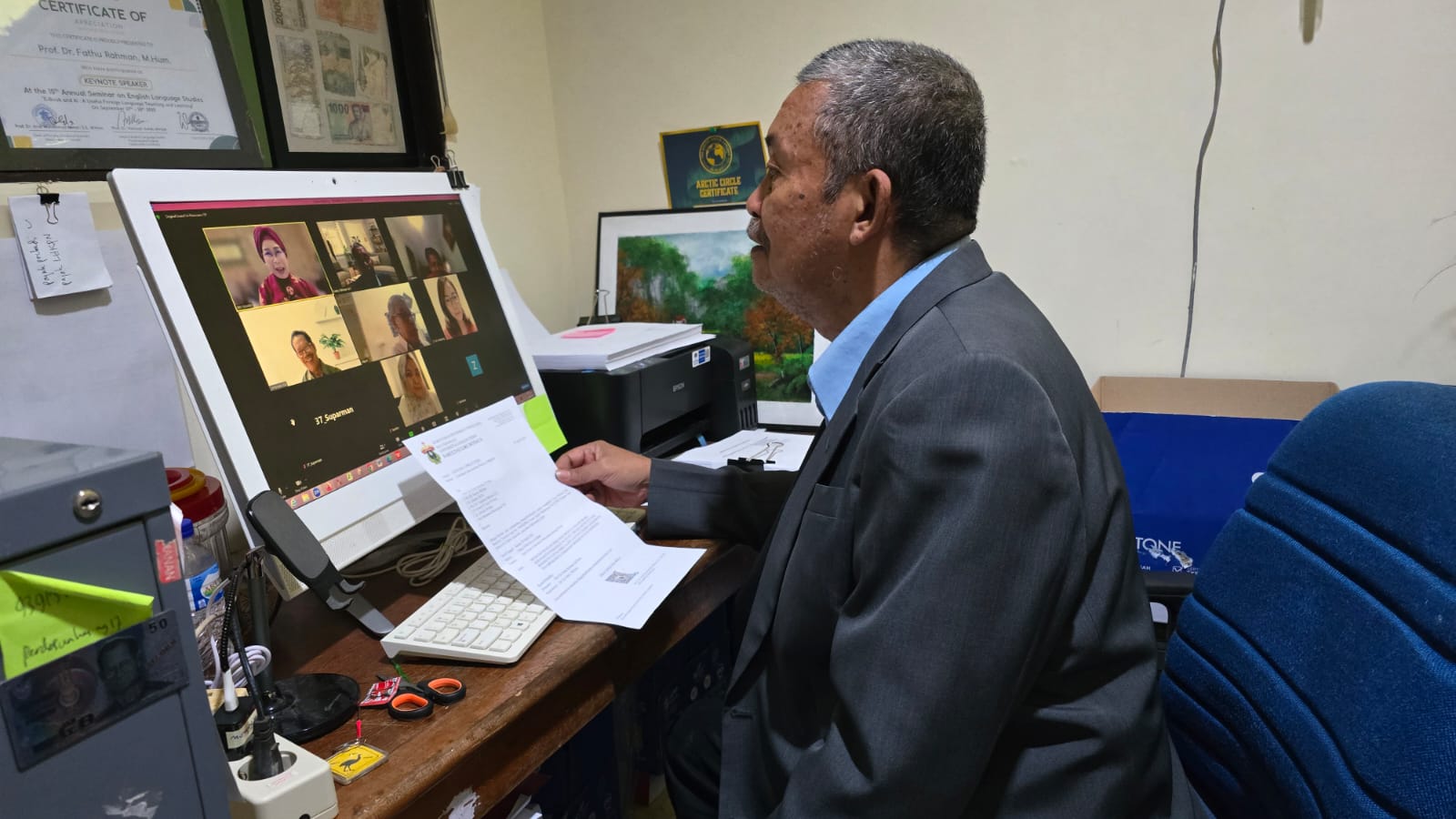

The advancement of cultural research in the digital age necessitates seamless collaboration across geographical boundaries. On February 13, 2026, the TRG Ethno-Literature conducted a high-level strategic session via the Zoom platform titled “Virtual Meeting for TRG Ethno-Literature Support.” Organized while the research team was stationed in Bone, this virtual symposium was specifically convened to discuss and analyze recent field findings, ensuring that raw data is transformed into rigorous academic discourse through international expert validation.
The meeting featured a distinguished assembly of 10 participants, characterized by a significant transnational intellectual exchange. The presence of renowned international partners, Datuk Prof. Kolonel (K) Dr. Awang Azman Awang Pawi and Assoc. Prof. Dr. Aminoh Jehwae, provided a global comparative perspective to the local findings gathered from the field. Alongside these experts, student researchers Fakhreny Fathu Rahman and Irmayani actively participated, demonstrating the Faculty of Cultural Sciences’ commitment to involving students in the highest tiers of international academic consultation. The narrative of the meeting focused on the “Theory-Field Synthesis,” where local ethnographic data regarding maritime communities was scrutinized through contemporary literary and social frameworks.
This digital collaboration serves as a primary example of SDG 17 (Partnerships for the Goals). By utilizing telecommunication technology to bridge the distance between Indonesia, Malaysia, and Thailand, the TRG Ethno-Literature fosters a “Global Partnership for Sustainable Development.” This international cooperation ensures that research conducted at FIB Unhas is benchmarked against global standards, mobilizing shared expertise to address the preservation of Southeast Asian cultural identity.
Furthermore, the participation of international professors and local students directly aligns with SDG 4 (Quality Education). This meeting functioned as an advanced virtual classroom, providing students like Fakhreny and Irmayani with unprecedented access to global scholarly mentorship. This inclusive approach to research ensures that quality education at the university level is not merely theoretical but is integrated into the global production of knowledge, preparing the next generation for international academic leadership.
The research findings discussed also hold profound implications for SDG 1 (No Poverty). By identifying the cultural nuances and social structures of the communities studied in Bone and beyond, the TRG provides the empirical evidence needed to formulate poverty-reduction strategies that are culturally appropriate. Understanding the ethno-literary heritage of a people is essential for building social resilience; it empowers communities by recognizing their intellectual assets as a foundation for sustainable development and economic dignity.
As the virtual session concluded, the consensus reached among the 10 scholars and students underscored a vital truth: cultural research is most effective when it is collaborative and borderless. The insights provided by Datuk Prof. Awang Azman and Assoc. Prof. Aminoh Jehwae have paved the way for a series of high-impact publications, ensuring that the findings from Bone resonate within the global scientific community. Through this partnership, FIB Unhas continues to solidify its role as a leader in the digital and cultural transformation of Southeast Asian studies.


