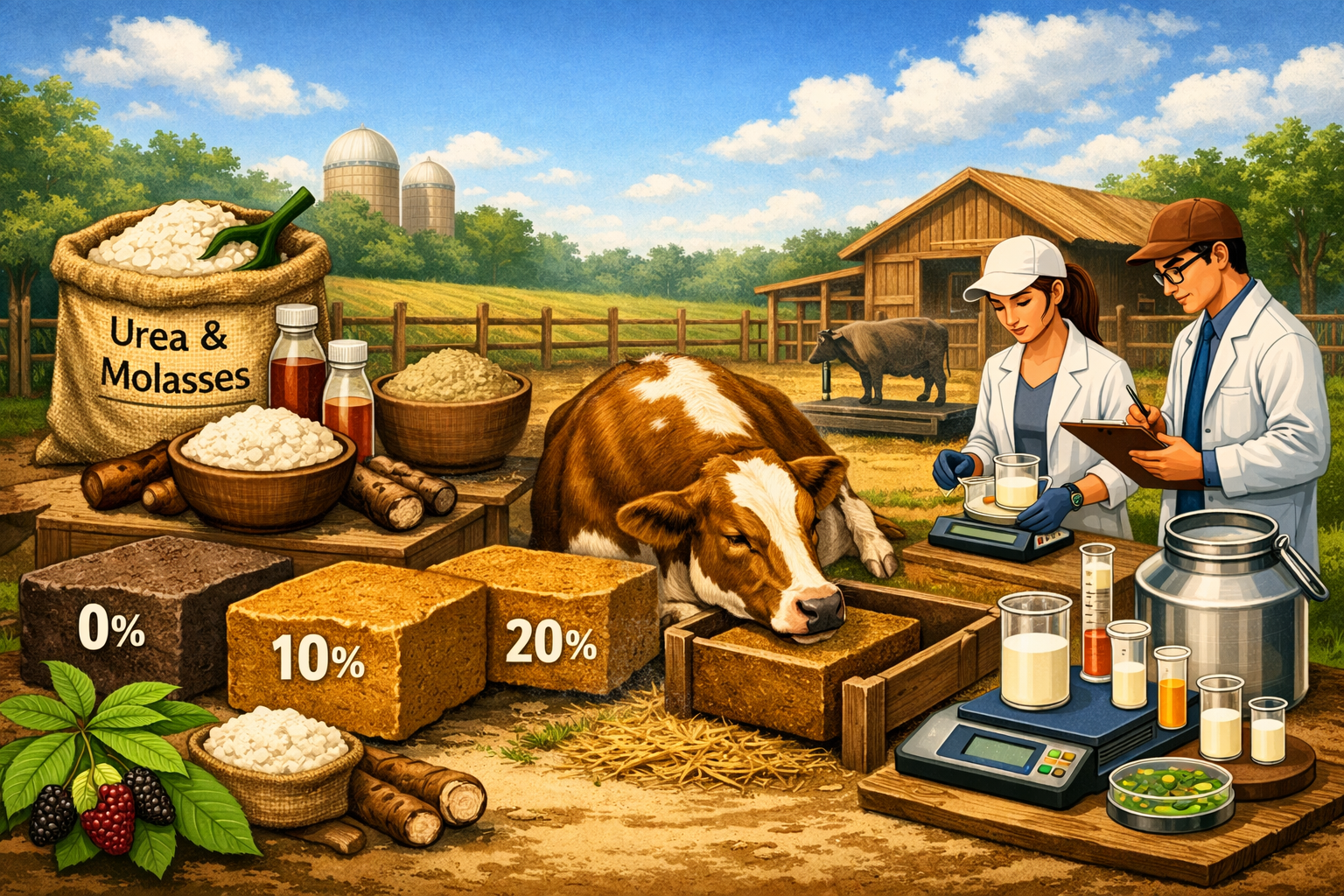

Makassar, Indonesia Apr 11 2026/DGRG/- Livestock farming is more than raising animals—it is about feeding families, sustaining rural economies, and protecting the environment. One innovation making a difference is the Urea Molasses Multinutrient Block (UMMB), a compact feed supplement that delivers protein, energy, and minerals to ruminants. But the quality of these blocks depends on the adhesive that binds them together.
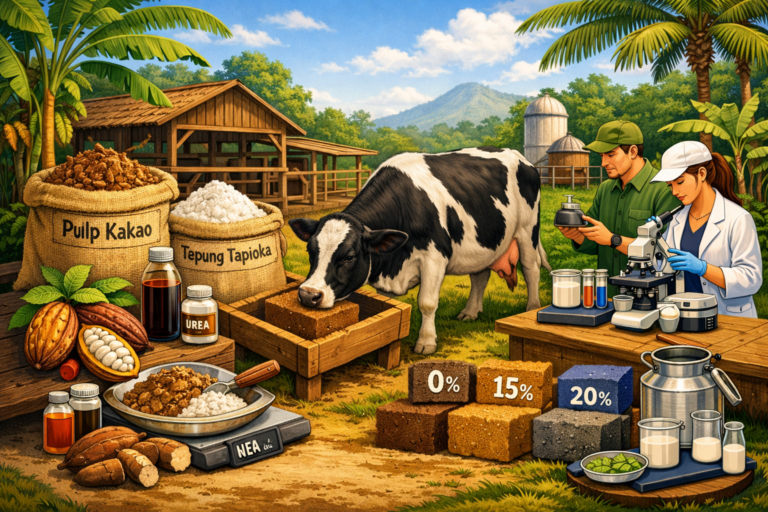
A study titled “Effect of Natural Adhesive Tapioca Meal on the Quality of Urea Molasses Multinutrient Block”, published in Hasanuddin Journal of Animal Science by the Faculty of Animal Science, Hasanuddin University in 23 Desember 2023, tested tapioca meal as a natural adhesive. The results showed that tapioca meal not only binds effectively but also improves durability and nutritional consistency. Farmers can rely on a locally available, eco-friendly ingredient to strengthen feed quality while reducing dependence on synthetic binders.
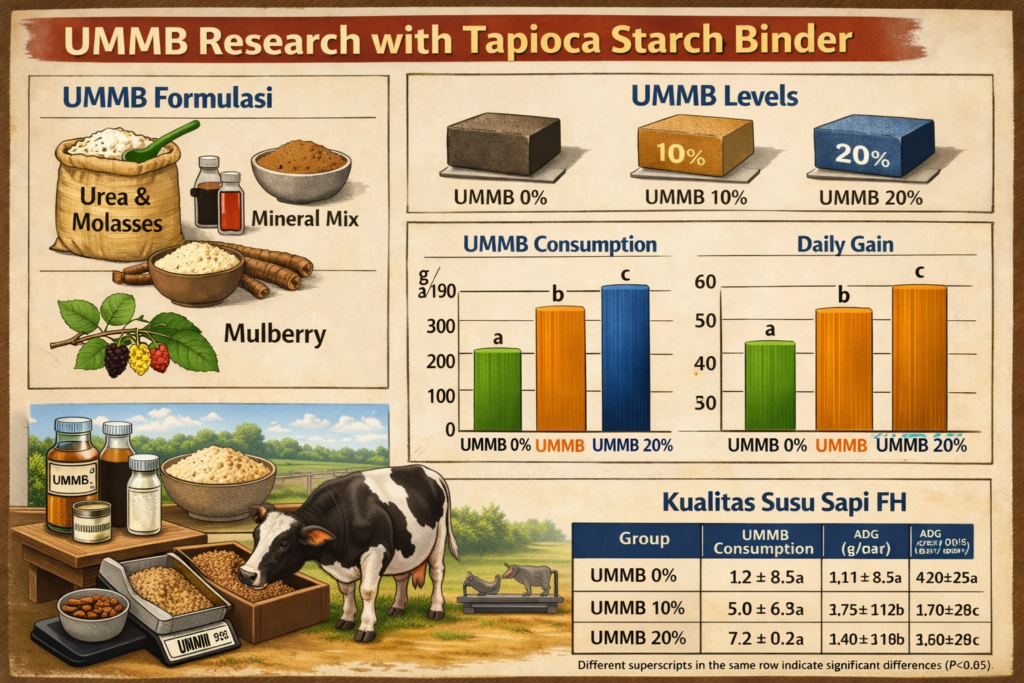
This innovation speaks to multiple global priorities. First, it supports SDG 1: No Poverty, since affordable feed solutions help farmers cut costs and increase income. Second, it advances SDG 3: Good Health and Well-being, because healthier livestock provide more nutritious milk and meat for families. Third, it contributes to SDG 15: Life on Land, by reducing reliance on chemical adhesives and encouraging sustainable use of local biodiversity. Finally, the research itself reflects SDG 17: Partnerships for the Goals, as universities, farmers, and communities collaborate to apply science for practical solutions.
For the public, the message is clear: science is not only about laboratories—it is about everyday innovations that improve lives. By turning to natural resources like tapioca meal, farmers can build resilient food systems that nourish families, protect ecosystems, and strengthen rural economies.
Reference:
DOI: https://doi.org/10.20956/hajas.v5i2.30984
Contact:
Renny Fatmyah Utamy
+62 812 4258 3456
rennyfatmyahutamy@unhas.ac.id