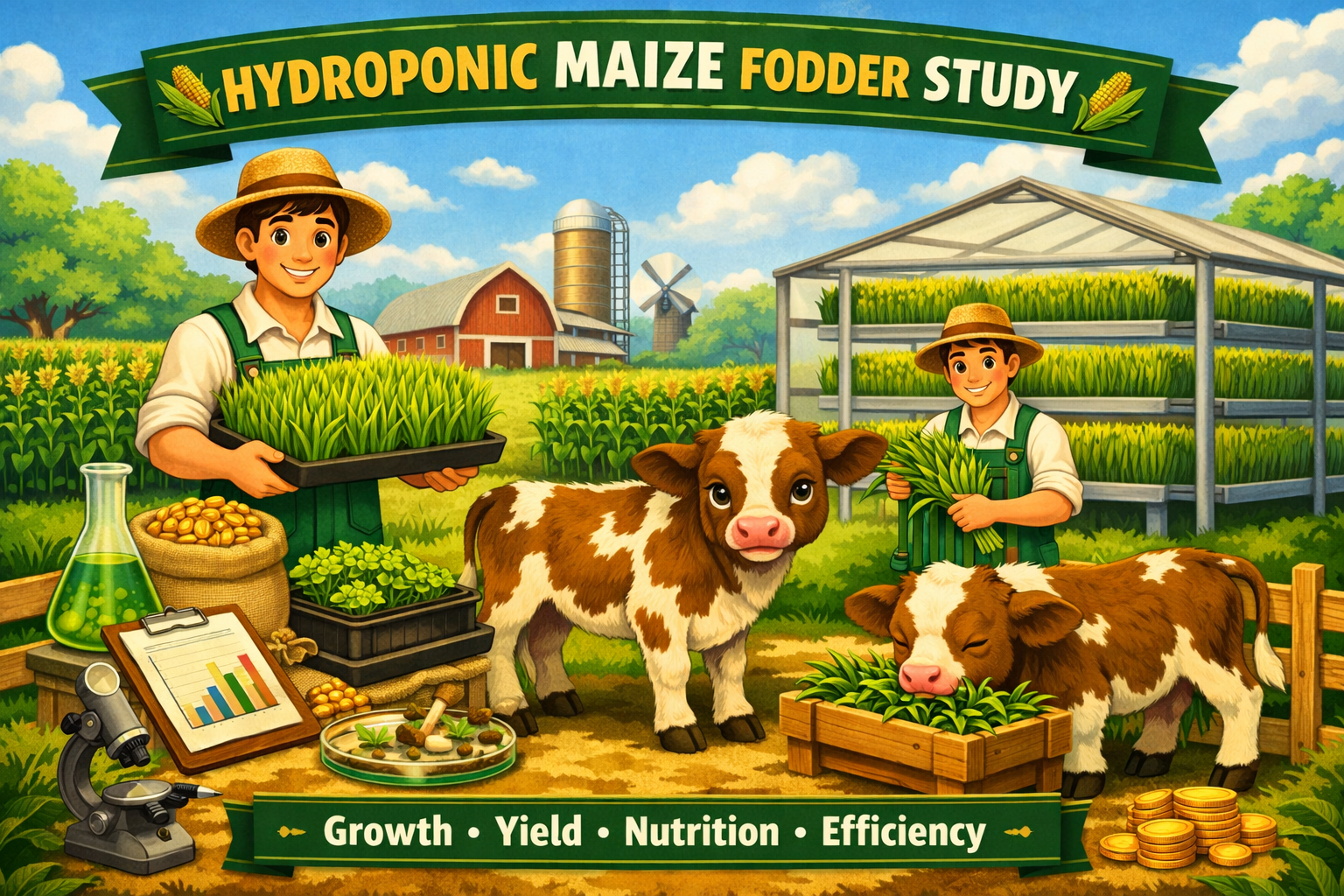

The study found that calves fed hydroponic maize showed better weight gain, improved feed efficiency, and overall healthier growth compared to those fed elephant grass. A recent study titled “Replacing Elephant Grass with Hydroponic Maize Fodder Improves Friesian Holstein Dairy Calves’ Growth Performance” published in Advances in Animal and Veterinary Sciences (Nexus Academic Publishers, January 20, 2026) offers a promising solution: hydroponic maize fodder.
The title “Replacing Elephant Grass with Hydroponic Maize Fodder Improves Friesian Holstein Dairy Calves Growth Performance” Published by Advances in Animal and Veterinary Sciences in 20 January 2026. This innovation is more than just a feeding strategy—it represents a step toward achieving SDG 2 (Zero Hunger) . By enhancing livestock productivity, farmers can secure more reliable sources of milk and meat, contributing to food security in rural communities. Hydroponic systems also use less land and water, making them particularly valuable in areas where resources are scarce. In addition, the rapid growth cycle of maize fodder ensures a continuous supply of fresh feed, reducing dependence on seasonal crops.
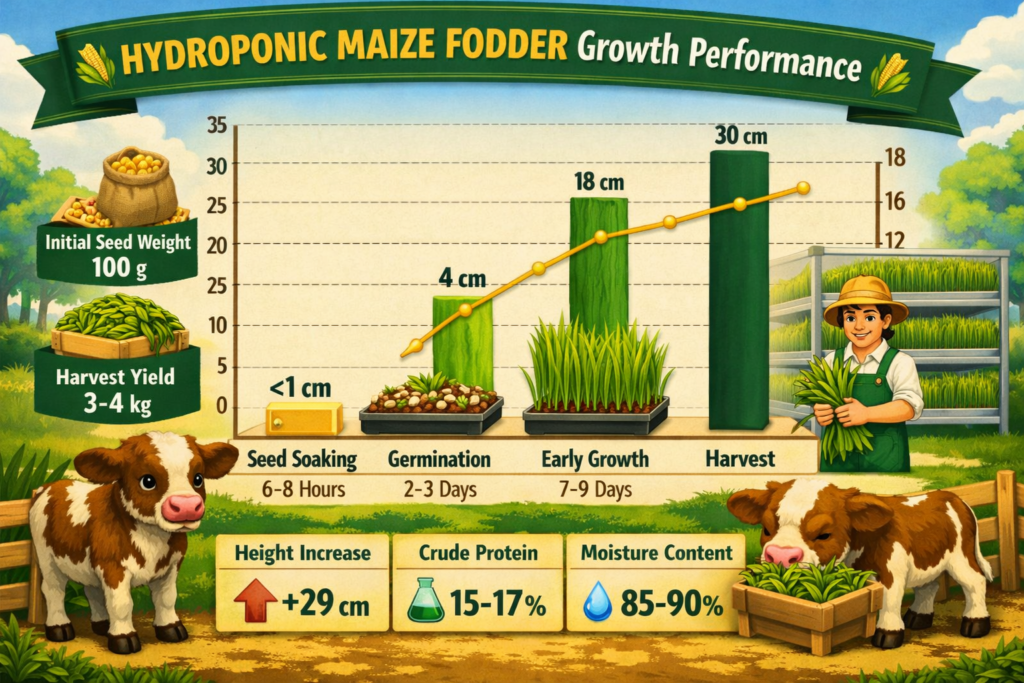
The environmental benefits are equally important. Hydroponic fodder production minimizes soil degradation, reduces the need for chemical fertilizers, and lowers methane emissions by improving feed digestibility. This aligns with the broader vision of sustainable agriculture—producing more with fewer resources while protecting the planet.
For smallholder farmers, especially in developing countries, adopting hydroponic maize fodder could be transformative. It offers a practical, low-cost technology that can be implemented with simple infrastructure. By improving calf growth rates, farmers can shorten the time to market, increase income, and strengthen resilience against economic challenges. Ultimately, healthier calves mean stronger dairy herds, which translates into better livelihoods and nutrition for families.
This research highlights how science and innovation can directly support global goals. By rethinking what we feed our animals, we are also rethinking how to feed the world. Hydroponic maize fodder is not just about growing calves—it’s about growing futures.
Refference
Doi: https://dx.doi.org/10.17582/journal.aavs/2026/14.1.147.155
Contact:
Renny Fatmyah Utamy
+62 812 4258 3456
rennyfatmyahutamy@unhas.ac.id