
Makassar, Indonesia Apr 16/DGRG/-When people buy a glass of milk, they often focus on its freshness, taste, or nutritional value. However, few realize that the quality of milk begins long before it reaches the supermarket. It starts with the health of dairy cows, proper farm management, and even the stage of lactation. Understanding these factors is essential for producing high-quality milk while supporting the sustainability of the dairy industry.
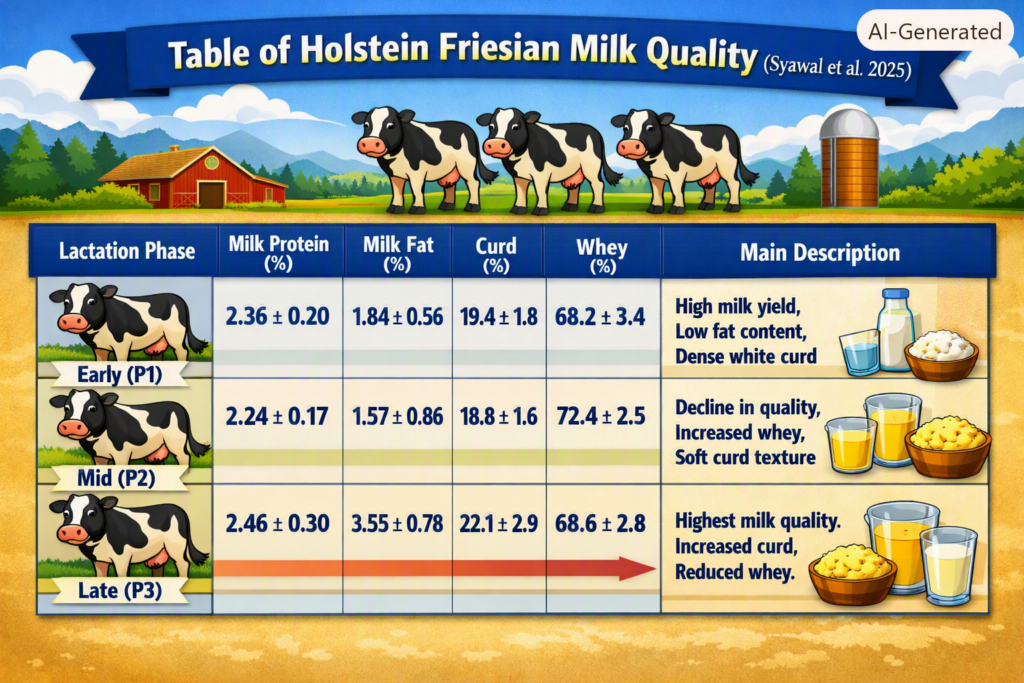
The title “Milk Quality, Curd, and Whey Percentages of Holstein Friesian Cows at Different Lactation Phases” Published by Hasanuddin Journal of Animal Science, in 21 September 2025. One important aspect of dairy science is the relationship between the lactation phase of Holstein Friesian cows and the characteristics of the milk they produce. As cows move through different stages of lactation, changes may occur in milk composition, curd formation, and whey production. These natural variations are valuable for farmers, dairy processors, and researchers because they help determine the best ways to improve milk utilization and product quality.
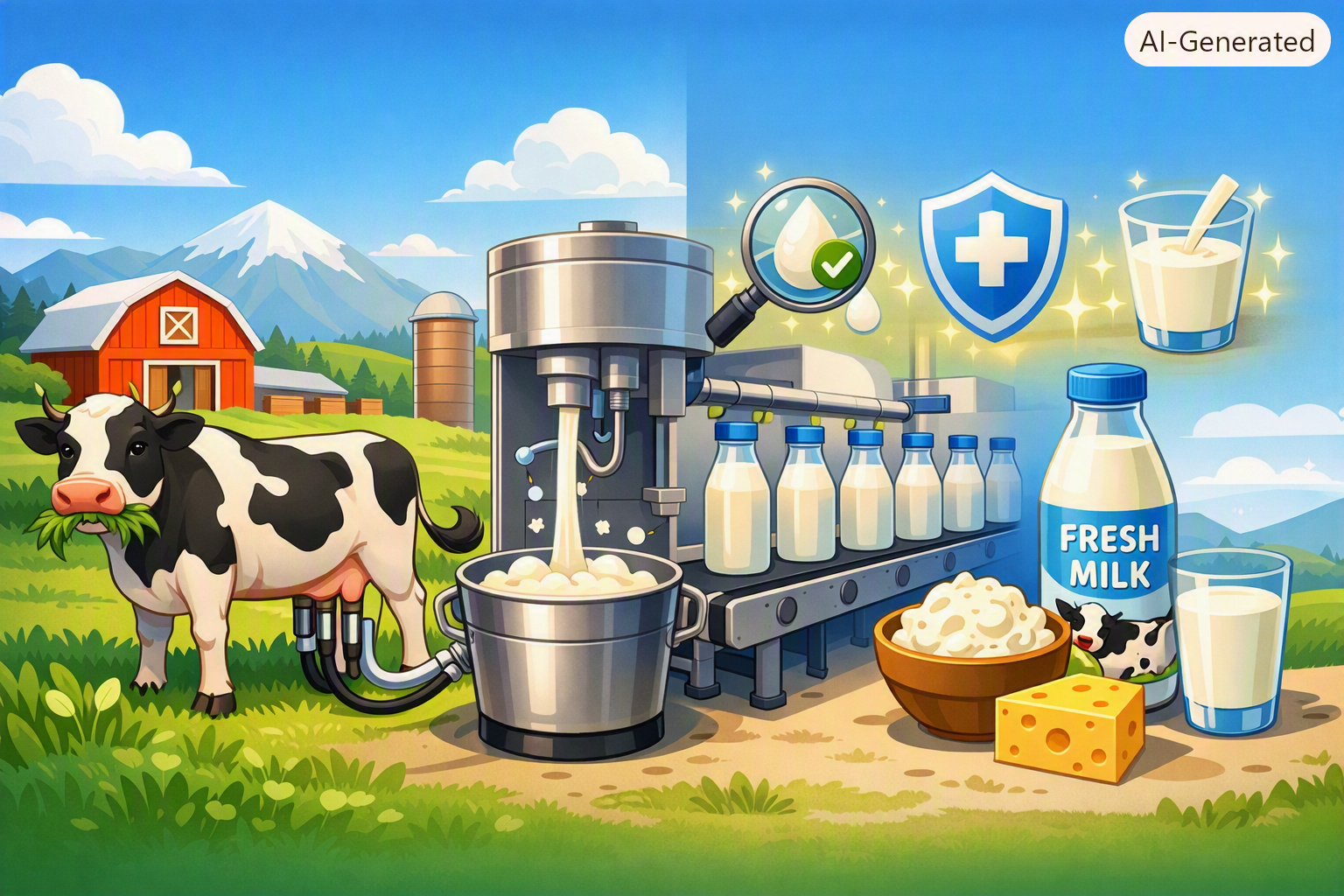
Milk is more than just a nutritious beverage. It is also the raw material for many dairy products, including cheese, yogurt, butter, and other processed foods. During dairy processing, milk is separated into two main components: curd and whey. Curd is widely used to produce cheese and similar products, while whey contains valuable nutrients that can be processed into protein ingredients, beverages, and functional food products. By understanding how these components vary during different lactation phases, the dairy industry can make better decisions to reduce waste and maximize the value of every litre of milk.
Scientific research plays a crucial role in providing this knowledge. Studies on milk quality help farmers improve herd management and feeding practices, while dairy manufacturers can optimize processing methods based on the characteristics of raw milk. Consumers also benefit because better production systems contribute to safer, higher-quality dairy products with consistent nutritional value.
This topic is closely connected to Sustainable Development Goal (SDG) 3: Good Health and Well-being. High-quality milk contributes to better nutrition for people of all ages, especially children, pregnant women, and older adults who depend on dairy products as important sources of protein, calcium, vitamins, and essential minerals. Scientific efforts to improve milk quality therefore support healthier communities by ensuring that nutritious food is produced efficiently and responsibly.
Beyond health, improving milk quality also strengthens the dairy sector. Farmers can enhance productivity, processors can increase product efficiency, and consumers receive better products. At the same time, making full use of both curd and whey encourages a more sustainable food system by reducing unnecessary waste and creating additional economic opportunities from dairy by-products.
The future of dairy farming is not only about producing more milk but also about producing better milk. By continuing to explore how milk quality changes throughout different lactation phases, researchers contribute valuable knowledge that supports innovation across the dairy value chain. Their work reminds us that every drop of milk has the potential to improve nutrition, strengthen rural livelihoods, and create a more sustainable future for everyone.
Refference
Doi: https://doi.org/10.20956/hajas.v7i1.37178
Contact:
Renny Fatmyah Utamy
+62 812 4258 3456
rennyfatmyahutamy@unhas.ac.id