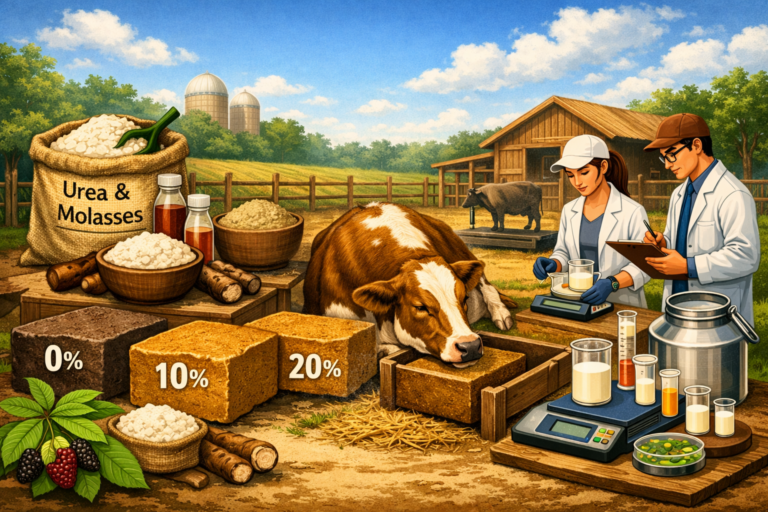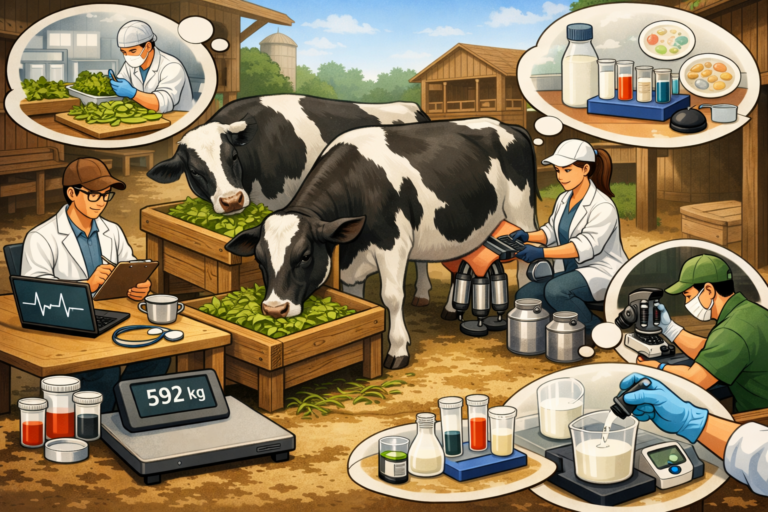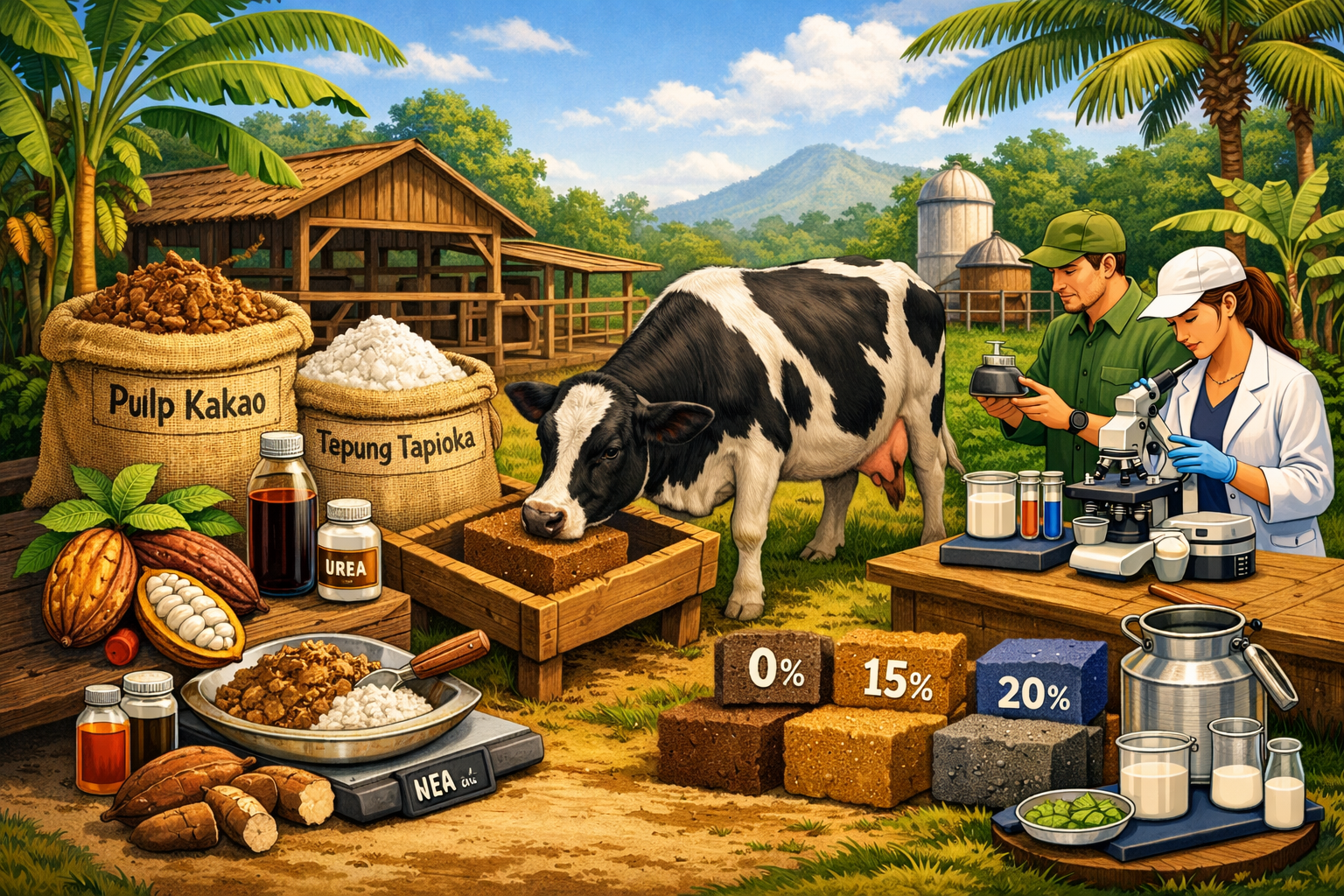

Makassar, Indonesia Apr 11 2026/DGRG/- Milk is more than a staple food—it is a lifeline for families, a source of income for farmers, and a driver of rural development. Yet the quality of milk depends on what cows eat. Farmers often struggle with expensive feeds, while scientists search for affordable, sustainable alternatives. One innovation making a difference is the Urea Molasses Multinutrient Block (UMMB), a compact feed supplement that delivers protein, energy, and minerals to ruminants.
A study titled “Enhancing Milk Yield and Quality of Holstein Friesian through Special Formulation Urea Molasses Multinutrient Block”, published in Advances in Animal and Veterinary Sciences by Nexus Academic Publishers, in 30 Desember 2024 explored how specially formulated UMMBs can improve milk yield and quality. The research showed that cows fed with these blocks produced more milk with better nutritional value. By using locally available ingredients such as tapioca meal as a natural adhesive, farmers can strengthen feed quality while reducing dependence on costly synthetic binders.
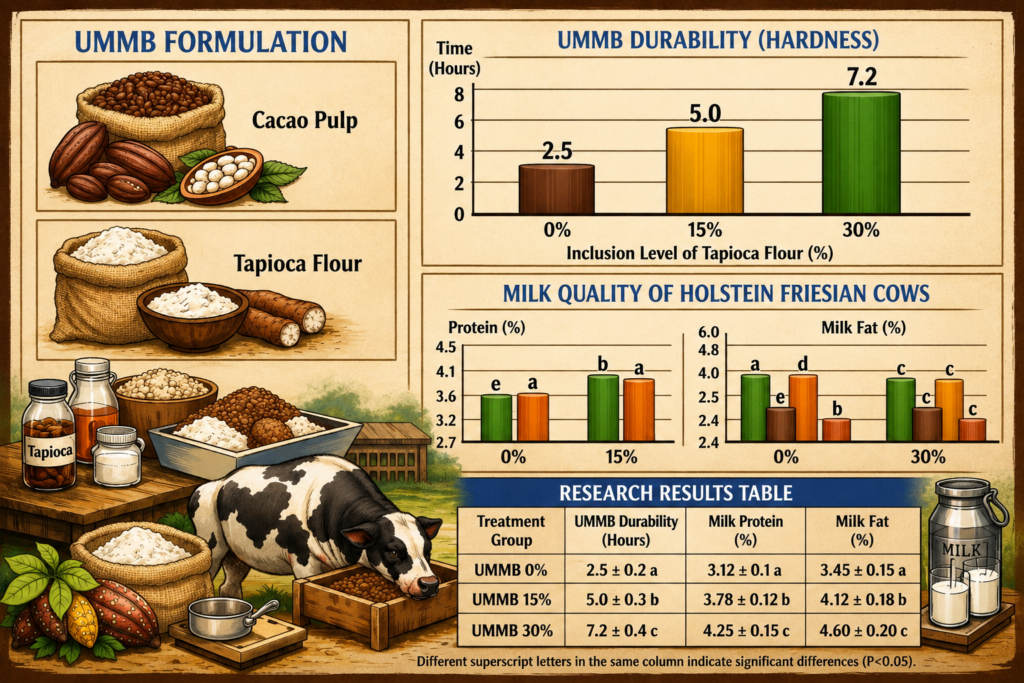
This innovation connects directly to the United Nations Sustainable Development Goal (SDG) 3: Good Health and Well-being. Nutritious milk is essential for human diets, especially for children and vulnerable populations. By improving both yield and quality, UMMBs help ensure that families have access to healthier food, reducing risks of malnutrition and supporting stronger communities.
The benefits, however, extend beyond health. Affordable feed solutions also support SDG 1: No Poverty, since farmers can cut costs and increase income. Stronger dairy production means more stable livelihoods in rural areas. At the same time, using natural adhesives like tapioca meal aligns with SDG 15: Life on Land, promoting sustainable agriculture and biodiversity. And because this research was made possible through collaboration between scientists and institutions, it reflects SDG 17: Partnerships for the Goals, showing how cooperation drives innovation.
For the general public, the message is simple: science is not only about laboratories—it is about practical solutions that improve everyday life. By turning to natural resources like tapioca meal, farmers can produce more milk, improve its quality, and contribute to multiple Sustainable Development Goals at once.
This study reminds us that small innovations in animal nutrition can ripple outward—strengthening health, reducing poverty, protecting ecosystems, and building partnerships for sustainable futures.
Reference:
DOI: https://dx.doi.org/10.17582/journal.aavs/2025/13.1.139.145
Contact:
Renny Fatmyah Utamy
+62 812 4258 3456
rennyfatmyahutamy@unhas.ac.id