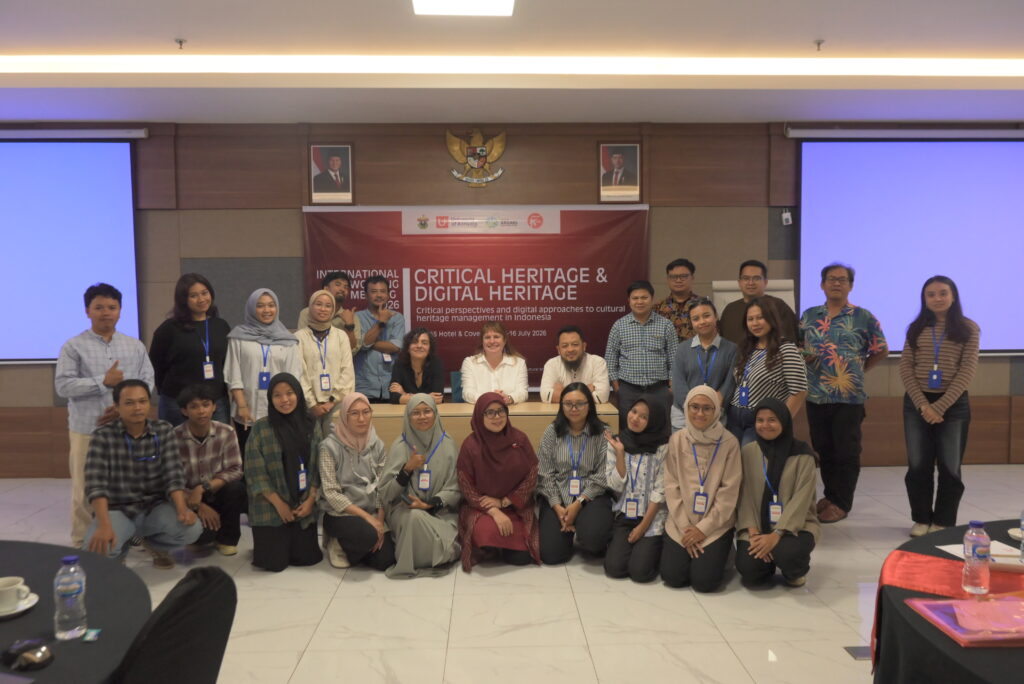
Makassar, Indonesia – From 13–17 July 2026, Universitas Hasanuddin (Unhas) and the University of Antwerp (UAntwerp), Belgium, brought together academics, researchers, government representatives, students, and heritage practitioners through the Unhas–UAntwerp Masterclass 2026: Critical Perspectives and Digital Approaches to Cultural Heritage Management in Indonesia. Held in Makassar, the five-day programme created a collaborative learning environment to explore how critical perspectives and digital innovation can contribute to a more inclusive, sustainable, and future-oriented approach to cultural heritage management.
The Masterclass involved 40 participants, representing diverse academic, research, governmental, and cultural backgrounds, including one international participant from India. The programme was conducted on 13–17 July 2026, with the University of Antwerp (UAntwerp), Belgium, serving as the international partner. Supported by Universitas Hasanuddin, Yayasan Arsari Djojohadikusumo, and the Sulawesi Archaeological Research Collaboration Center (Unhas–BRIN), the programme demonstrated the value of cross-institutional collaboration in strengthening Indonesia’s capacity to respond to contemporary heritage challenges.
Participants represented institutions including Institut Teknologi Sepuluh Nopember (ITS), Universitas Atma Jaya Yogyakarta, Universitas Brawijaya, Universitas Gadjah Mada, the National Research and Innovation Agency (BRIN), Universitas Hasanuddin, Yayasan Bumi Toala, Universitas Udayana, the Takalar Office of Culture, and the Cultural Preservation Offices of South Sulawesi and Central Sulawesi. This diverse composition encouraged interdisciplinary exchange between academic knowledge, research, public policy, and heritage practice.
The programme combined lectures, discussions, workshops, and field-based learning. Participants explored critical heritage management and examined how heritage can be understood not merely as physical remains of the past, but as a living part of identity, community, and contemporary society. Discussions on digital heritage introduced participants to the importance of documentation, metadata, data governance, and digital infrastructures in supporting research, conservation, and evidence-based decision-making.
Field activities at Fort Rotterdam and Makassar Old Town allowed participants to connect theoretical perspectives with real heritage contexts. Through collaborative exercises, they mapped stakeholders, identified heritage management challenges, developed digital heritage matrices, and considered ethical questions surrounding documentation, accessibility, and the use of digital technologies.
The Masterclass directly contributed to SDG 4 (Quality Education) by providing interdisciplinary learning and knowledge exchange opportunities. It also supported SDG 1 (No Poverty) by strengthening knowledge and capacities that can contribute to sustainable and inclusive heritage-based development, while advancing SDG 17 (Partnerships for the Goals) through collaboration among universities, research institutions, government agencies, and cultural organizations.
Beyond academic learning, the programme strengthened professional networks and encouraged participants to view heritage management as a shared responsibility. The experience concluded with a farewell dinner aboard a traditional Phinisi ship, celebrating the relationships and future collaborations developed throughout the programme.
Ultimately, the Unhas–UAntwerp Masterclass 2026 reaffirmed that the future of cultural heritage management lies in connecting critical thinking, digital innovation, quality education, and international partnership. Through initiatives such as this, Universitas Hasanuddin continues to strengthen its contribution to Indonesia’s cultural heritage future while expanding meaningful connections with the global academic and heritage community.