


Cultural Tourism Training at Sumpang Bita Prehistoric Park for Site Custodians in Collaboration with the Cultural Heritage Preservation Office Region XIX
The Cultural Tourism Training at Sumpang Bita Prehistoric Park is an initiative aimed at enhancing the knowledge and skills of site custodians in managing and promoting the site’s cultural heritage. This program is conducted in collaboration with the Cultural Heritage Preservation Office Region XIX to ensure that heritage conservation aligns with sustainable tourism practices.
The training focuses on several key aspects, including heritage interpretation, visitor engagement techniques, storytelling methods, and sustainable tourism management. Participants will receive hands-on guidance on how to communicate the historical and archaeological significance of Sumpang Bita to visitors while ensuring the preservation of its prehistoric rock art and cultural relics.
Additionally, the training emphasizes digital promotion strategies to increase public awareness and attract more responsible tourists. By equipping custodians with knowledge of best practices in heritage tourism, this initiative aims to foster a deeper appreciation of prehistoric culture while ensuring the site remains well-preserved for future generations.
Through this collaborative effort, Sumpang Bita Prehistoric Park is expected to become a model site for cultural tourism development, offering visitors an enriching educational experience while maintaining the authenticity and sustainability of its heritage asset.
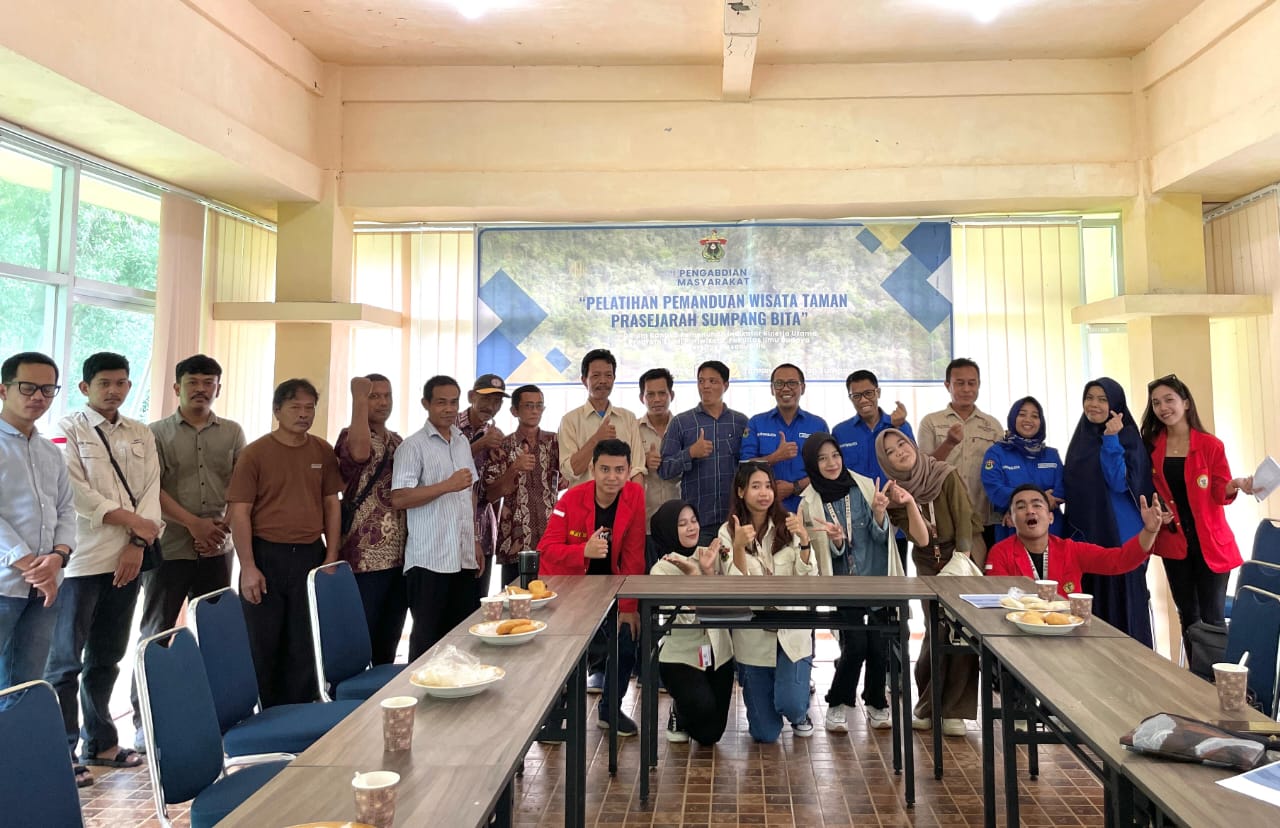
Cultural tourism requires more than attractive heritage sites. It also depends on the ability of local tourism actors to interpret cultural resources and communicate their significance to visitors in an engaging, accurate, and responsible manner. In this context, the Cultural Tourism Training at Sumpang Bita Prehistoric Park was conducted on May 6–7, 2026, at Sumpang Bita Prehistoric Park, Pangkep, South Sulawesi. The training focused on cultural tourism guiding in conservation areas, with the aim of strengthening participants’ knowledge and practical skills in delivering meaningful visitor experiences while maintaining respect for the archaeological and environmental values of the site.
The training introduced participants to the distinctive characteristics of guiding in a heritage conservation setting. Unlike conventional tourism destinations, prehistoric sites require guides to communicate information carefully because the resources being presented are often irreplaceable archaeological remains and cultural heritage. Participants were therefore encouraged to understand the importance of balancing visitor engagement with the principles of conservation and responsible tourism.
A central topic of the training was the role of cultural tourism guides as interpreters of heritage. Participants explored how archaeological information can be transformed into narratives that are accessible to visitors without losing their historical and scientific context. Effective guiding involves not only delivering factual information but also connecting visitors with the cultural meaning, historical significance, and broader context of the heritage landscape. This approach can help visitors develop greater appreciation for the site and encourage more responsible behavior during their visits.
The training also emphasized the importance of communication skills in cultural tourism guiding. Participants were introduced to approaches for presenting information clearly, responding to visitor questions, managing different types of audiences, and creating engaging storytelling experiences. These competencies are particularly important in prehistoric and archaeological destinations, where visitors may have limited prior knowledge about the site’s history and cultural significance.
Another important aspect of the activity was the relationship between tourism and conservation. Participants discussed how tourism activities can contribute to heritage awareness while simultaneously creating potential pressures on fragile archaeological and environmental resources. Through responsible guiding practices, local tourism actors can become an important part of conservation efforts by helping visitors understand site regulations, protecting sensitive areas, and promoting respectful interaction with cultural heritage.
The activity contributes to Sustainable Development Goal (SDG) 4: Quality Education by providing opportunities for tourism stakeholders to strengthen their knowledge, professional skills, and competencies in cultural heritage interpretation and sustainable tourism guiding. It also supports SDG 8: Decent Work and Economic Growth by enhancing the professional capacity of local tourism actors and strengthening the human resources needed for culturally responsible tourism development.
Furthermore, the training supports SDG 15: Life on Land through its emphasis on responsible tourism practices within a conservation area. Protecting prehistoric heritage requires an integrated understanding of cultural and environmental values, particularly when tourism activities take place within sensitive landscapes.
Overall, the Cultural Tourism Training at Sumpang Bita Prehistoric Park demonstrated the importance of strengthening local guiding capacity as part of sustainable heritage management. By improving participants’ ability to interpret cultural resources and communicate conservation values, the activity contributes to developing tourism experiences that are educational, engaging, and respectful of the prehistoric heritage of South Sulawesi.