

MAKASSAR, Indonesia July 14 2026 /CTRG/ – Real change often begins with a simple opportunity to learn. When women gain new knowledge and practical skills, they do more than improve their own lives—they strengthen families, support local economies, and inspire community development. This idea is clearly demonstrated in a recent community empowerment initiative conducted in Indonesia, where digital technology and entrepreneurship training became powerful tools for sustainable development.
The inspiration for this article comes from a scientific publication entitled “The Role of Women Entrepreneurs to Support Food Security and SDGs 2030 in the Tourism Sector through Application Training.” The article was published on April 8, 2025, in the Journal of Community Service and Empowerment, a scholarly journal published by LPPI University of Muhammadiyah Malang. The publication highlights how practical training in digital literacy and business management can empower women entrepreneurs while contributing to the achievement of the Sustainable Development Goals (SDGs).
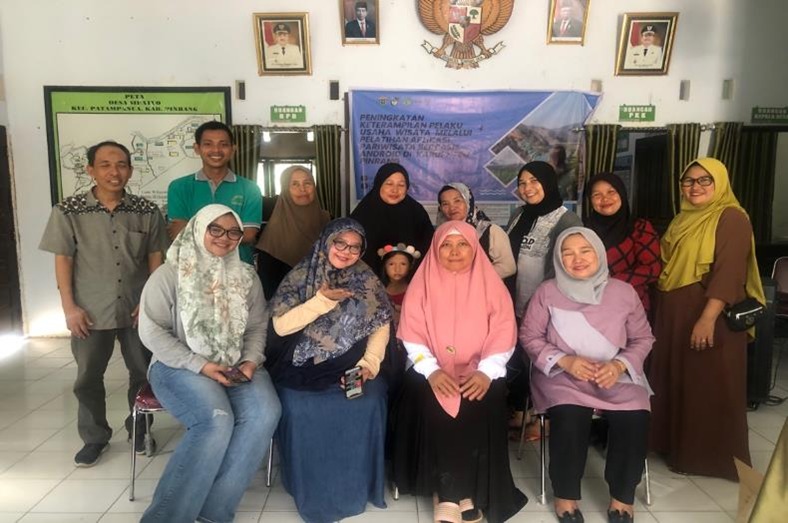
The project involved women entrepreneurs from Sipatuo Village, South Sulawesi, who participated in training on financial management and Android-based business applications. Many of these women already had small tourism-related businesses but lacked the digital skills needed to expand their markets. Through hands-on learning, mentoring, and practical exercises, they became more confident in managing finances, promoting products online, and utilizing technology to improve their businesses.
While the original research discusses several Sustainable Development Goals, one of the most meaningful connections is with SDG 4: Quality Education. SDG 4 is not limited to classrooms or formal schooling. It also promotes lifelong learning opportunities that equip people with practical knowledge to improve their quality of life. The training described in the study is an excellent example of lifelong education in action. Instead of focusing solely on theory, participants acquired real-world skills that they could immediately apply in their daily businesses.
Education has become one of the most valuable investments in today’s digital economy. Learning how to use mobile applications, organize business finances, and market products online allows small entrepreneurs to compete in an increasingly connected world. More importantly, these skills create confidence. Women who once relied only on traditional selling methods can now reach broader markets and make informed business decisions.
The benefits extend far beyond individual success. As women improve their businesses, household incomes become more stable, local tourism products gain greater visibility, and communities become more economically resilient. In this way, education becomes a driver of inclusive growth rather than simply a personal achievement.
The experience from Sipatuo Village reminds us that sustainable development is not always about massive infrastructure or expensive technology. Sometimes, it begins with a training session, a smartphone, and a willingness to learn. Empowering women through education creates a ripple effect that reaches families, communities, and future generations.
Achieving SDG 4: Quality Education requires making learning accessible, practical, and relevant for everyone. When knowledge is shared with purpose, education becomes more than a right—it becomes a pathway toward sustainable development, stronger communities, and a better future for all.
Reference:
DOI https://doi.org/10.22219/jcse.v6i1.37552
Contact:
Prof. Seniwati, S.Sos., M.Hum., Ph.D
+62 823-4526-9476
Seniwati@unhas.ac.id


