
MAKASSAR, Indonesia, Sep 03 2025 /CORN-RG/– Climate change is making drought an increasingly serious challenge for maize production. For farmers, especially in tropical regions, a shortage of water during critical growth stages can result in smaller plants, reduced kernel development, and significantly lower harvests.
But what if breeders could identify maize hybrids that continue producing well even when water becomes scarce?
A recent study led by Muhammad Azrai and colleagues provides promising answers. Published in Frontiers in Sustainable Food Systems, the study entitled “Integrating Multi-Trait and Multi-Index Approaches for Identifying Drought Tolerant Tropical Maize Genotypes” explored how multiple drought-tolerance indicators and advanced selection methods can be combined to identify resilient tropical maize hybrids.
The researchers evaluated 33 tropical maize hybrids under both normal irrigation and controlled drought conditions at two locations in South Sulawesi, Indonesia: Maros and Bajeng. Water was withheld from 40 days after planting until approximately the milk stage, covering a critical period that includes flowering and early grain development.
Rather than focusing only on grain yield, the researchers evaluated multiple characteristics related to plant growth, physiology, and productivity. This multi-trait approach provides a more comprehensive picture of how different maize genotypes respond when water becomes limited.
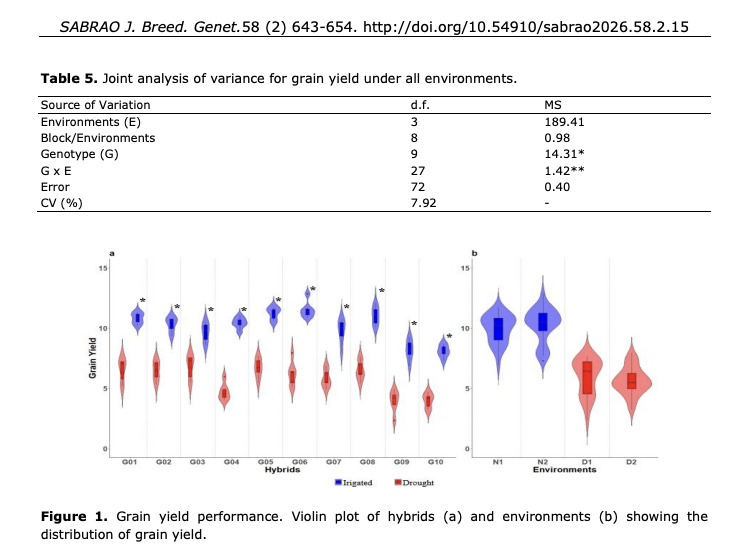
The results clearly demonstrated the impact of drought on maize performance. Water stress reduced plant height by 12%, leaf area by 20.7%, chlorophyll-related SPAD values by 12.9%, and 1,000-kernel weight by 10.8%. Most importantly, average grain yield declined by approximately 23% compared with plants grown under normal irrigation.
But not every maize hybrid responded in the same way.
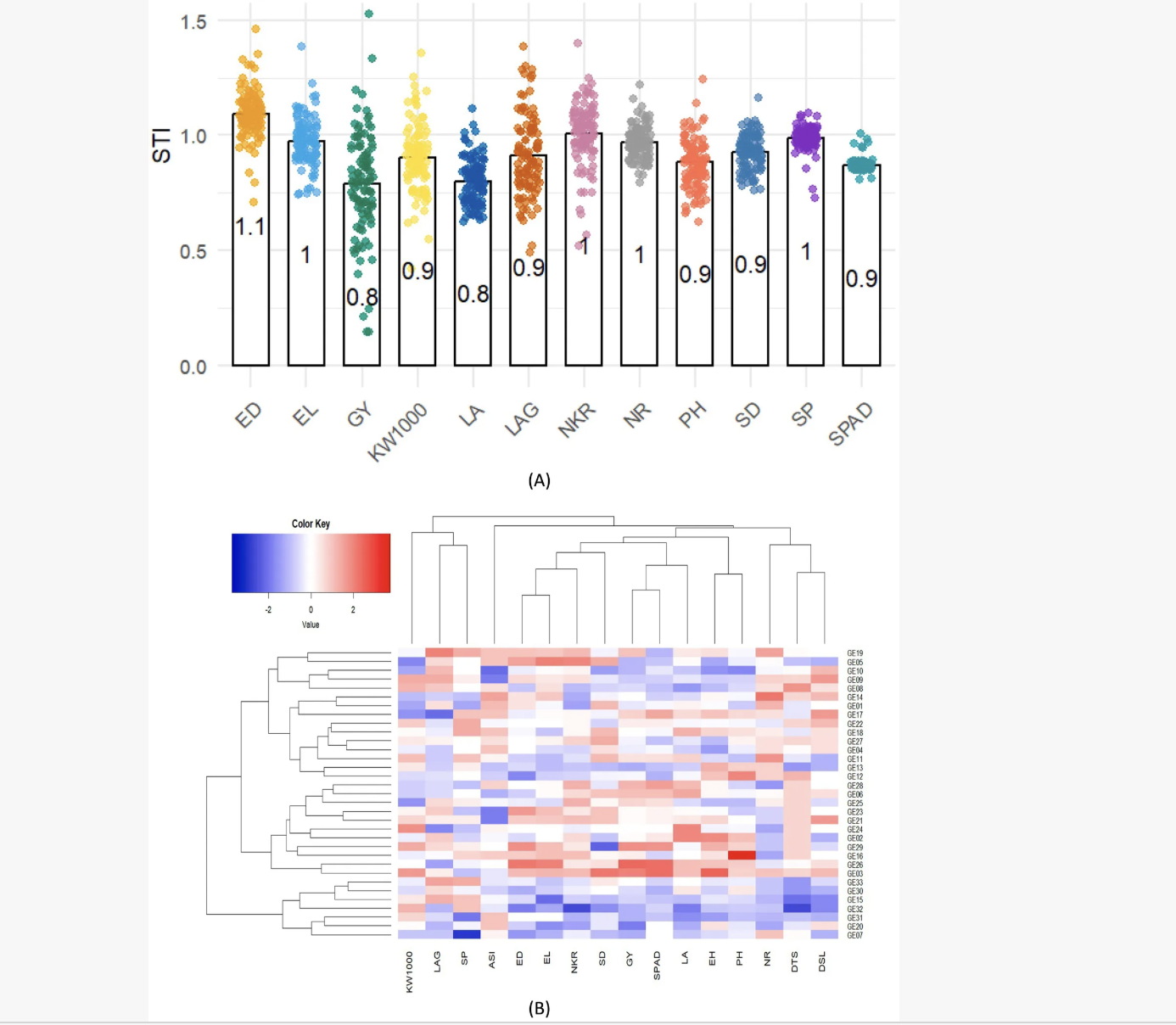
To identify the most promising materials, the researchers combined four drought-tolerance indices—Stress Tolerance Index (STI), Stress Susceptibility Index (SSI), Yield Stability Index (YSI), and Harvest Index (HI)—with the Multi-Trait Genotype-Ideotype Distance Index (MGIDI).
MGIDI can be understood as a tool for identifying plants that come closest to an “ideal maize.” Instead of selecting a genotype based on a single characteristic such as grain yield, the method considers several desirable traits simultaneously. This allows breeders to identify genotypes that combine productivity with characteristics needed to perform under stressful environmental conditions.
Using the drought-tolerance indices, the researchers identified six promising hybrids: GE13, GE17, GE21, GE26, GE29, and GE32. When these results were combined with the MGIDI analysis, GE13, GE21, and GE32 consistently emerged as the strongest candidates across both selection approaches.
These findings demonstrate an important principle in modern maize breeding: the highest-yielding genotype under favorable conditions is not necessarily the best genotype when environmental conditions become stressful. By integrating multiple traits and selection indices, breeders can identify maize hybrids that offer a better balance between productivity and drought resilience.
This approach is particularly important for tropical agriculture, where variability in rainfall and water availability can strongly influence crop performance. Developing maize hybrids capable of maintaining productivity under water-limited conditions can provide farmers with more resilient options for increasingly unpredictable growing environments.
The research contributes directly to Sustainable Development Goal 2 (SDG 2): Zero Hunger by supporting the development of resilient crop varieties that can help sustain agricultural production under challenging environmental conditions.
It also contributes to SDG 13: Climate Action, as developing drought-tolerant crops is an important component of adapting agricultural production systems to increasing climate variability.
In addition, the study is relevant to SDG 15: Life on Land by supporting more efficient use of existing agricultural land. Improving crop adaptation to water-limited environments can help maintain agricultural productivity without relying solely on the expansion of cultivated areas.
The message is simple but increasingly important:
The maize of the future should not only produce high yields when conditions are favorable—it must also keep producing when water becomes scarce.
By integrating multi-trait evaluation with advanced selection tools such as MGIDI, this research provides a scientific foundation for identifying tropical maize hybrids that combine productivity and drought resilience, supporting the development of more sustainable and climate-resilient maize production systems.
Reference:
Azrai, M., et al. (2025). Integrating Multi-Trait and Multi-Index Approaches for Identifying Drought Tolerant Tropical Maize Genotypes. Frontiers in Sustainable Food Systems, 9, 1608307.
DOI: 10.3389/fsufs.2025.1608307
Contact:
Prof. Dr. Muhammad Azrai
Faculty of Agriculture, Hasanuddin University
azrai@agri.unhas.ac.id