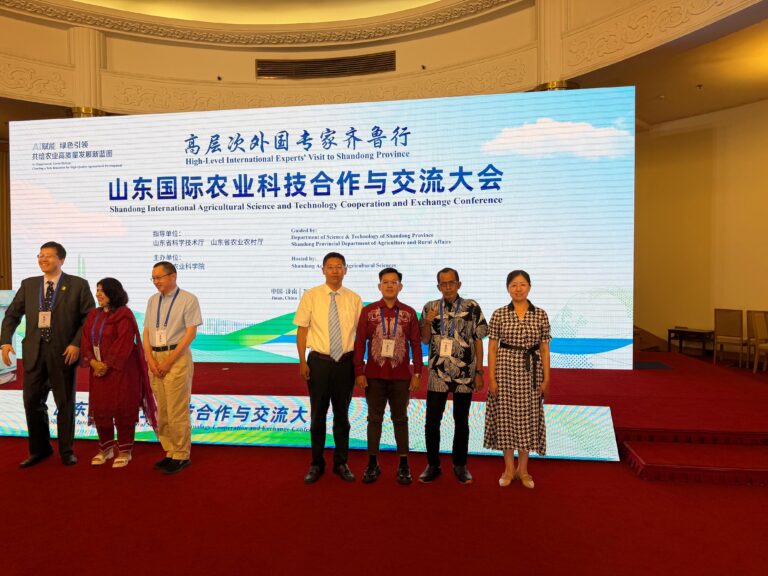

International scientific collaboration plays an increasingly important role in addressing agricultural challenges, particularly the need to develop productive, adaptable, and sustainable crop technologies. In this spirit, the Faculty of Agriculture, Hasanuddin University (UNHAS), Indonesia, and the Shandong Academy of Agricultural Sciences (SAAS), China, have established a joint research collaboration to strengthen maize breeding, cultivation technology, and scientific innovation.
The collaborative activity is entitled “Development and Application of Suitable Maize Hybrid Breeding and High-Yield & High-Efficiency Techniques for Indonesia.” It is part of the proposed 2025 “Belt and Road” Sci-Tech Poverty Alleviation Cooperation Project under the National Key R&D Program “Strategic Scientific and Technological Innovation Cooperation” of the Ministry of Science and Technology of the People’s Republic of China.
Advancing Maize Research through International Collaboration
The collaboration aims to integrate the scientific platforms, expertise, research resources, and human resources of both institutions to advance maize genetic breeding, cultivation techniques, and technology application relevant to agricultural production in Indonesia.
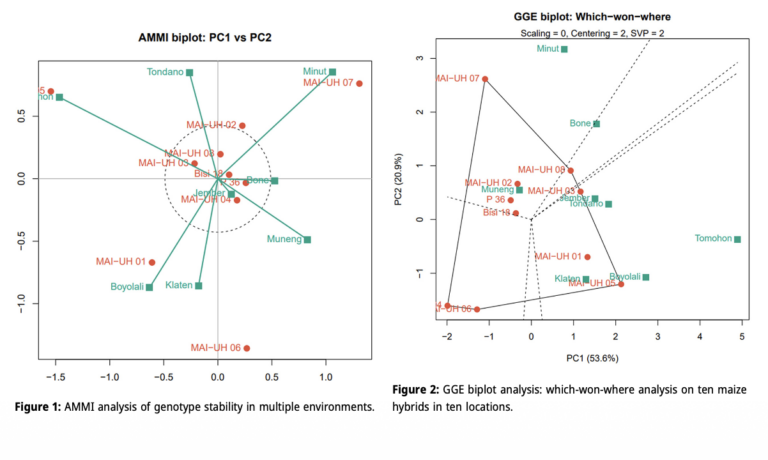
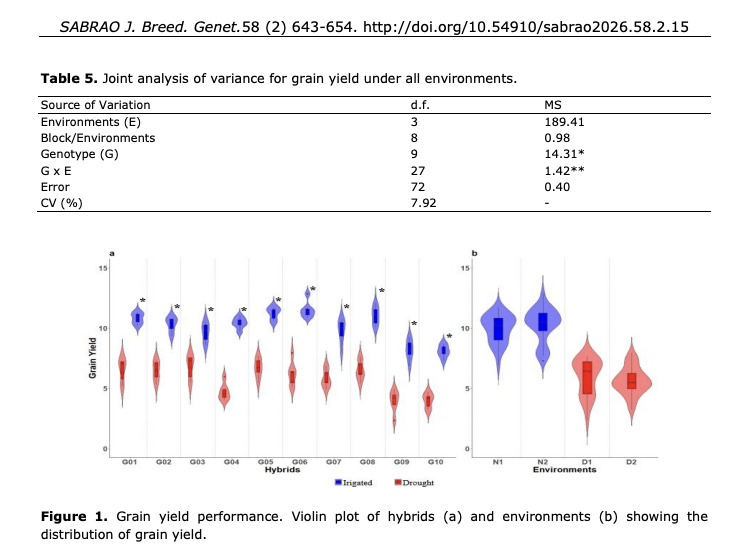
The collaboration covers several strategic activities, including maize variety selection, development of precision identification systems and platforms, advancement of maize breeding technologies, research and integrated application of cultivation techniques, joint testing and regional adaptability evaluation of new varieties, joint scientific publications, academic exchanges, and personnel exchanges.
Through these activities, UNHAS and SAAS seek to combine their respective scientific strengths and research capabilities to support the development and application of improved maize varieties and efficient production technologies suitable for Indonesian conditions.
Formalizing the UNHAS–SAAS Research Partnership
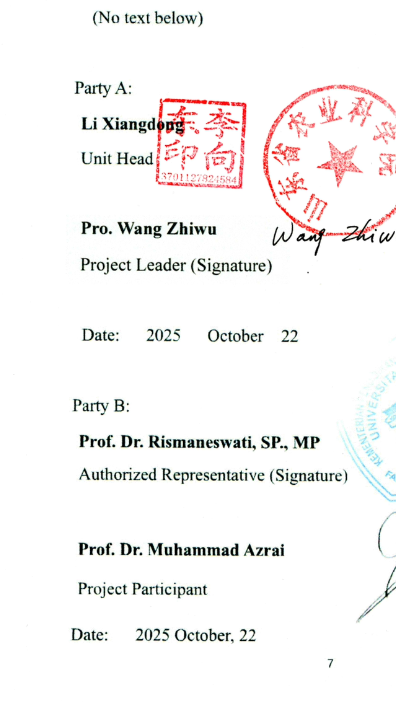
The collaboration is formally established through a cooperation agreement involving the Shandong Academy of Agricultural Sciences (SAAS), China, and the Faculty of Agriculture, Hasanuddin University (UNHAS), Indonesia.
Under the agreement, Li Xiangdong represents Party A as Unit Head, while Prof. Wang Zhiwu serves as the Project Leader. Hasanuddin University is represented by Prof. Dr. Rismaneswati, S.P., M.P. as the Authorized Representative, with Prof. Dr. Muhammad Azrai serving as the Project Participant.
The agreement was formally signed on 22 October 2025, providing an institutional framework for the implementation of the joint research activities.
This formal partnership provides a foundation for integrating scientific expertise, research platforms, human resources, and institutional capacities from Indonesia and China in advancing maize research and agricultural innovation.
Involving Young Researchers and Doctoral Students
An important dimension of this international collaboration is the involvement of young researchers and doctoral students within the Tropical Research Group (TRG).
The participating students include Ervendi, S.P., M.Si., a TRG-track doctoral student in Agricultural Sciences at Hasanuddin University, and Reynaldi Laurenze, S.P., M.Si., a doctoral student currently pursuing his Ph.D. studies in Taiwan and also a member of TRG.
Their involvement strengthens the integration of research, postgraduate education, and international scientific networking. Participation in an international research environment also provides opportunities for young researchers to develop experience in collaborative research, maize breeding, scientific communication, and international knowledge exchange.
By involving doctoral students and young researchers, the collaboration contributes not only to current research activities but also to capacity building and the development of the next generation of agricultural scientists. This is important for ensuring the continuity of maize research and strengthening future international scientific collaboration.
From Joint Research to Agricultural Innovation
The UNHAS–SAAS partnership creates opportunities to translate scientific achievements into practical agricultural applications. Research on maize breeding, variety evaluation, regional adaptability, and cultivation technologies is expected to generate knowledge and innovations relevant to improving maize production in Indonesia.
The collaboration also provides a framework for the management and potential utilization of scientific outputs generated through joint research, including new varieties, technologies, research data, intellectual property, and other research achievements in accordance with the provisions agreed upon by the collaborating institutions.
By connecting scientific research, institutional cooperation, and human resource development, the collaboration provides a foundation for advancing maize innovation from research toward broader agricultural applications.
Contribution to the Sustainable Development Goals
The UNHAS–SAAS collaboration contributes to several Sustainable Development Goals (SDGs).
It supports SDG 1: No Poverty through agricultural research and technological innovation aimed at supporting more productive farming systems and creating opportunities for improved agricultural livelihoods.
The involvement of doctoral students, academic exchanges, collaborative research, scientific publications, personnel exchanges, and international knowledge sharing contributes to SDG 4: Quality Education.
Most importantly, the collaboration strongly reflects SDG 17: Partnerships for the Goals by demonstrating how international partnerships can bring together scientific expertise, research infrastructure, education, human resources, and technological capabilities to address shared agricultural challenges.
Through the “Development and Application of Suitable Maize Hybrid Breeding and High-Yield & High-Efficiency Techniques for Indonesia” initiative, Hasanuddin University and the Shandong Academy of Agricultural Sciences are strengthening a strategic scientific partnership between Indonesia and China.
The integration of joint research, institutional cooperation, and the involvement of young researchers and doctoral students provides a strong foundation for long-term collaboration aimed at advancing productive, adaptable, and sustainable maize innovation for Indonesia.