
Makassar, Indonesia, 17 September 2026/Cores/ – Some crimes leave no witness. Bomb fishing happens fast, often far from shore, and the evidence sinks to the bottom. For decades, nobody could say with real numbers just how often it was happening in the reefs of eastern Indonesia. Now, a cheap underwater microphone and a small piece of artificial intelligence have given that crime a number, and it is much higher than most people feared.
The findings come from “Widespread Bomb Fishing in Indo-Pacific Archipelago Revealed Through Machine Learning Accelerated Passive Acoustic Monitoring,” published in Remote Sensing in Ecology and Conservation by Wiley-Blackwell Publishing Ltd, with the paper made available on 12 August 2026. A team working with Universitas Hasanuddin and the Mars Coral Reef Restoration Project anchored an underwater recorder, costing under $150, at a single site in the Spermonde Archipelago off South Sulawesi. Over 16 months it gathered more than 3,600 hours of audio.
Listening to all of that by hand would take a human years. Instead, the researchers trained a machine-learning model nicknamed BombDetect to recognise the distinctive low-frequency thud of an underwater blast among the constant crackle of snapping shrimp and other reef noise. The model flagged the likely blasts; humans then checked each one by eye on a spectrogram, cutting review time by more than fifty-fold.
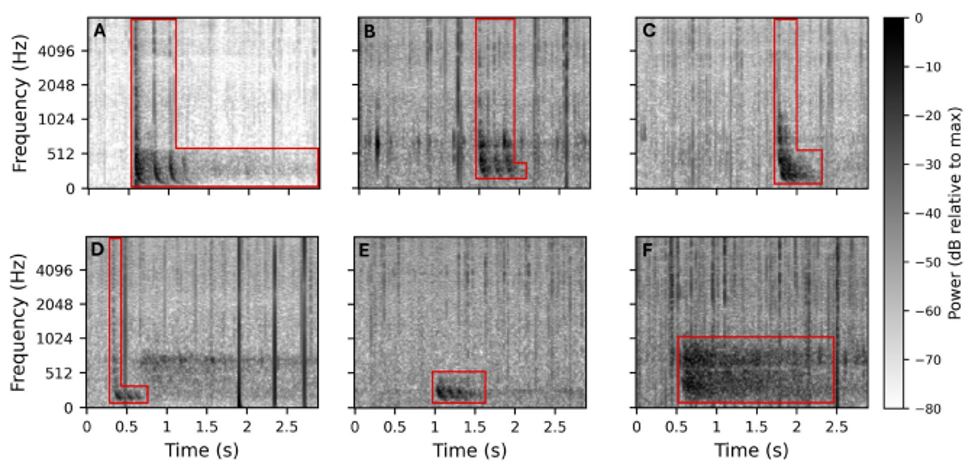
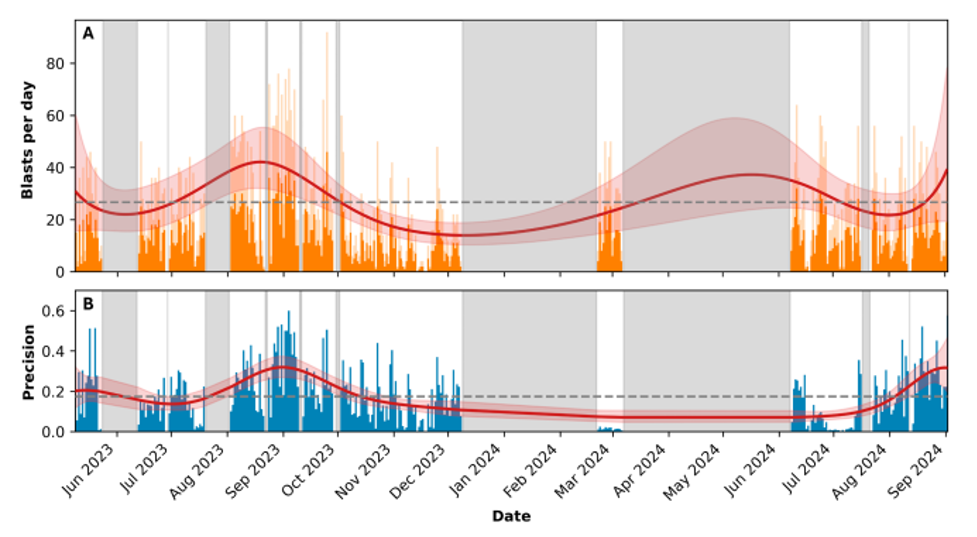
The result was sobering: 3,567 confirmed blasts, averaging 23 a day, projecting to roughly 8,446 blasts a year. Up to 16.7 hectares of reef pulverised annually within just the area one recorder could hear, a zone nearly 17 kilometres across. Bombing happened every day of the year and mostly in daylight, when fishers could see the fish shoals they were targeting. The one dependable lull came on Fridays, the local day of communal prayer, when blasts dropped by more than half.
Why does this matter beyond one archipelago? Coral reefs like Spermonde’s sit inside the most biodiverse marine region on Earth, and this kind of acute, repeated destruction directly undermines SDG 14 (Life Below Water). The practice persists partly because, for fishers with few other options, it is simply more profitable than any legal method — a reminder that ocean conservation cannot be separated from SDG 1 (No Poverty). Elsewhere, poor awareness of the ecological damage has been cited as another driver, pointing to a role for SDG 4 (Quality Education) in changing behaviour over the long term. And the tool itself is a partnership story: a university, a conservation NGO, and a private-sector restoration project combined to build something none of them could have built alone, the essence of SDG 17 (Partnerships for the Goals).
The researchers are careful to call this a baseline, not a solution. But a baseline is exactly what enforcement and community programs have lacked. You cannot fix what you cannot measureand for the first time, someone is measuring the bombs, one blast at a time.
References:
DOI: https://doi.org/10.1002/rse2.70093
Contact:
Prof. Dr. Ir. Jamaluddin Jompa, M.Sc.
j.jompa@unhas.ac.id