
Makassar, Indonesia, 17 September 2026/Cores/ – To protect a coral reef, most people would think to work at sea such as patrol the water, ban destructive fishing, plant new coral. A large new study on eastern Indonesia suggests something less obvious: some of the most valuable work happens dozens of kilometres inland, on a hillside no diver will ever see.
The research, “Ridge-to-reef conservation avoids future deforestation and sediment exposure of coral reefs,”was published in Biological Conservation by Elsevier and made available online on 16 August 2026. An international team, including researchers from Universitas Hasanuddin in Makassar, examined the whole Wallacea region, roughly 1,680 islands and 40,900 kilometres of coastline sitting at the heart of the Coral Triangle.
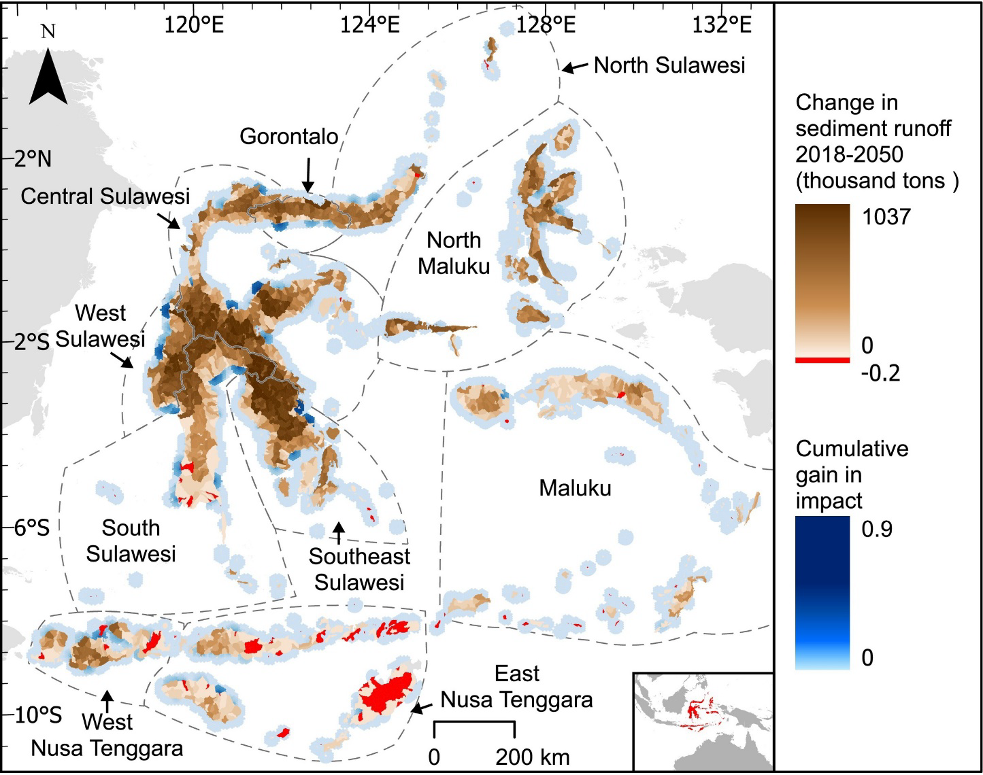
The logic is simple. When forest is cleared, rain that once soaked into deep-rooted vegetation instead runs off, carrying soil with it. Rivers deliver that soil to the sea, where it clouds the water. Cloudy water blocks the sunlight corals need, smothers their surfaces, and slowly replaces a diverse reef with a few tough, silt-tolerant species.
Using rainfall data, forest maps, and satellite readings of ocean murkiness, the team estimated that sediment flowing off Wallacea’s land will rise from about 917 million tonnes a year in 2018 to roughly 1,065 million tonnes by 2050 if deforestation continues as usual. Three provinces of Sulawesi alone, Central, Southeast, and South account for 77 percent of that increase.
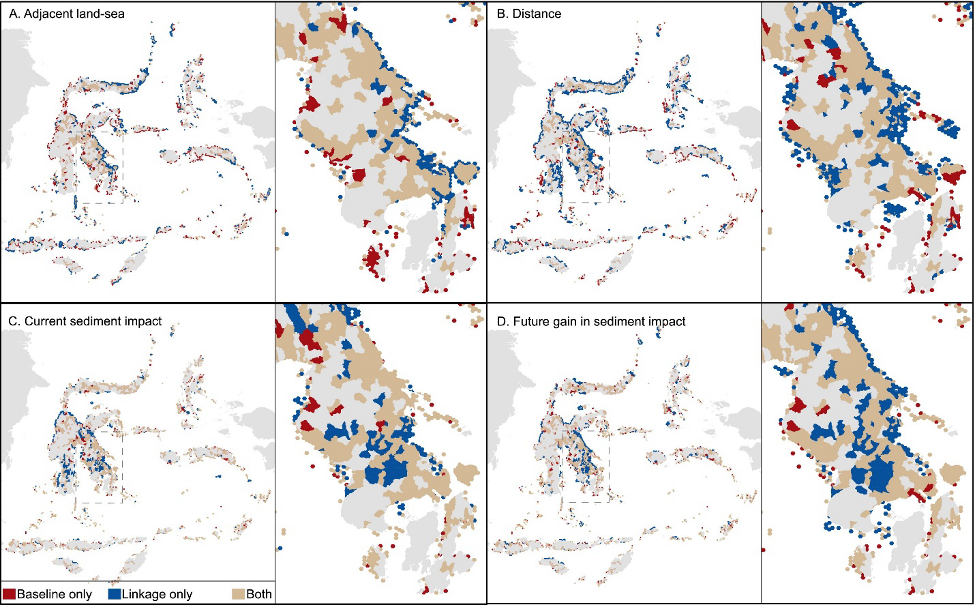
Then came the useful part. The researchers tested four ways of planning conservation, and compared them against a plan where land and sea are protected separately, as usually happens. Protecting land and sea in a coordinated way cut future sediment by an extra quarter, for only about five percent more in economic cost to local people.
But how you coordinate matters enormously. Simply protecting land next to the reef barely helped. Planning based on where sediment actually ends up avoided up to twelve times more soil than that neighbour-based shortcut. The catchments that mattered most were often far inland, in Sulawesi’s steep, rugged interior.
These findings connect directly to several Sustainable Development Goals. Because the work protects forests and threatened species, it advances SDG 15 (Life on Land); because it shields reefs from sediment, it serves SDG 14 (Life Below Water) at the same time. The study deliberately weighted the cost to communities most dependent on forests, keeping SDG 1 (No Poverty) in view rather than treating conservation as something imposed on the poor. And since forests and oceans in Indonesia are governed by different ministries, delivering any of this depends on SDG 17 (Partnerships for the Goals).
One honest caveat: these are models, meant to show relative patterns rather than exact futures. Even so, the message is hard to ignore. A reef’s fate may be decided by decisions made on a mountainside by a permit signed, a slope left forested, or a river given time to run clear.
References:
DOI: https://doi.org/10.1016/j.biocon.2026.112058
Contact:
Prof. Dr. Ir. Jamaluddin Jompa, M.Sc.
j.jompa@unhas.ac.id