
Makassar, Indonesia, 17 September 2026/Cores/ – Corals get sick, just as people do. And like us, they get sicker when conditions turn against them. In the Spermonde Archipelago off Makassar, researchers wanted to know exactly how much a two-degree rise in seawater temperature matters to a coral fighting off a bacterial infection. The answer, it turns out, is complicated and more urgent than a simple headline suggests.
The study, titled “Disease Dynamics in Hard Corals: Transmission Study of Desulfovibrio salexigens and Acinetobacter sp.,” appeared in the Journal of Aquaculture and Fish Health, published by the Department of Fish Health Management and Aquaculture, Universitas Airlangga, on 18 June 2026. The team brought coral fragments from Spermonde into a controlled laboratory at Hasanuddin University and gave them a problem to solve.
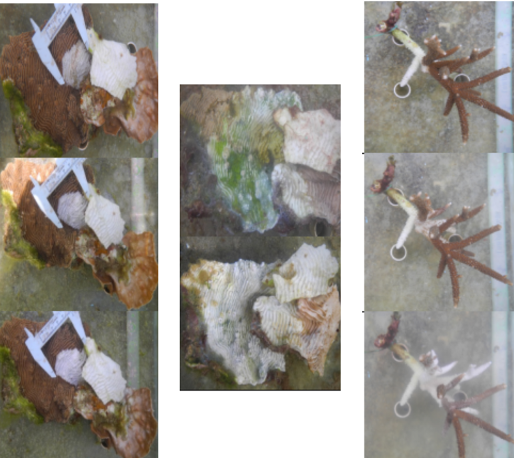
Two corals were tested. Pachyseris, a flat, leaf-like coral, was exposed to the bacterium behind Black Band Disease. This infection leaves a dark, creeping line separating living tissue from dead. Acropora, the familiar branching “staghorn” coral, faced the bacterium linked to Brown Band Disease. Each was kept at either 29°C or 31°C, the difference between a normal tropical sea and one in the grip of a marine heatwave.
The extra two degrees were devastating for Pachyseris. The disease spread twice as fast at 31°C, advancing up to 1.72 centimetres per day. Symptoms that took five days to appear at the cooler temperature showed up on day one in the warmer tank, and fragments were dead within a week. Heat, in effect, turns up the metabolism of the bacteria while turning down the coral’s defences.
Acropora behaved differently: its infection actually moved fastest at 29°C, reaching 2.20 centimetres per day. That surprise is a reminder that reefs are not a single system responding in one direction. A coral’s shape matters, flat corals trap sediment that shelters bacteria, while branching corals sit exposed in the current. So does the identity of the pathogen. Any mitigation plan that ignores this variety will misjudge the risk.
The findings speak directly to the Sustainable Development Goals. Most obviously, they serve SDG 14 (Life Below Water) by clarifying how warming and sedimentation drive reef disease. They also touch SDG 3 (Good Health and Well-Being), since opportunistic bacteria such as Acinetobacter thriving in warmer water is a One Health concern that does not stop at the shoreline. Because millions of coastal Indonesians earn their living from reef fisheries, healthy reefs underpin SDG 1 (No Poverty). And the work itself is a collaboration between a private university, a national research agency, and Hasanuddin University, demonstrates SDG 17 (Partnerships for the Goals), the kind of alliance needed to turn laboratory evidence into policy.
The practical message is not despair. Cutting land-based sediment and pollution, protecting reef zones, and researching probiotics that strengthen coral immunity are all within reach. Warmer seas may be coming, but how sick our reefs become is still partly our decision.
Refenrences:
DOI: https://doi.org/10.20473/jafh.v14i2.68325
Contact:
Prof. Dr. Ir. Jamaluddin Jompa, M.Sc.
j.jompa@unhas.ac.id