Description
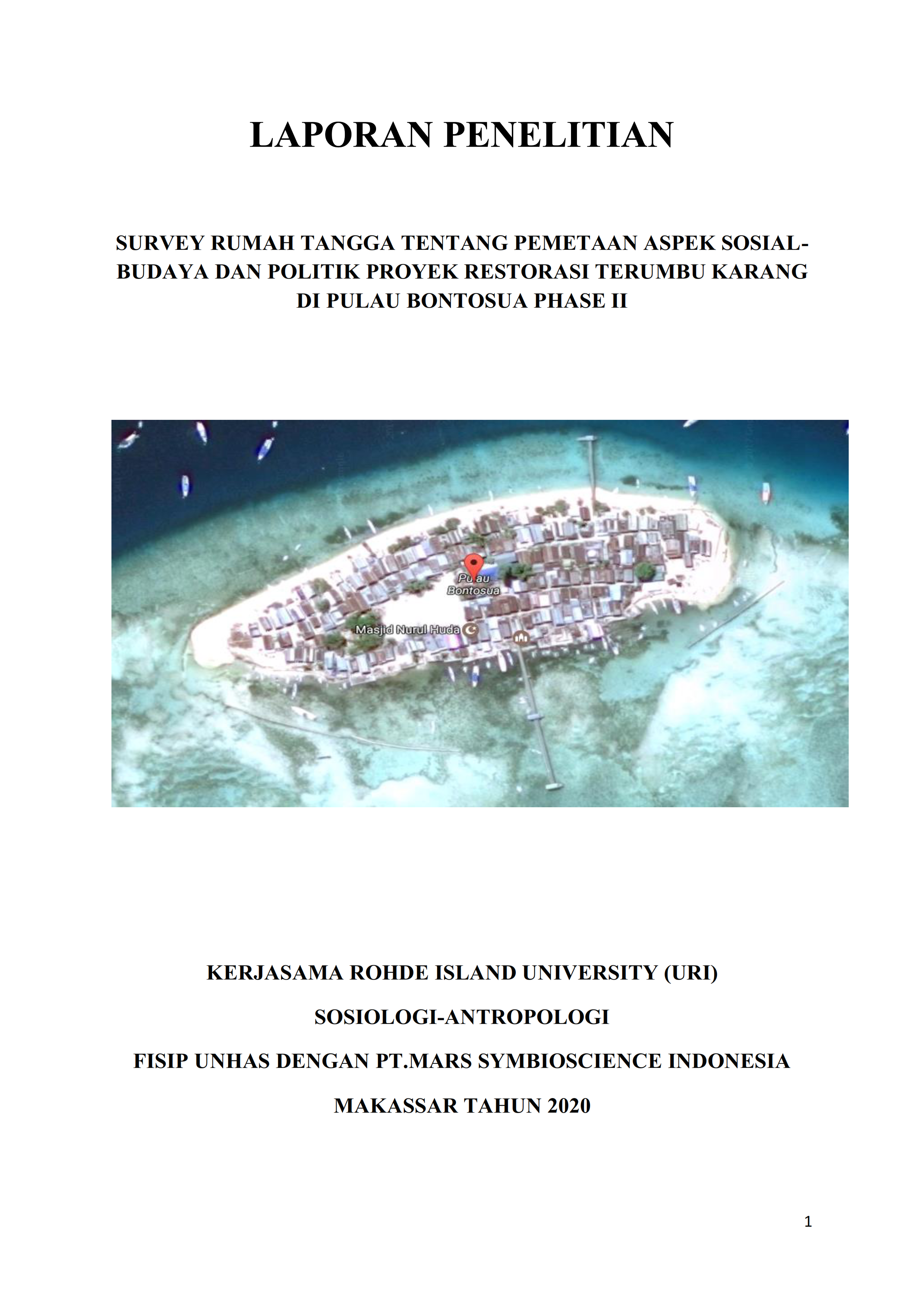
The report titled “Household Survey on Mapping Socio-Cultural and Political Aspects of the Coral Reef Restoration Project in Bontosua Island Phase II” presents a comprehensive quantitative study conducted in collaboration between PT. Mars Symbioscience Indonesia, the University of Rhode Island (URI), and the Sociology-Anthropology Department of Universitas Hasanuddin. It explores the socio-economic, cultural, and political dynamics of Bontosua Island following the Phase I coral reef restoration, aiming to assess changes in livelihoods, community perceptions, and environmental sustainability. The study, based on household surveys, reveals that while most residents rely on fishing, they face challenges in income stability, access to clean water, education, and waste management. Despite limited awareness of ecological impacts, the community shows optimism about the future of coral reefs and expresses a desire for greater participation in marine resource governance. The report concludes with strategic recommendations to enhance community empowerment, environmental stewardship, and sustainable development in Bontosua.
Description
The final report on the Conflict Vulnerability Mapping of North Kalimantan Province (2024) presents a comprehensive analysis of social conflict risks across five districts and one city. Using mixed methods and spatial analysis, the study identifies 34 conflict issues, with Nunukan classified as a red zone (high risk), Bulungan and Tarakan as yellow zones (moderate risk), and Tana Tidung and Malinau as green zones (low risk). Key conflict types include land disputes, political power struggles, ethnic and religious tensions, economic inequality, and border issues with Malaysia. The report emphasizes the importance of inclusive governance, legal recognition of indigenous land rights, intergroup dialogue, and participatory mapping to prevent and resolve conflicts. It also highlights strategic vulnerabilities in border areas, particularly in Nunukan, due to illegal trade, migration, and economic dependence on Malaysia.
Description
This report presents a comprehensive study on the potential development of tourism, economic, social, and cultural impacts, as well as the integration of transportation modes along the Makassar–Parepare railway corridor in South Sulawesi. Conducted by Universitas Hasanuddin in collaboration with the Ministry of Transportation, the research analyzes community mobility patterns, readiness of local governments and residents, and the railway’s contribution to regional development. Using a mixed-method approach, the study surveyed 300 respondents across Maros, Pangkep, and Barru, revealing high public awareness of the railway, strong potential for tourism growth, and significant economic opportunities through improved connectivity. However, challenges such as infrastructure gaps, land acquisition conflicts, and limited public transport integration remain. The findings emphasize the need for inclusive planning, local workforce engagement, and strategic multimodal transport policies to maximize the railway’s benefits for sustainable development.