MAKASSAR, Indonesia Mar 9 2026/Coffee-RG/ – For millions of people around the world, coffee is more than just a drink—it is a daily ritual. Behind every cup, however, lies a complex journey that begins with a small fruit known as the coffee cherry. Scientists and coffee experts continue to explore new ways to improve the quality, flavor, and economic value of coffee. One promising innovation is ohmic-based carbonic maceration, a modern fermentation technique that may reshape the future of specialty coffee.This innovation is comprehensively discussed in the review article “Ohmic-based Carbonic Maseration of Arabica Coffee Cherries: A Review,” published in BIO Web of Conferences, by EDP Sciences, on 27 March 2024. The review explores how controlled fermentation, microbial activity, and ohmic heating can work together to improve the sensory quality of Arabica coffee while opening new opportunities for specialty coffee production.
Coffee is one of the most important agricultural commodities in the world. Global coffee production exceeds millions of tons each year, and countries such as Brazil, Vietnam, Colombia, and Indonesia play a major role in supplying this beloved beverage. Because of its economic significance, improving coffee quality is essential not only for consumers but also for farmers and producing countries.
Traditionally, coffee beans are produced from coffee cherries through three main processing methods: wet, dry, and semi-dry processing. Each method involves fermentation, a biological process in which microorganisms break down the sticky mucilage layer surrounding the beans. This stage is crucial because it strongly influences the final taste and aroma of coffee.
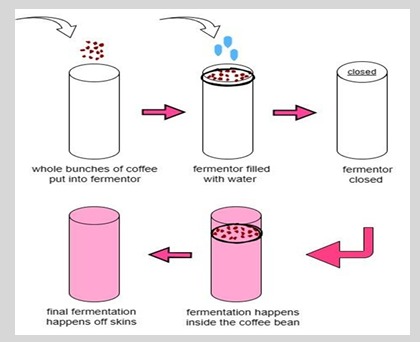
Recent developments in coffee science have introduced a technique borrowed from the wine industry called carbonic maceration. In this method, whole coffee cherries are placed in a sealed tank filled with carbon dioxide. Because oxygen is limited, fermentation occurs in an anaerobic environment. Inside the cherries, complex biochemical reactions take place, producing unique flavor compounds. As a result, the coffee can develop distinctive fruity notes such as strawberry, raspberry, banana, or cherry.
To further enhance this process, researchers have explored the use of ohmic heating technology. Ohmic heating works by passing an electric current through the material, allowing heat to be generated evenly and quickly throughout the fermentation system. This helps maintain a stable temperature during fermentation, which is important because temperature strongly affects microbial activity and flavor development.
Studies suggest that using ohmic heating during coffee fermentation can improve the quality of Arabica coffee beans and produce specialty coffee with higher sensory scores. By carefully controlling temperature and fermentation conditions, this technology can help unlock the full flavor potential of coffee cherries.
Beyond taste, innovations like this can also support broader global development goals. In particular, they contribute to Sustainable Development Goal (SDG) 1: No Poverty. By increasing the quality and market value of coffee beans, advanced processing techniques can help farmers earn higher incomes and improve their livelihoods. Specialty coffee produced through innovative methods often commands higher prices in the global market, benefiting coffee-growing communities.
In addition, improving coffee processing technology encourages collaboration between scientists, universities, farmers, and the coffee industry. Such cooperation promotes knowledge sharing and technological innovation in agricultural systems.
As research continues, ohmic-based carbonic maceration may become an important tool for producing high-quality coffee with distinctive flavor profiles. For coffee lovers, this means more exciting tastes in the cup. For farmers, it offers new opportunities to increase the value of their harvest.
In the end, the future of coffee may depend not only on fertile soil and careful harvesting, but also on the power of science and innovation.
Reference
DOI: https://doi.org/10.1051/bioconf/20249601010
Contact:
Dr. Februadi Bastian
+62858-2501-3239
februadi@unhas.ac.id