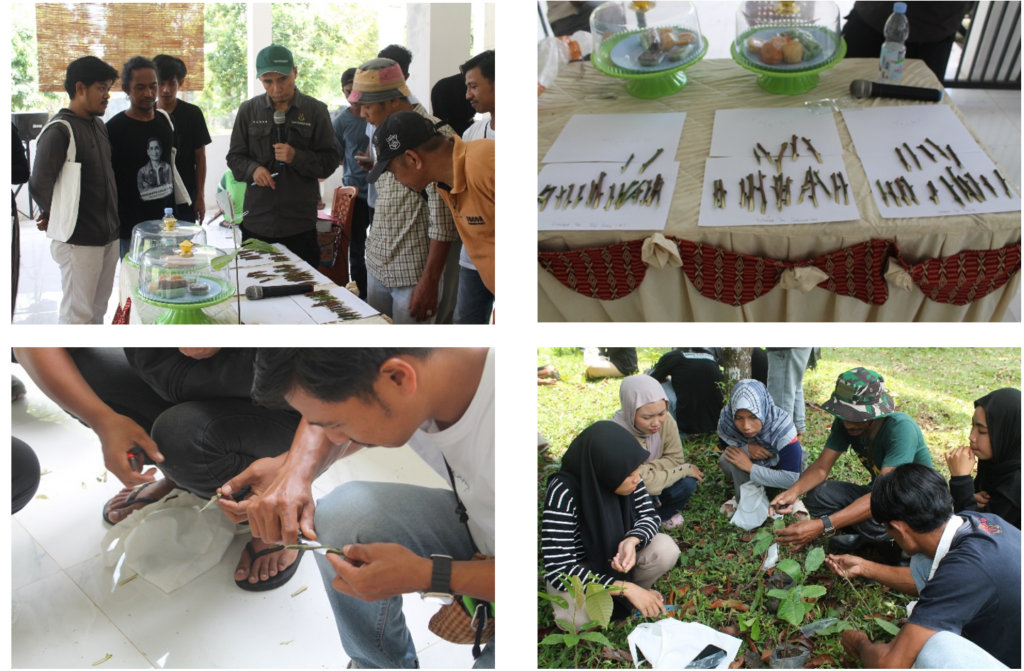
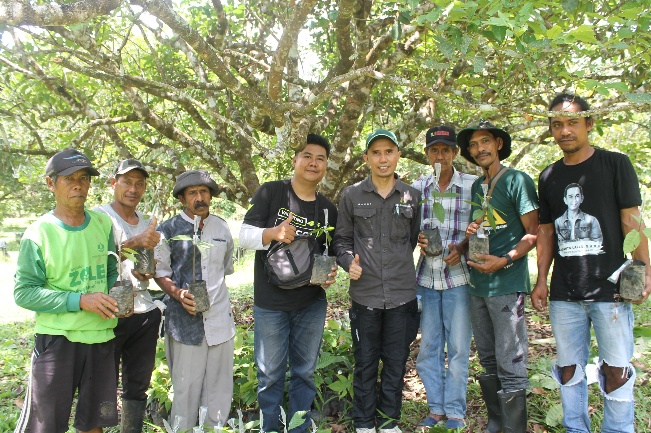
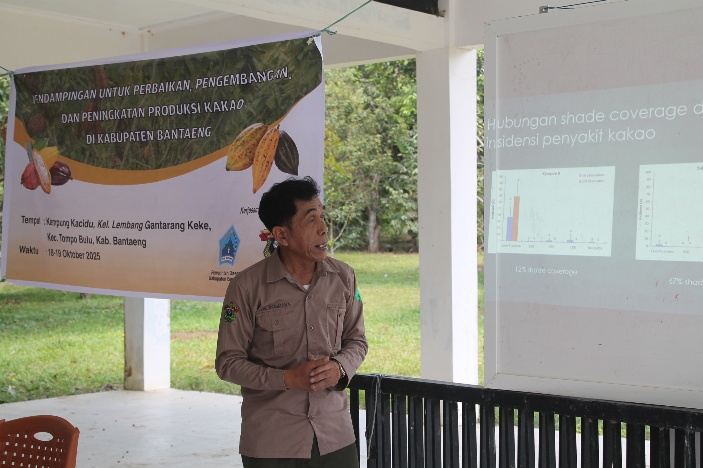
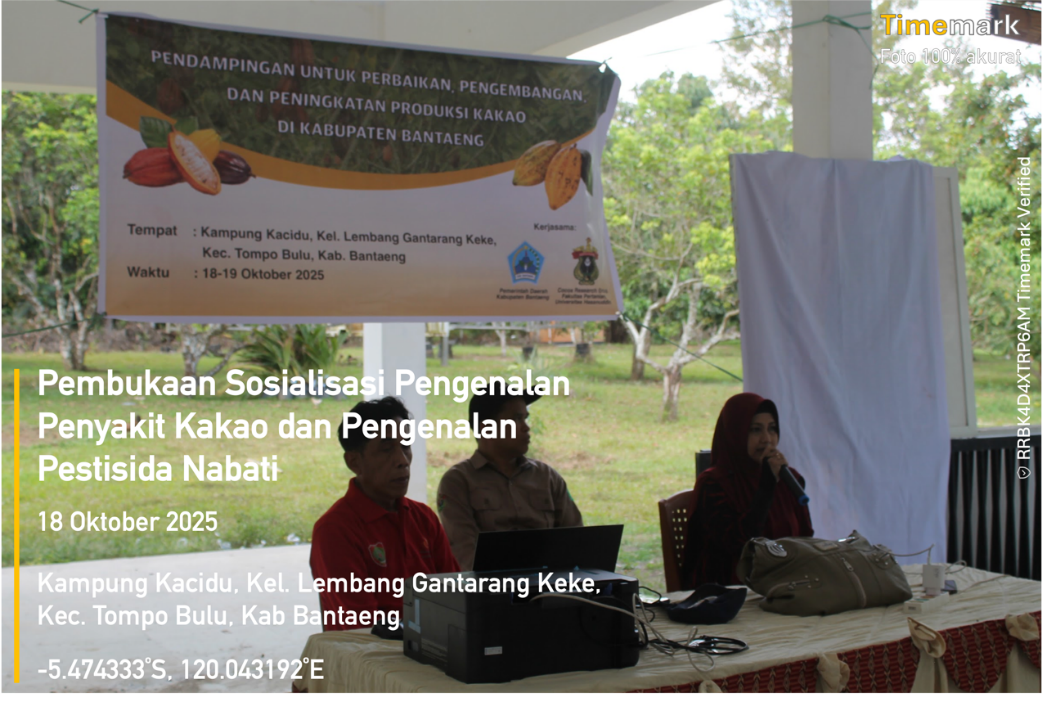
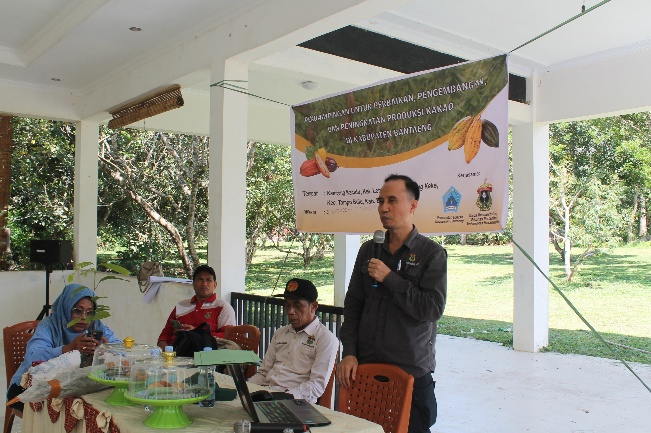
On October 31, 2025, the serene landscape of Kampung Kacidu, Lembang Gantarang Keke, became a vibrant hub of agricultural innovation. The Cocoa Research Group from Hasanuddin University, in a strategic alliance with the Bantaeng Regency Government, successfully conducted a high-impact workshop titled “Mentorship on Cleft Grafting (Sambung Pucuk).” This initiative engaged 50 enthusiastic local farmers and stakeholders, all converging with a shared ambition: to double cocoa productivity and production across Bantaeng through scientific rejuvenation and clonal diversification.
Cocoa has long been the economic heartbeat of Indonesia, yet the industry currently faces a critical plateau. Aging plantations, soil nutrient depletion, and the escalating pressures of climate change have caused yields to falter. The activity in Tompo Bulu district was designed as a direct technical intervention to reverse this trend. By focusing on cleft grafting—a precise vegetative propagation technique—farmers are now equipped to transform older, less productive trees into high-yielding assets by introducing superior, disease-resistant clones.
This mentorship program is meticulously aligned with the United Nations Sustainable Development Goals (SDGs) to ensure a holistic impact on the community. By providing the technical means to double crop yields, the project serves as a cornerstone for SDG 1: No Poverty. When smallholder farmers transition from subsistence yields to high-productivity harvests, they secure a more stable and prosperous economic future, effectively building resilience against market fluctuations and rural poverty.
The transfer of this sophisticated agricultural knowledge also champions SDG 4: Quality Education. Beyond simple instructions, the 50 participants engaged in a “living classroom” experience, mastering the delicate biological synchronization required for successful grafting. This commitment to technical literacy ensures that the community is not merely receiving aid but is gaining lifelong vocational skills that promote sustainable agricultural mastery. The democratisation of such specialized scientific expertise allows local farmers to become the primary innovators of their own land.
Furthermore, the realization of this ambitious productivity target relies heavily on SDG 17: Partnerships for the Goals. This event exemplifies the synergy between academic institutions and local government authorities. By bridging the gap between high-level research at Universitas Hasanuddin and the practical needs of the Bantaeng agricultural sector, this partnership creates a scalable model for regional development.
As the workshop concluded, the farmers left Kampung Kacidu with more than just new tools; they carried the blueprint for a renewed cocoa industry. Through the integration of land expansion, clonal diversity, and improved growing environments, Bantaeng is setting a new national standard. This journey toward doubling production is not just about numbers; it is about creating a sustainable, educated, and prosperous farming community that can thrive for generations to come.