
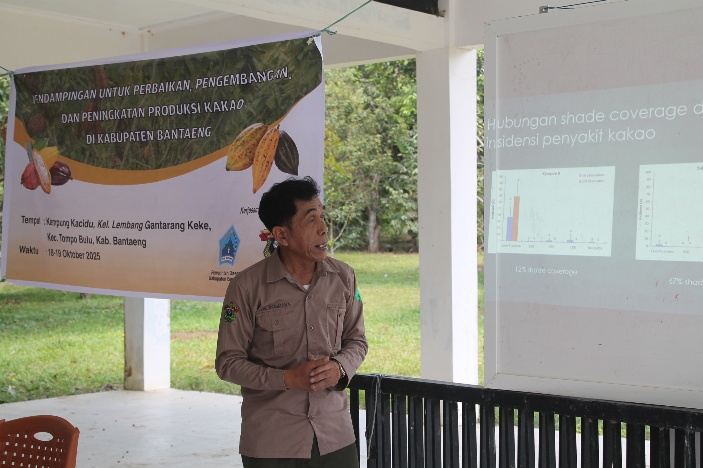

On October 19, 2025, a significant milestone in sustainable agriculture unfolded in Kampung Kacidu, Lembang Gantarang Keke. Under the lush canopy of Tompo Bulu district, the Cocoa Research Group from Hasanuddin University, in collaboration with the Bantaeng Regency Government, hosted a transformative workshop: “Pest and Disease Management in Cocoa and Practical Production of Botanical Pesticides.” This initiative brought together 50 dedicated local farmers and stakeholders, all driven by a singular, ambitious vision—to double cocoa productivity in Bantaeng through ecological harmony and scientific precision.
The program addresses a critical challenge in Indonesian agriculture. Since the 1980s, cocoa has been a backbone of the national economy; however, productivity has faced a sharp decline due to aging trees, soil nutrient depletion, and the intensifying pressures of climate change. By focusing on land expansion, rejuvenation, and clonal diversity, this activity serves as a catalyst for a “Cocoa Renaissance” in South Sulawesi.
Central to this workshop was the shift toward organic cultivation. Farmers were mentored in identifying major pathogens and pests, followed by hands-on training in creating botanical pesticides. These natural alternatives, derived from local flora, offer a potent defense against infestations without the environmental degradation associated with synthetic chemicals. This approach directly supports SDG 15: Life on Land, by promoting sustainable forest management and halting land degradation through the use of eco-friendly agricultural inputs.
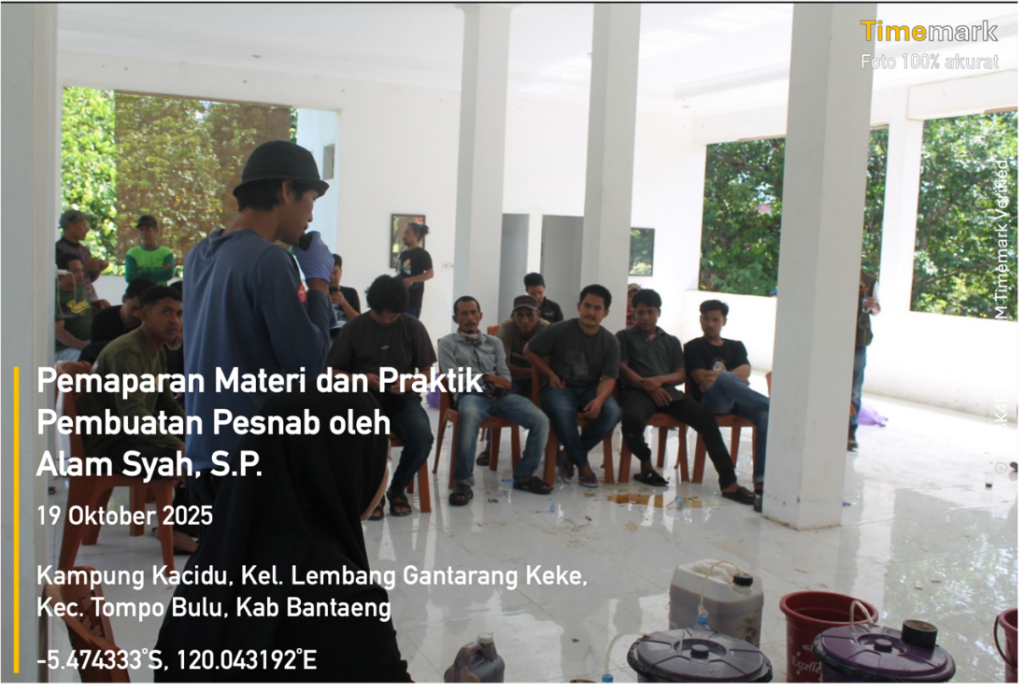
Furthermore, this initiative is deeply rooted in the United Nations Sustainable Development Goals (SDGs) framework to ensure long-term community impact. By equipping farmers with the skills to double their yields, the program actively advances SDG 1: No Poverty. Increasing the efficiency and output of smallholder farms directly bolsters the economic resilience of rural households, providing a sustainable pathway out of financial vulnerability.
The transfer of specialized knowledge is also a testament to SDG 4: Quality Education. The workshop transformed the field into a living laboratory, offering lifelong learning opportunities for the community. Participants did not just receive instructions; they mastered the technical nuances of seedling preparation and the introduction of superior clones, ensuring that scientific expertise is democratized and localized.
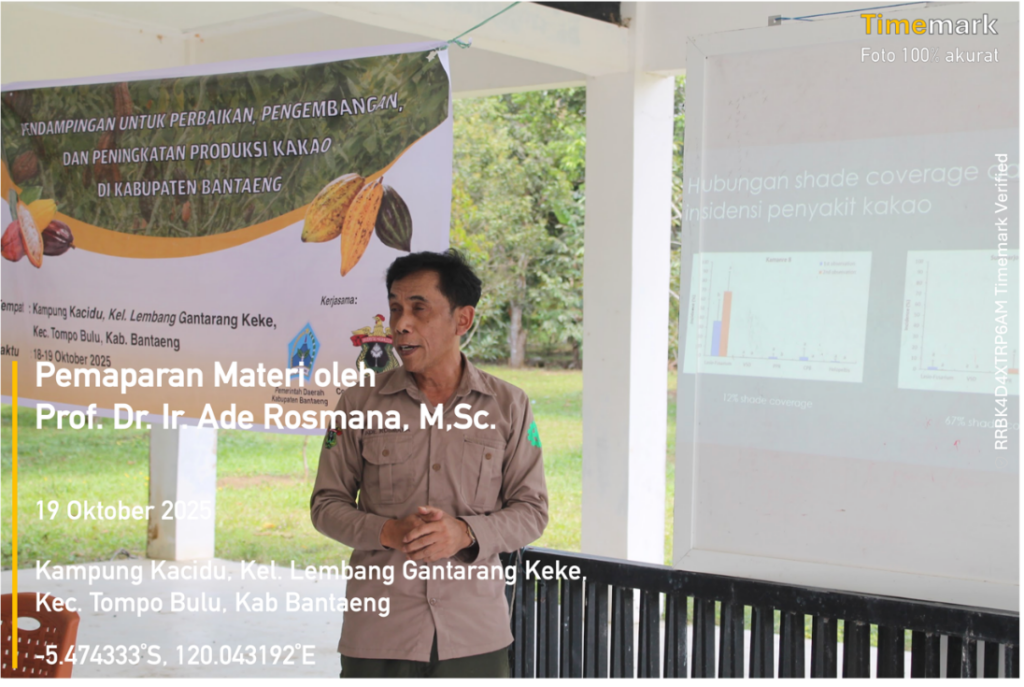
Finally, the success of this event underscores the power of SDG 17: Partnerships for the Goals. The synergy between the academic rigor of Universitas Hasanuddin and the administrative support of the Bantaeng Government creates a robust ecosystem for innovation. Such multi-stakeholder collaborations are essential for scaling agricultural breakthroughs and ensuring that technical assistance reaches the grassroots level.
As the sun set over the cocoa groves of Kampung Kacidu, the 50 participants departed not just with bottles of botanical pesticides, but with a renewed sense of agency. Through the integration of organic practices and strategic partnerships, Bantaeng is now positioned as a beacon of sustainable cocoa production, proving that environmental stewardship and economic prosperity can grow hand in hand.


