
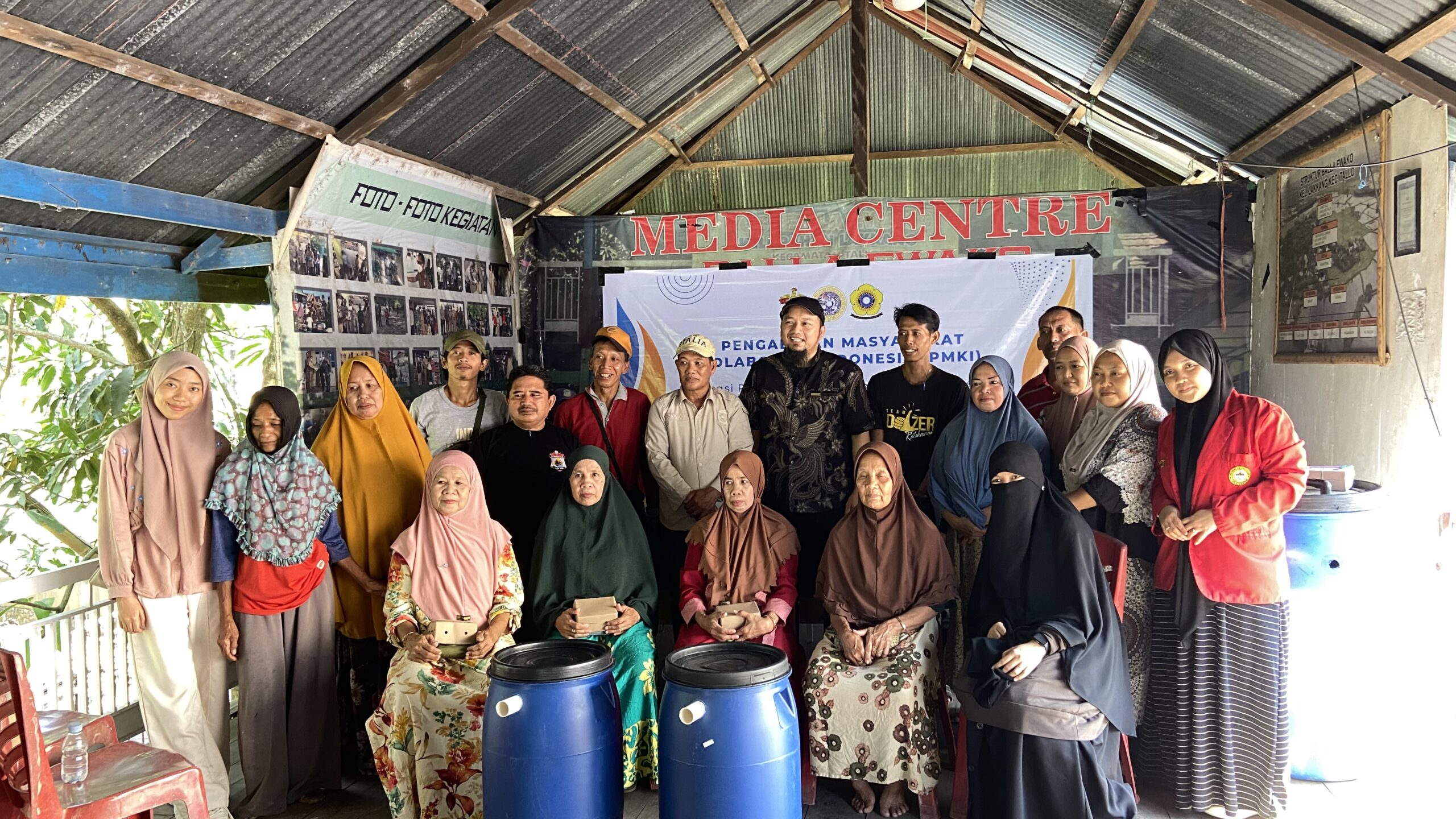

Organic waste management is an important issue for coastal and island communities, where limited land, dense settlements, and restricted waste transport systems can increase environmental and public health risks. When organic waste is not properly managed, it may produce unpleasant odors, attract disease vectors, and contribute to greenhouse gas emissions, particularly methane, when disposed of in landfills. To respond to this challenge, a community service activity entitled “Hilirisasi Penggunaan Alat Modifikasi Komposting Sampah Organik Skala Rumah Tangga dalam Upaya Penurunan Gas Rumah Kaca dan Pengendalian Penyakit Berbasis Sampah” was conducted in Pulau Lakkang, Kota Makassar.
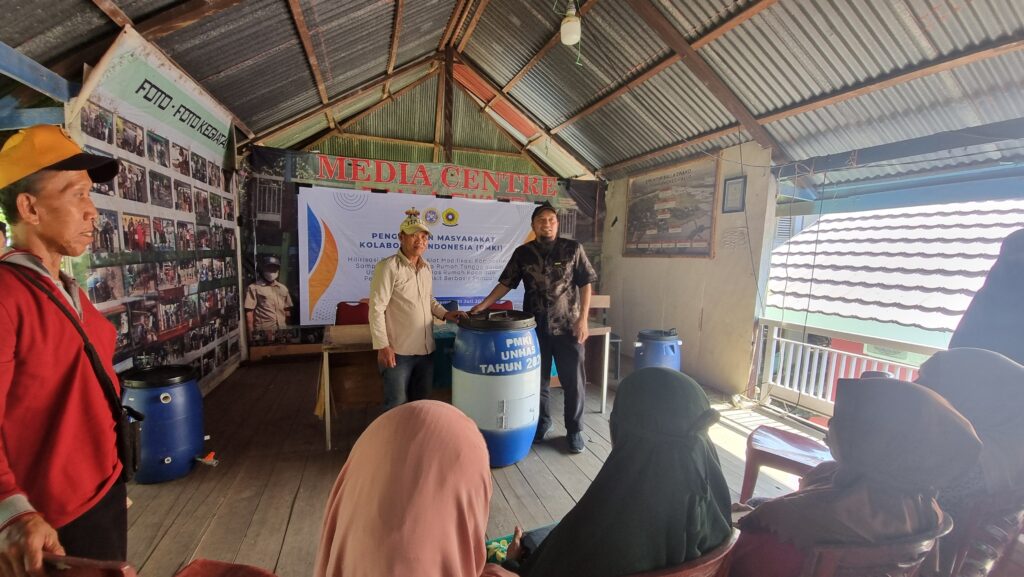
This activity was implemented on 2 August 2026 and involved government representatives and the community of Kelurahan Lakkang. The program was carried out as part of the Program Pengabdian Masyarakat Kolaborasi Indonesia (PMKI), with the principal researcher from Universitas Airlangga (UNAIR) and institutional partners from Universitas Hasanuddin (Unhas) and Universitas Sriwijaya (Unsri). This collaboration reflects the importance of inter-university partnerships in developing practical, science-based solutions for community environmental health problems.
The main objective of the activity was to improve organic waste management among coastal and island communities through the application of a simple, adaptive, and sustainable household-scale composter. The technology was introduced as an accessible tool that can help residents process organic waste directly from the household level. This approach is particularly relevant to support the government policy direction that, starting 1 August 2026, organic waste should no longer end up as mixed waste in final disposal sites, and communities are encouraged to manage waste from its source.
During the activity, participants were introduced to the principles of organic waste separation, composting, and household-level environmental hygiene. The modified composting tool was designed to be simple to use, suitable for community settings, and adaptable to local conditions in Lakkang Island. Through this approach, organic waste such as food scraps and biodegradable household waste can be converted into compost, reducing the volume of waste transported to disposal sites while producing material that may support local greening or household gardening activities.
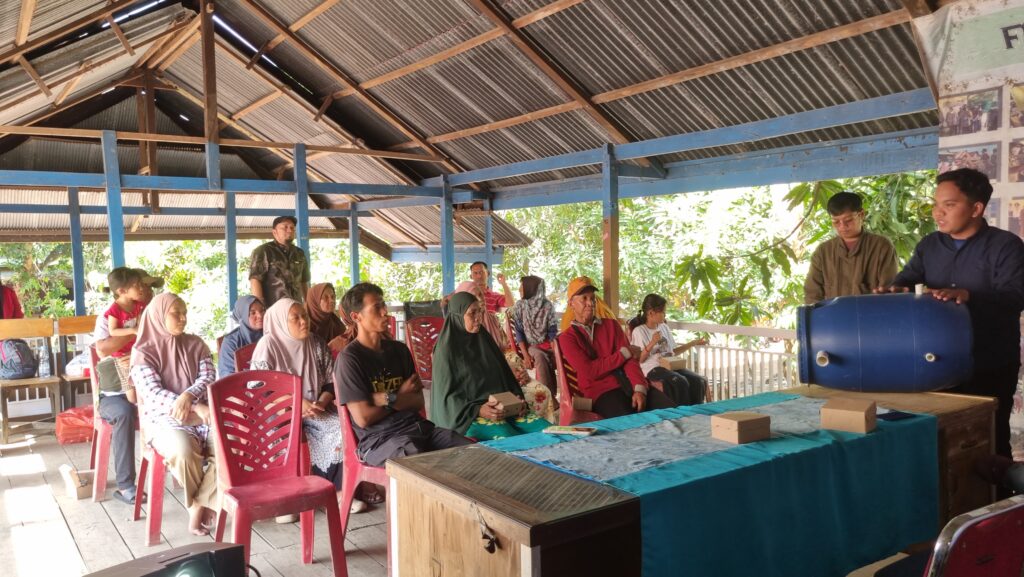
This initiative is closely aligned with SDG 3: Good Health and Well-being, SDG 11: Sustainable Cities and Communities, and SDG 13: Climate Action. It supports SDG 3 by reducing environmental conditions that may contribute to waste-related diseases and vector breeding. It contributes to SDG 11 by promoting community-based waste management as part of a cleaner and more sustainable settlement system. At the same time, it supports SDG 13 by encouraging organic waste processing that can help reduce greenhouse gas emissions from unmanaged waste.
Overall, this activity represents a practical step toward strengthening community resilience in Lakkang Island. By combining appropriate technology, public participation, and academic collaboration, household-scale composting can become an effective strategy for reducing organic waste, improving environmental health, and supporting low-carbon community development in Makassar.


