
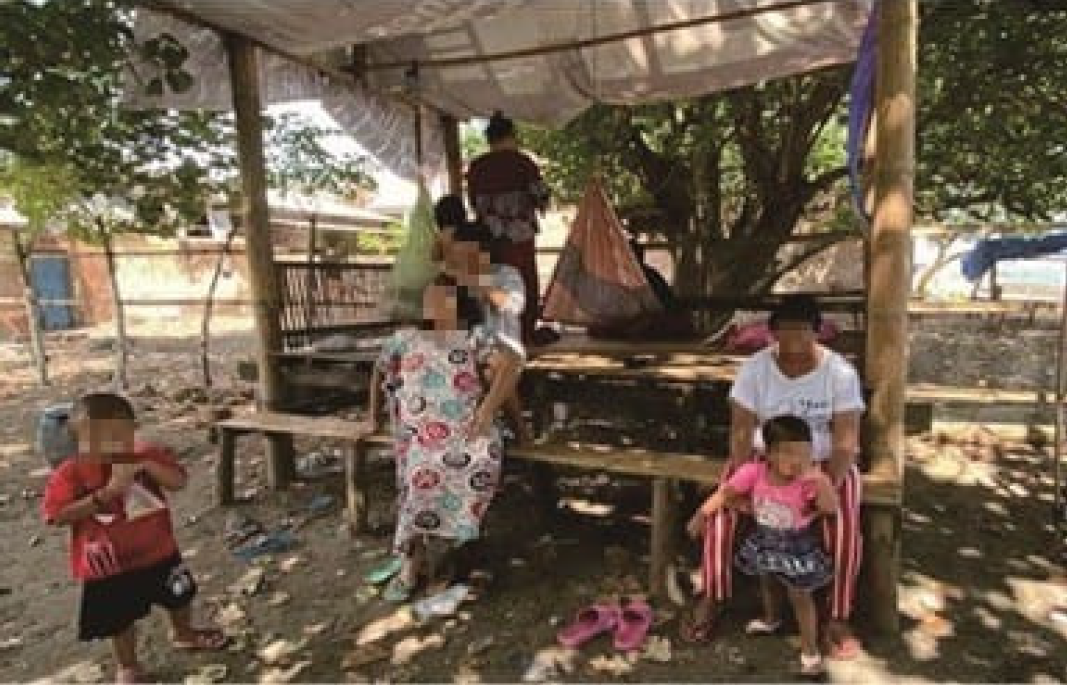

MAKASSAR, Indonesia April 7 2026/CSR/ – In many coastal settlements, survival is not just about individual strength—it is about togetherness. While modern urban living often emphasizes privacy and independence, coastal communities in Indonesia remind us of a different value: the importance of shared spaces in building strong, resilient societies.
Imagine a simple communal space—a veranda, an open yard, or a shared living area—where families gather, talk, and support one another. At first glance, it may seem ordinary. But in reality, these spaces play a powerful role in shaping social bonds. They are places where problems are discussed, solutions are found, and trust is built. In times of crisis—such as natural disasters or economic hardship—these connections become essential.
This idea is explored in the article “The Presence of a Family Communal Space as a Form of Local Wisdom towards Community Cohesion and Resilience in Coastal Settlements,” published in the Sustainability journal by Multidisciplinary Digital Publishing Institute (MDPI) on May 17, 2023. The study highlights how local wisdom, expressed through communal living spaces, strengthens social cohesion and enhances community resilience in coastal areas.
Local wisdom is not just about tradition—it is about practical knowledge that has been tested over generations. In coastal settlements, where people often face environmental risks such as flooding, erosion, and storms, strong social ties can make a critical difference. When communities are closely connected, they can respond faster, share resources, and recover more effectively from challenges.
These communal spaces also contribute to emotional and mental well-being. In a world where stress and isolation are increasingly common, having a place to connect with others can reduce anxiety and improve quality of life. People feel heard, supported, and valued. This is why the issue is closely linked to SDG 3: Good Health and Well-being, which emphasizes not only physical health but also mental and social well-being.
Interestingly, the presence of communal spaces also reflects a balance between cultural identity and modern needs. While many cities are moving toward more private and compact housing, coastal communities continue to preserve shared spaces as part of their identity. This shows that development does not always mean abandoning tradition. Instead, it can mean adapting and integrating valuable cultural practices into contemporary life.
However, these communal values are increasingly under pressure. Urbanization, changing lifestyles, and limited land availability often reduce the space available for shared activities. As a result, social interactions may decline, weakening the sense of community over time.
This is why it is important for planners, policymakers, and communities to recognize the value of communal spaces. Designing settlements that include areas for social interaction is not just about aesthetics—it is about building resilience and improving well-being.
In the end, the lesson from coastal communities is simple yet powerful: strong communities are built on strong relationships. And sometimes, all it takes to create those relationships is a space to come together.
Because when people connect, communities thrive—and resilience follows naturally.
Reference
DOI : https://doi.org/10.3390/su15108167
Contact
Idawarni Asmal
081357922950
idawarniasmal@yahoo.com; idawarni@unhas.ac.id


