
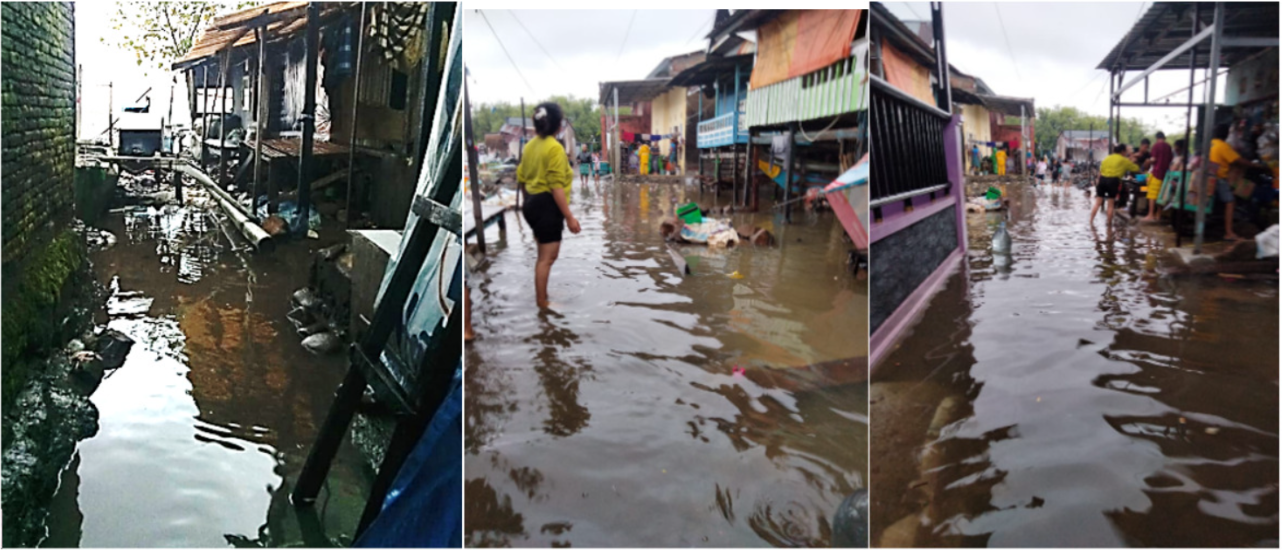

Makassar – The Coastal Settlement Resilience (CSR) Research Group conducted an international collaborative project in partnership with Toyohashi University of Technology, Japan. Coastal areas are increasingly exposed to environmental pressures such as erosion, flooding, and ecosystem degradation, all of which directly affect the livelihoods and well-being of local communities.
In response to these challenges, a community-based initiative entitled Ecological and Social Corridors: A Multifunctional Solution for Coastal Settlement Resilience was implemented in Galesong Utara, Takalar. This initiative aims to develop a multifunctional coastal corridor that integrates vegetation-based solutions with recreational embankments, thereby providing both ecological protection and social benefits for coastal communities.
The program emphasizes the use of coastal vegetation, such as mangroves and other adaptive plant species, to create natural barriers against wave action and coastal erosion. At the same time, the integration of recreational spaces within the embankment design encourages community engagement, promotes physical activity, and strengthens social cohesion. This dual-function approach ensures that environmental resilience goes hand in hand with improvements in community well-being.
The initiative directly contributes to several Sustainable Development Goals (SDGs), particularly SDG 1: No Poverty, SDG 11: Sustainable Cities and Communities, and SDG 13: Climate Action. By enhancing coastal protection and supporting sustainable livelihoods, the project helps reduce vulnerability among coastal populations (SDG 1). Educational components, including community training and participatory learning activities, empower local residents with knowledge about coastal ecosystem management (SDG 4). Furthermore, collaboration between local stakeholders and international experts reflects a strong commitment to global partnership and knowledge exchange (SDG 17).
The activity was conducted over an extended period from April to November 2025, allowing for iterative learning and adaptation based on environmental and social feedback. Throughout this period, participants engaged in a variety of activities, including environmental assessments, design workshops, vegetation planting, and the monitoring of coastal changes. The participatory approach ensured that local knowledge was incorporated into the planning and implementation processes.
A total of ten (10) participants actively contributed to the project, including students and community members. The involvement of young scholars played a crucial role in bridging scientific knowledge with local practices. The students involved in this initiative were Andi Luthfia Amalya, Andi Muhammad Ikhsan, and Fadel, who demonstrated strong commitment and interdisciplinary collaboration throughout the program.
The involvement of Prof. Jun Ichiro Asano from Toyohashi University of Technology, Japan provides an international perspective and expert insight into the project. His contribution provided valuable insights into sustainable coastal engineering and ecological design, enriching the overall quality and impact of the initiative.
In conclusion, this activity represents a holistic and scalable model for coastal resilience, combining ecological restoration, social infrastructure, and educational empowerment. By aligning local actions with global sustainability goals, the project demonstrates how integrated approaches can effectively address complex environmental challenges while fostering inclusive and sustainable community development


